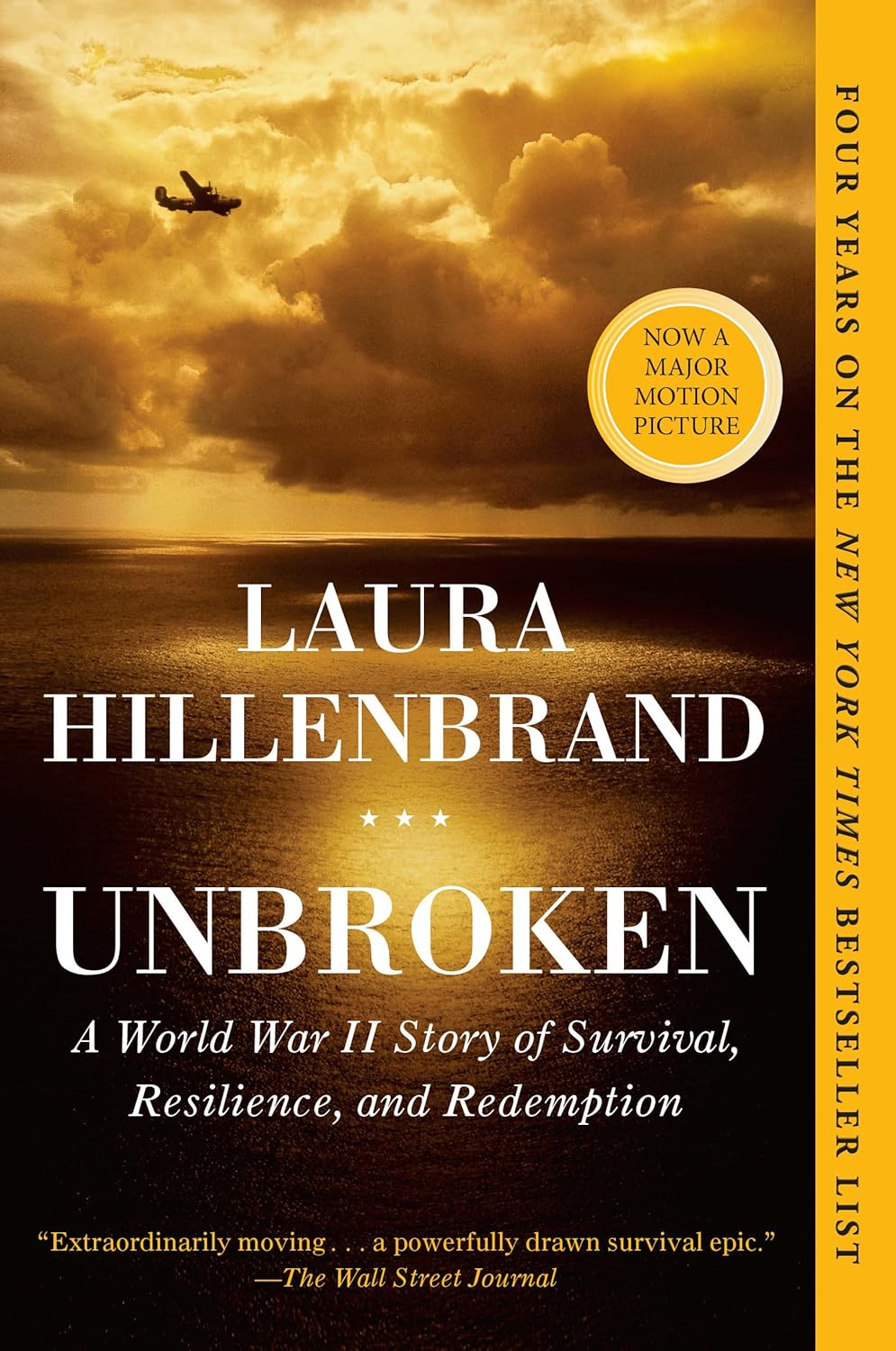
Unbroken: A World War II Story of Survival, Resilience, and Redemption
2010, Pages: 528
Genres
Writer
| Laura Hillenbrand |
Characters
Louie Zamperini, Russell Allen Phillips, Pete Zamperini
An Olympic runner turned WWII bombardier survives a plane crash, 47 days at sea, and brutal torture as a POW, only to face his hardest battle at home: forgiving the man who broke him.
☕Thus says AI: 96/100
⭐ Rating: Thus Says AI –
This is a critical rating based on biblical richness, narrative power, redemptive arc, and literary excellence. Unbroken earns its place as essential reading for Christians seeking to understand grace, suffering, and forgiveness. The book’s theological depth and honest portrayal of conversion distinguish it from typical survival narratives.
Article Summary
| Concern | Level | Notes |
|---|---|---|
| Violence | High | Graphic depictions of torture, beatings, starvation. Extended scenes of prolonged physical abuse. Not gratuitous but necessary to narrative. |
| Language | Moderate | One f-word, multiple d-words, racial slurs (“wop,” “dego”). Misuse of God’s name limited but present. |
| Drug Use | Moderate | Heavy post-war alcoholism depicted. Drinking among servicemen portrayed realistically. Smoking included. |
| Explicit Content | Moderate | References to sexual slavery, pornographic photos, brothel visits. No explicit scenes. One sexual assault reference (guard/duck). |
| Spiritual Messaging | Very High | Powerful conversion narrative, prayer throughout, Billy Graham ministry, forgiveness, grace, redemption central. |
| Emotional Intensity | Very High | Trauma, PTSD nightmares, marital breakdown, rage, despair. Cathartic but demanding. |
Unbroken in a Nutshell
🔤 Title: Unbroken: A World War II Story of Survival, Resilience, and Redemption
🎬 Author: Laura Hillenbrand
📺 Genre: Non-fiction Biography / WWII History / Spiritual Memoir
⏱️ Reading Time: Approximately 15–20 hours (500+ pages)
📅 Release: 2010 (Random House)
⭐ Adult Audience: Yes | Mature Content: Yes
🎭 Key Figures: Louis “Louie” Zamperini, Phil Phillips, Cynthia Applewhite Zamperini, Billy Graham, Mutsuhiro Watanabe (“The Bird”)
📖 Based On: True account of Olympic runner and WWII bombardier Louis Zamperini (1917–2014)
📜 Plot Synopsis
Louis Zamperini is born to Italian immigrant parents in Torrance, California, in 1917. A troublemaking child who smokes and drinks by age eight, Louie finds redemption—temporarily—in track. By his late teens, he breaks records and qualifies for the 1936 Berlin Olympics. But discipline and purpose fade. When America enters World War II, Louie volunteers as a bombardier on a B-24 Liberator nicknamed the “Green Hornet.”
On May 27, 1943, engine failure sends his plane plummeting into the Pacific. Louie and two crewmates—Phil Phillips, a believing Christian and pilot, and Mac, a tail gunner—scramble into life rafts. What follows is a 47-day ordeal of starvation, dehydration, shark attacks, and Japanese strafing. The men pray. Rain comes. Louie, drowning in despair, vows to God: “If you save me, I will serve you forever.” Mac dies on day 33. Only Louie and Phil survive capture.
The horrors intensify. Louie endures two years in brutal Japanese POW camps, where he faces sadistic torture by guards. The worst is Mutsuhiro Watanabe—”The Bird”—a deranged corporal who singles Louie out for systematic destruction. Watanabe beats him daily, forces him to hold a heavy wooden beam overhead for 37 minutes without dropping it (or face execution), and orchestrates a humiliating two-hour scene where hundreds of POWs punch Louie in the face on command. Yet Louie survives.
Post-war, the real battle begins. Louie returns home a hero, but PTSD, nightmares of The Bird, and alcoholism consume him. His marriage to Cynthia crumbles. He spirals toward violence and revenge. In 1949, Cynthia attends a Billy Graham crusade and experiences conversion. When she tells Louie she won’t divorce him, he reluctantly joins her at another event.
That night, everything changes. Graham preaches from John 8 about the woman caught in adultery, speaking of people “drowning in the sea of life.” Graham proclaims: “God says, ‘If you suffer, I’ll give you the grace to go forward.'” Louie remembers his childhood promise on the raft. He charges toward the exit, then stops. He walks instead to the prayer room. Kneeling before God, he surrenders. In that moment, his rage, fear, and humiliation fall away. He becomes a new creation.
The final chapters chronicle Louie’s transformation: forgiveness visits to Sugamo Prison where he shakes the hands of his former tormentors. Decades later, he attempts contact with The Bird to offer forgiveness (Watanabe refuses). Louie dedicates his life to youth ministry and Christian witness. He lives to age 97, never stopped being “unbroken”—but this time, by grace.
💭 Themes & Messages of Unbroken
1. Survival as Testimony to Divine Mercy
Louie’s physical endurance on the raft and in camps is extraordinary, but Hillenbrand frames it not as proof of human willpower alone, but as evidence of God’s sustaining grace. When Louie promises God on the raft, the narrative becomes theological. Rain comes when they pray. Phil’s faith keeps hope alive. Louie later realizes his survival was not mere luck or grit—it was divine intervention.
Biblical Connection: Psalm 23:4 (“Though I walk through the valley of the shadow of death, I will fear no evil, for you are with me”) and 2 Corinthians 12:9 (“My grace is sufficient for you, for my power is made perfect in weakness”). Louie’s survival teaches us that endurance under suffering is not a measure of human strength but of God’s faithfulness.
2. The Power of Prayer & Covenant
Throughout the book, prayer is the thread connecting Louie to hope. On the raft, when he promises God, “If you save me, I will serve you forever,” he enters a covenant. Though Louie forgets this promise for six years post-war, God doesn’t forget. When Graham’s words trigger Louie’s memory of that vow, spiritual transformation is unleashed.
Biblical Connection: Psalm 66:13-14 (“I will fulfill my vows to you, for you have delivered me from death”). Louie’s covenant with God illustrates that our promises to the Lord, even made in desperation, matter eternally. God honors commitments born of faith.
3. Redemption Over Resilience (The Heart of the Story)
This is the theme that separates Unbroken from a typical war survival account. Many readers expect a book about human grit. Instead, Hillenbrand gives us something far richer: a gospel narrative. Louie’s resilience—physical endurance, mental toughness, competitive will—actually fails him after the war. The same strength that kept him alive becomes his prison. Alcoholism, rage, and revenge fantasies trap him in a mental cell.
Only when Louie is broken by grace, not strengthened by willpower, does he find freedom. His conversion at Billy Graham’s crusade is not sentimental—it’s existential. Hillenbrand writes: “In a single, silent moment, his rage, his fear, his humiliation and helplessness, had fallen away. That morning, he believed, he was a new creation.”
Why This Matters for Christians: We live in a culture that celebrates the “unbroken spirit”—the indomitable human will. Unbroken teaches that true victory comes not from the strength within us, but from surrender to Christ’s strength. Louie’s story inverts our cultural narrative. He was unbroken not because he was strong, but because he was willing to be broken by God.
4. Forgiveness as the Ultimate Act of Freedom
Louie doesn’t find peace by overcoming his desire for revenge through sheer willpower. He finds it by forgiving those who tortured him. After his conversion, Louie travels to Sugamo Prison in Tokyo and looks his former guards—including his worst tormentors—in the eyes and says, “I forgive you.” He even attempts to reach The Bird decades later with a letter offering forgiveness and Christ.
This is not Hollywood sentimentality. Louie’s forgiveness is born of understanding that he needed forgiveness from God. The same grace that saved him extends to those who harmed him.
Biblical Connection: Matthew 18:21-22 (Peter asks if he should forgive seven times; Jesus says seventy times seven—unlimited forgiveness) and Ephesians 4:32 (“Be kind to one another, tenderhearted, forgiving one another, as God in Christ forgave you”).
Louie’s forgiveness of The Bird is a living epistolary to these passages. For Christians uncertain about forgiving the “unforgivable,” Louie’s example is transformative.
5. The Tension Between Human Strength & Divine Grace
A sophisticated theme runs through Unbroken: the danger of self-reliance. Louie’s greatest asset—his competitive will, his refusal to quit—becomes his deepest liability. Post-war, he believes he can overcome PTSD through willpower. He tries returning to running for the 1948 Olympics. He tries managing his drinking. He tries controlling his rage. All fail.
Only when he admits helplessness does grace enter. At Billy Graham’s crusade, Louie initially resists. He’s angry. He feels accused. But when he remembers his prayer on the raft—when he stops defending himself—the Holy Spirit breaks through.
Biblical Connection: Romans 7:18-25 (Paul’s cry: “Who will rescue me from this body of death?… Thanks be to God—through Jesus Christ our Lord!”). Louie’s post-war struggle mirrors Paul’s: the things he wants to do, he can’t; the things he doesn’t want to do, he does. Only Christ offers the answer.
Scene Examples & Biblical Analysis
Scene 1: The Raft—Louie’s Covenant Prayer (Days 5–7)
Setting: After six days without fresh water, the men’s lips are cracked and bleeding. Louie leads them in prayer. Rain comes. This happens three times—each time they pray before storms arrive.
What Happens: Louie makes his vow to God: “If you save me, I will serve you forever.” Rain comes. The men drink. Hope is reborn.
Biblical Richness: This scene echoes Psalm 42:1 (“As the deer pants for flowing streams, so pants my soul for you, O God”). It also recalls Jesus in Gethsemane (Matthew 26:39): “My Father, if it be possible, let this cup pass from me; nevertheless, not as I will, but as you will.” Louie’s prayer is not whining; it’s surrender. He asks for rescue, but he also commits himself to serve if saved. This is covenant language—the deepest biblical theology.
For Christians: This scene teaches that prayer in crisis, when we have nothing else, can actually deepen our faith. The raft becomes a pulpit. Louie’s desperation becomes his greatest spiritual resource.
Scene 2: The Beam Scene—Louie’s Limits Tested by The Bird (POW Camp)
Setting: The Bird orders Louie to hold a heavy wooden beam overhead. “Drop it, and I’ll have you shot.”
What Happens: Louie holds the beam for 37 minutes while guards watch with guns. His muscles scream. The Bird paces, hoping Louie will fail. When Louie finally drops the beam (fainting from exhaustion), he expects a bullet. Instead, The Bird laughs and walks away.
Why This Matters: This scene illustrates the limits of human will. Louie survives not because he’s strong enough, but because his tormentor’s sadism is more interested in psychological torture than execution. He survives by luck, by God’s providence, not by superior willpower. Louie can hold a beam, but he cannot hold together a life fractured by trauma.
For Christians: When we face our limits—in suffering, in temptation, in weakness—we discover that human resolve has boundaries. This scene prepares readers for Louie’s later breakdown and his ultimate need for divine rescue, not merely human endurance.
Scene 3: Billy Graham’s Crusade—The Conversion (1949, Los Angeles)
Setting: A massive tent. Billy Graham preaches from John 8, the story of the woman caught in adultery.
What Happens (First Night): Graham’s message about judgment (“Your own words will condemn you before God”) enrages Louie. He feels accused. Who is this man to judge me? He stormed out mid-sermon, determined never to return.
What Happens (Second Night): Graham speaks again. This time, he says: “Here tonight, there’s a drowning man, a drowning woman, a drowning boy, a drowning girl, out lost in the sea of life.” Then: “God says, ‘If you suffer, I’ll give you the grace to go forward.'”
At those words, Louie’s mind explodes. He remembers the raft. He remembers his vow. He remembers praying: “If you save me, I will serve you forever.” He’s been thinking about that promise for years, pushing it away, dismissing it. But now, at 26 years old, in a tent in Los Angeles, Louie remembers his covenant.
He gets up to leave—one last escape route. But something stops him. He walks toward the prayer room instead, falls to his knees, and surrenders everything to Jesus.
Hillenbrand writes: “When he thought of his history, what resonated with him now was not all that he had suffered but the divine love that he believed had intervened to save him. He was not the worthless, broken, forsaken man that the Bird had striven to make of him. In a single, silent moment, his rage, his fear, his humiliation and helplessness, had fallen away. That morning, he believed, he was a new creation. Softly, he wept.”
Biblical Depths:
- John 8:11 (Jesus to the woman: “Neither do I condemn you; go, and from now on sin no more”)—Louie experiences this grace firsthand.
- John 3:16-17 (God’s love and non-condemnation)
- Psalm 51:17 (“The sacrifices of God are a broken spirit; a broken and contrite heart, O God, you will not despise”)—Louie’s brokenness becomes the gateway to grace.
For Christians: This scene is the pivot point of the entire book. It shows that:
- Grace often arrives through unexpected messengers. Billy Graham was simply proclaiming Scripture, but God used those words to reach Louie.
- Conversion is instantaneous and totalizing. In that one moment, Louie’s nightmares about The Bird stop. For the first time in five years, he sleeps without being tormented.
- God keeps covenants we forget. Louie made a promise on the raft and abandoned it. But God never abandoned Louie. When Louie remembers, everything changes.
Scene 4: Forgiveness at Sugamo Prison—The Pinnacle
Setting: 1950. Louie travels to Sugamo Prison in Tokyo where his former guards are imprisoned as war criminals.
What Happens: Louie enters the prison cell by cell. He looks into the faces of men who tortured him. Some recognize him. Some don’t. Louie extends his hand, shakes theirs, and says: “I forgive you.” One guard weeps. Others stand in stunned silence.
Why This Transcends Movie Drama: This isn’t revenge fantasy. Louie isn’t confronting The Bird (who was transferred to another camp). He’s offering what The Bird tried to destroy—his dignity and humanity. By forgiving, Louie reclaims what the Bird tried to steal: his soul.
Biblical Connection: Colossians 3:13 (“Bear with each other and forgive one another if any of you has a grievance against someone. Forgive as the Lord forgave you”).
Louie understands that the Lord’s Prayer includes a radical promise: “Forgive us our debts, as we also have forgiven our debtors.” Only as we forgive can we receive God’s forgiveness. Louie’s act is not sentimental—it’s soteriologically essential. His forgiveness is tied to his own salvation.
For Christians: How many believers harbor unforgiveness toward someone who has hurt them? Unbroken demonstrates that forgiveness isn’t about the other person’s worthiness—it’s about our own freedom. Louie doesn’t forgive because his guards deserve it. He forgives because he has been forgiven by God, and that grace flows through him.
⚠️ Content Warnings
Violence
This section requires mature readers. Hillenbrand doesn’t graphically sensationalize, but she doesn’t spare details either.
- Plane crash and ocean crash: Louie nearly drowns when tangled in electrical wires; graphic descriptions of the plane sinking.
- Shark attacks: A shark tears off a man’s leg in the water. Blood in the water. Men baiting sharks with garbage, then throwing hand grenades into their mouths to watch them explode.
- Prolonged beating scenes: Louie is beaten repeatedly by guards. The most notorious: The Bird forces every POW in the camp—hundreds of men—to punch Louie in the face as hard as possible. This goes on for approximately two hours. Louie’s face swells so badly he can barely open his mouth.
- Torture scenes: Kendo stick beatings, belt buckle strikes to the head (causing temporary deafness), forced starvation, forced labor in brutal conditions.
- Medical violence: A pilot’s leg is unnecessarily amputated high on the thigh (to ensure he can never pilot again). The scene describes the amputation in clinical but disturbing detail.
- Mentions of execution: References to POWs being beheaded, executed, subject to medical experiments.
- Bullying: Louie is bullied as a child and teen; scenes of physical violence during school years.
Drug & Alcohol Use
- Childhood drinking: Louie steals and drinks beer at age 8.
- Wartime drinking: Servicemen drink to cope with death and loss. POWs get drunk on sake.
- Post-war alcoholism: This is a major theme. Louie becomes an alcoholic after returning home. Hillenbrand describes:
- His secret stashes of alcohol
- His increasing inability to function
- His verbal and emotional abuse of his wife under the influence
- Near-suicidal despair
- The devastation alcohol wreaks on his marriage
- Smoking: Louie smokes from childhood through adulthood.
Profanity
- One f-word (used by servicemen in authentic wartime context)
- Multiple uses of d-word (“damn,” “damned”), including in religious contexts (misuse of God’s name)
- Racial slurs: “Wop” and “dego” used repeatedly by bullies and to describe Italian-Americans (historically accurate but painful to read)
- Crude names for guards: Nicknames like “Turdbird” and “S—head” used by POWs
- One misuse of Jesus’ name
Romantic or Explicit Content
- References to sexual slavery: The book mentions that the Japanese military provided women prisoners for soldiers’ sexual use (historical context).
- Pornographic material: POWs describe barracks decorated with girlie magazines and nude photographs (historically accurate).
- Young romance: Phil kisses his fiancée at prom.
- Louie’s marriage: Louie marries Cynthia impulsively, knowing little about her. Post-war, he verbally abuses her, and she leaves him (implied marital separation due to his behavior, not explicit sexual content).
- One sexual assault reference: A guard sexually violates the camp’s pet duck (this is mentioned but not graphically described).
- Brothel visits: After war’s end, some men visit a brothel. This is mentioned but not depicted.
Spiritual Messaging
- Prayer throughout: Louie prays on the raft. POWs pray during bombing raids. Louie’s mother prays for him constantly (he watches her pray without her knowing). Phil prays fervently. Prayer is woven into the survival narrative.
- Christian characters: Phil is explicitly Christian and his faith sustains hope. Kawamura, a Japanese guard, identifies as Christian and shows unexpected kindness to Louie and Phil. Louie’s mother is a woman of prayer.
- Billy Graham crusade: The crusade scenes are treated with respect and power. Graham is portrayed as a faithful proclaimer of the gospel, and his ministry is shown as transformative.
- Conversion narrative: Louie’s conversion is the climax and resolution of the book. His transformation is miraculous—instant and total. For five years, he’s plagued by nightmares of The Bird. After conversion, he sleeps through the night for the first time since captivity.
- Church: Louie and Cynthia marry in a church. She becomes active in faith community. Louie becomes a Christian speaker.
- Forgiveness & grace themes: The entire book builds toward understanding that survival isn’t enough—only grace and forgiveness heal the soul.
- God’s providence: Hillenbrand portrays God as sovereign over Louie’s survival, not luck or chance.
🎯Verdict: Reasons To Watch
Reasons to Watch ✅
- ✝️ It’s a masterclass in gospel narrative. If you want to understand how redemption actually works—not as an abstraction but as lived reality—this book will transform you. Louie’s conversion is sudden, total, and real.
- ✝️ It demolishes the myth of self-reliance. Our culture teaches that suffering builds character and that willpower conquers all. Unbroken shows that both ideas are deadly lies. Only grace saves.
- ✝️ It offers hope to those broken by trauma. PTSD, addiction, rage, despair—Louie experienced all of them. If you or someone you love is struggling, Louie’s restoration through Christ is a beacon.
- ✝️ It models biblical forgiveness. In an age of grudges and cancel culture, Louie’s forgiveness of The Bird (and his guards) is countercultural and Christlike.
- ✝️ It’s actually well-written. Hillenbrand is a master storyteller. The book reads like an adventure thriller while wrestling with profound theological questions. It’s not a boring sermon—it’s a gripping narrative that happens to be about grace.
- ✝️ It reminds us that God keeps covenants we forget. Louie made a promise on the raft and abandoned it. Six years later, God reminded him. This is profoundly encouraging for anyone who’s failed the Lord.
- ✝️ It shows suffering as a tool of sanctification. Romans 5:3-4 teaches that “suffering produces endurance, and endurance produces character, and character produces hope.” Louie’s story lives this out.
❌ REASONS TO AVOID
- ⚠️ The violence is graphic and prolonged. If you struggle with violent imagery or have trauma histories involving abuse, this book may re-traumatize. Read reviews first. Consider reading with a therapist or trusted friend.
- ⚠️ The profanity, though sparse, is present. If you’re sensitive to crude language or believe Ephesians 5:4 applies strictly to reading material, note this.
- ⚠️ The descriptions of post-war alcoholism are detailed. If you’re in recovery or sensitive to addiction narratives, be aware that Louie’s spiral is vividly portrayed. (That said, the book ultimately shows alcohol as destructive, not attractive.)
- ⚠️ It demands emotional engagement. This isn’t a light read. You’ll feel Louie’s despair, rage, and trauma. Be prepared for a heavy book that will stay with you long after finishing.
Explore Latest Book Reviews
-
Silence
Silence 1966, Reading Time: 8-10h, Pages: 300 Genres Writer Shūsaku Endō Characters Sebastião Rodrigues, Cristóvão Ferreira, Kichijiro, Tokugawa Inoue Two 17th-century Jesuit priests journey to a Japan hostile to their faith to locate their missing mentor, only to face a test that questions the very nature of God’s presence in suffering. ☕Thus says AI: 89/100…
-
Apocalyptic | Books | Christian Fiction | Christianity | Dystopian | Fantasy | Fiction | Religion | Science Fiction | Suspense/Thriller
Left Behind: A Novel of the Earth’s Last Days
Left Behind: A Novel of the Earth’s Last Days 1995, 5h 21m Genres Authors Jerry B. Jenkins, Larry LaHaye “In the blink of an eye, millions vanished—now, the real nightmare begins for those who stayed.” ☕Our No Cap Review Left Behind in a Nutshell Left Behind is a 1995 novel by evangelical pastor Tim LaHaye and…
-
Books | Christian | Christian Living | Christian Non Fiction | Christianity | Evangelism | Faith | NonFiction | Religion
Gospeler
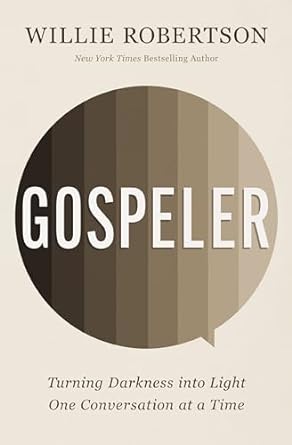
Gospeler: Turning Darkness into Light One Conversation at a Time Willie Robertson (author) A bold, heartfelt call to share the hope of Jesus through simple conversations that can change a life forever. Genres 224 pages, Paperback First published May 14, 2024 Our No Cap Review Plot Summary Gospeler is Willie Robertson’s personal and practical exploration…
-
Books | Business | Communication | Leadership | Management | NonFiction | Personal Development | Personal Growth | Psychology | Self Help
Never Split the Difference: Negotiating As If Your Life Depended on It
Never Split the Difference: Negotiating As If Your Life Depended on It Chris Voss (Author), Tahl Raz (co-author) Never Split the Difference is a bestselling negotiation book written by former FBI lead international hostage negotiator Chris Voss, with journalist Tahl Raz. Drawing from real high-stakes hostage scenarios, corporate negotiations, and cross-cultural conflict resolution, Voss presents…
-
The Hobbit
Middle-earth #0 The Hobbit, or There and Back Again J. R. R. Tolkein The Hobbit is a timeless fantasy adventure that follows Bilbo Baggins, a comfort-loving hobbit from the peaceful Shire, who is unexpectedly swept into a daring quest. When the wizard Gandalf arrives at his doorstep with thirteen determined dwarves led by Thorin Oakenshield,…


Explore Latest Movie Reviews
-
The King of Kings
The King of Kings The King of Kings | © 2025 Angel Studios Category None Light Moderate Heavy Profanity ✓ Violence & Gore ✓ Drug & Alcohol Use ✓ Explicit Content ✓ Spiritual Messaging ✓ 2025, 1h 41m Genres Director Seong-ho Jang Writers Seong-ho Jang, Rob Edwards Stars Oscar Isaac, Kenneth Branagh, Uma Thurman, Pierce…
-
Amazing Grace
Amazing Grace 2006, PG, 2h Genres Director Michael Apted Writers Steven Knight Stars Ioan Gruffudd, Albert Finney, Michael Gambon The idealist William Wilberforce maneuvers his way through Parliament in 19th-century England, endeavoring to end the British transatlantic slave trade. Amazing Grace: When Faith Fuels Revolution A Christian Review of the 2006 Biographical Drama 📊 Rating…
-
War Room
War Room 2015, PG, 2h Genres Director Alex Kendrick Writers Alex Kendrick, Stephen Kendrick Stars Priscilla C. Shirer, T.C. Stallings, Karen Abercrombie With her marriage on the brink of collapse, a woman discovers that she can only win the battle for her home by surrendering the fight to God in her “war room.” Is War…
-
Sound of Hope: The Story of Possum Trot
Sound of Hope: The Story of Possum Trot 2024, PG-13, 2h 10m Genres Director Joshua Weigel Writers Joshua Weigel, Rebekah Weigel Stars Nika King, Demetrius Grosse, Elizabeth Mitchell Inspired by a true story, a rural East Texas pastor and his wife ignite a movement within their small church to adopt 77 of the most difficult-to-place…
-
God’s Not Dead 2
God’s Not Dead 2 2016, PG, 2h Genres Director Harold Cronk Writers Chuck Konzelman, Cary Solomon Stars Melissa Joan Hart, Jesse Metcalfe, David A.R. White When a public high school teacher is sued for answering a student’s question about Jesus, she must fight in court to save her career and defend the right to speak…
-
God’s Not Dead
God’s Not Dead 2014, PG, 1h 53m Genres Director Harold Cronk Writers Hunter Dennis, Chuck Konzelman, Cary Solomon Stars Shane Harper, Kevin Sorbo, David A.R. White A devout Christian student must prove God’s existence in a series of debates against his atheist philosophy professor to save his grade and stand up for his faith. ☕Thus…