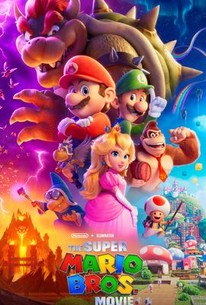
The Super Mario Bros. Movie
PG, 2023, 1h 32m
Directors
Aaron Horvath, Michael Jelenic, Pierre Leduc
Writer
Matthew Fogel
Stars
Chris Pratt, Anya Taylor-Joy, Charlie Day
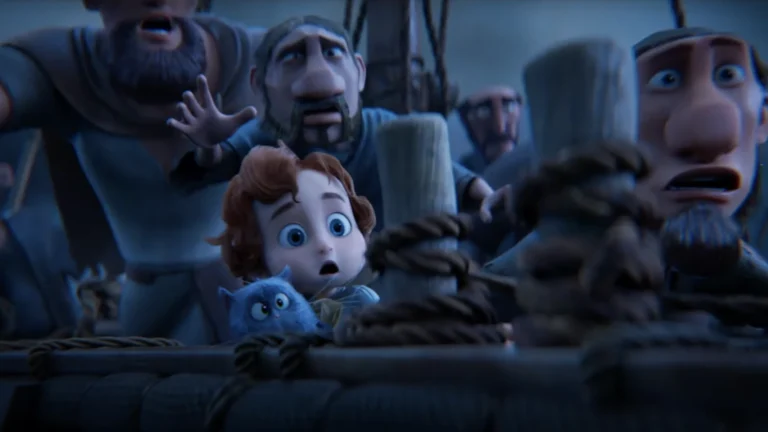
A struggling small-business owner is transported to a magical mushroom kingdom where he must master the power of the power-up to stop a love-struck turtle from destroying the world.
Our No Cap Review
☕Review on the Go
Plot Summary
Christian Critic Review: The Super Mario Bros. Movie
Quick Review
Yes or No: Should You Watch This?
Yes—with some caveats. This is a wholesome, well-crafted film that celebrates brotherhood, courage, and sacrifice. It’s appropriate for most families and genuinely enjoyable. However, don’t expect theological depth or Christian messaging; it’s fundamentally a secular humanistic adventure. The movie is also fine for ages 7+, though the darker imagery around Bowser might unsettle very sensitive young children.
The Super Mario Bros. Movie in a Nutshell
A cheerful, energetic animated adventure about two brothers who stumble into a magical kingdom and learn that their bond is stronger than any challenge—including a fire-breathing despot with a serious case of romantic entitlement. It’s fast-paced, visually vibrant, and surprisingly heartfelt.
Plot Synopsis
Mario and Luigi Mario are struggling plumbers in Brooklyn with big dreams but little success. After a disastrous first job, their father dismisses their ambitions. When a massive water main breaks downtown, the brothers see their shot at proving themselves. Instead of fixing a leak, they fall through a mysterious pipe and tumble into the Mushroom Kingdom—where Luigi lands in the clutches of the evil King Bowser, a tyrant plotting to conquer all kingdoms and force Princess Peach into marriage.
Mario, separated from his brother but driven by their brotherly bond, teams up with the spirited Princess Peach. Together they journey to seek an alliance with Donkey Kong’s jungle kingdom. The film builds toward a climactic battle where Mario and Luigi—reunited—must stop Bowser’s plans and save both the Mushroom Kingdom and their home world of Brooklyn.
Any Major Concerns Right off the Bat?
The film is clean overall, but here are the real watch-outs:
- Bowser’s toxic masculinity and entitlement: While this makes for compelling storytelling, parents might need to discuss why Bowser’s desire to possess Peach—regardless of her lack of interest—is morally wrong. The film doesn’t explicitly condemn this; it just shows that such behavior leads to destruction.
- Existential nihilism played for laughs: A cute star-shaped character makes darkly nihilistic statements (“The only hope is the sweet release of death”) for comedic effect. It’s brief and probably goes over kids’ heads, but worth noting.
- No moral framework beyond consequences: The film shows that good triumphs and evil fails, but doesn’t explore why goodness matters beyond practical success. There’s no higher moral authority or redemption story.
Content Warnings
Violence & Gore
Moderate cartoony action violence. Bowser breathes fire, melts castles, and threatens to kill characters multiple times (“Mario, you’re a dead man”). Dry Bones skeletons chase Luigi through forests. Mario and Donkey Kong have a tussle with barrels and throwing. Explosions, crashing vehicles, and destruction of property are frequent. One disturbing visual: a character is transformed into a skeleton with glowing eyes (played for comedic effect, but visually dark).
Most importantly: No blood, gore, or genuine injury is depicted. Everything is cartoony and consequence-free in appearance, mirroring the video games. Still, the threat level and collision-heavy action might be intense for kids under 7.
Drug & Alcohol Use
None whatsoever.
Profanity
Zero profanity. The dialogue includes mild name-calling: “stupid,” “idiot,” “lunatic,” “psycho,” “shut up,” and “nuts.” Nothing remotely crude or coarse.
Sexual or Romantic Content
Minimal. Bowser is clearly attracted to Princess Peach and wants to marry her. He practices his proposal by dressing another male character as Peach in a scene played entirely for laughs (not making a political statement, just silliness). Peach wears an off-shoulder gown showing cleavage and bare shoulders/back. There’s light flirting between Mario and Peach—she’s clearly taken with him, and he’s with her—but it’s entirely innocent. No kissing, no innuendo.
Other Concerns
- Magic/fantasy elements: Mushroom power-ups grant temporary abilities (growing larger, shrinking, gaining special suits). This is video-game logic, not witchcraft, and falls well within evangelical guidelines for fantasy media.
- Frightening imagery for very young children: Bowser’s volcanic lair is deliberately dark and foreboding. His glowing eyes and deep voice might spook kids under 6.
- Father-approval anxiety: The film shows Mario and Luigi anxious about their father’s disapproval, and later Donkey Kong experiencing similar father-approval issues. These aren’t harmful to explore, but they’re depicted as resolved through earthly success rather than spiritual wisdom—a missed opportunity for a Christian lens.
Verdict: Why or Why Not Watch This?
Watch it. The positives far outweigh the concerns. It’s a rare family film that celebrates loyalty, sacrifice, and unconditional love without preachiness. The animation is gorgeous, the humor lands for both kids and adults, and the core message—that we’re stronger together than apart—is genuinely valuable. The biggest “con” is that it’s not Christian, but that doesn’t make it un-Christian. It’s simply secular in its worldview, which is fine for entertainment.
Full Review
Director & Writers: Background, Beliefs & Worldview
Directors Aaron Horvath and Michael Jelenic cut their teeth on Teen Titans Go!, a show known for irreverent humor, pop-culture riffing, and surprising emotional depth beneath the goofiness. They’re showrunners who understand that animated comedy doesn’t have to be condescending to children.
Screenwriter Matthew Fogel had previously worked on Madagascar 3 and Minions, giving him experience in the comedic, high-energy animated-adventure space that Illumination dominates.
The real creative architect here, though, is Shigeru Miyamoto, the legendary Nintendo creator, who was heavily involved as co-producer to ensure the film didn’t become another 1993-style disaster. Miyamoto famously discussed the collaboration with Illumination’s Chris Meledandri, emphasizing that they wanted a film that honored the games while being cinematically engaging.
Their worldview, as reflected in the film: Humanistic and secular. Problems are solved through human courage, loyalty, and effort—not divine intervention. The film celebrates the power of familial and fraternal bonds as the ultimate force for good, which is touching but notably absent of any transcendent spiritual reality. There’s no mention of God, faith, prayer, or redemption through anything other than personal choice and teamwork. This isn’t surprising for a video-game adaptation, but it’s worth noting for Christians evaluating the film’s underlying philosophy.
The Core Message: How Biblical Is It?
The core message is not biblical, but it’s not un-biblical either.
The film’s central thesis is this: “Nothing can hurt us as long as we’re together.” Mario says this directly to Luigi, and it becomes the emotional through-line of the entire story. By the end, when Mario and Luigi obtain the Super Star (granting them invincibility), they do so together—and this unity is what allows them to defeat Bowser.
This echoes several biblical truths about unity and brotherhood:
- Ecclesiastes 4:9-12: “Two are better than one because they have a good return for their labor. If either of them falls down, one can help the other up… Though one may be overpowered, two can defend themselves. A cord of three strands is not quickly broken.”
- Psalm 133:1: “How good and pleasant it is when brothers dwell in unity!”
However, the film stops short of biblical unity. In Scripture, true unity flows from a shared love of Christ and submission to God’s authority. The brothers in Super Mario Bros. are united by blood, loyalty, and love—all beautiful things—but their unity is ultimately self-referential. They’re not pointing beyond themselves to something transcendent. They’re not united in Christ, which is the Christian understanding of the deepest possible brotherhood.
In other words: The film beautifully displays common grace—the goodness and beauty that God grants to all people, regardless of faith. Brotherhood, courage, and sacrifice are genuinely good things that God has wired into human nature. But the film lacks special grace—the redemptive work of Christ that transforms those good impulses into something holy and eternally significant.
A Christian watching this film might think: “Yes, I see the beauty of brotherly love here. And I’m reminded of how much deeper and more glorious that bond becomes when it’s rooted in our shared identity in Christ and our mutual submission to the Father.”
Themes & Messages of the Movie
1. Brotherhood and Loyalty (Primary Theme)
The beating heart of the film is Mario and Luigi’s relationship. Luigi is anxious, accident-prone, and prone to self-doubt. Mario is confident, encouraging, and absolutely unwavering in his belief in his brother. Luigi says: “He’s the best guy in the world.” Mario says: “Nothing can hurt us as long as we’re together.”
This isn’t toxic codependency—it’s healthy interdependence. Luigi needs Mario’s courage; Mario needs Luigi’s heart and loyalty. They’re incomplete without each other, and the film understands this beautifully. Luigi’s fear doesn’t make him weak; it makes him relatable and real. And Mario’s confidence isn’t arrogance; it’s rooted in his absolute trust in his brother.
Biblical resonance: This brings to mind the four friends in Mark 2:1-12 who carried their paralyzed friend to Jesus, demonstrating that friendship and loyalty are themselves redemptive acts. The disciples were often portrayed as a band of brothers (see John 13:34-35). Healthy brotherhood, as shown in this film, reflects something of God’s design for community.
2. Courage in the Face of Inadequacy
Mario and Luigi feel inadequate. They’re small plumbers from Brooklyn; they’re mocked and dismissed. When they enter the Mushroom Kingdom, Mario—already diminutive—feels even smaller. Yet he doesn’t let that stop him. He charges forward anyway.
Similarly, Peach is underestimated by many in her kingdom. But she takes decisive action, leading armies and standing alone against Bowser. The film is saying: Your circumstances don’t define your capacity for courage.
Christian angle: This reflects 2 Timothy 1:7: “For God has not given us a spirit of fear, but of power, love, and a sound mind.” The brothers aren’t motivated by faith in God, but they are displaying genuine courage—a virtue that flows from common grace. A Christian can watch this and be reminded that courage isn’t the absence of fear; it’s action despite fear.
3. Sacrifice for Others
Multiple characters willingly put themselves in danger for others:
- Luigi grabs a manacle cover to shield Mario from Bowser’s flames
- Peach stands alone before Bowser’s army to buy time for her people to escape
- Mario risks his life to save Donkey Kong from drowning, despite their earlier conflict
None of this is framed as religious or redemptive in a Christian sense. It’s simply portrayed as what good people do. Yet it’s a powerful reminder that sacrifice—laying down one’s interests for another’s—is a profound moral good.
Christian resonance: John 15:13 says, “Greater love has no one than this: to lay down one’s life for one’s friends.” The film displays this principle, even if it doesn’t connect it to Christ’s ultimate sacrifice. A mature Christian watching this might reflect: Here’s what sacrificial love looks like in a fallen world. How much more glorious is Christ’s sacrifice for us, done not out of human sentiment but out of divine love and justice?
4. Father-Son Relationships and Seeking Approval
Both Mario and Donkey Kong struggle with feeling unseen by their fathers. Mario’s dad dismisses his plumbing dreams as crazy. Donkey Kong feels his father sees him as just “someone who smashes things.”
By the film’s end, both fathers publicly praise their sons for their bravery and integrity. This is genuinely moving—there’s a palpable sense of relief and validation when Mario’s dad finally says, “I’m proud of you.”
However, and this is important: The film resolves this through earthly achievement, not spiritual transformation. The fathers aren’t convicted; they simply change their minds when confronted with external evidence of their sons’ worthiness.
Christian critique: In a truly Christian narrative, the resolution might look different. It might involve the fathers themselves experiencing humility, repentance, and forgiveness—not just a shift in opinion. Or it might explore how a son’s worth isn’t dependent on a father’s approval, because a child’s ultimate value comes from being created in God’s image and loved unconditionally by their heavenly Father (see 1 John 3:1). The film’s resolution is emotionally satisfying but spiritually shallow.
5. Toxic Masculinity (Bowser as a Foil)
Bowser is the film’s exploration of unhealthy masculinity. He’s driven by:
- Desire for power and control
- Possessiveness toward Peach (viewing her as a prize to be won)
- Entitlement (when rejected, he threatens mass destruction)
- Inability to process emotions other than anger
When Peach refuses to marry him, he explodes: “You ruined my wedding! I was finally gonna be happy! Now you will suffer!” His pain becomes everyone else’s problem.
In contrast, Mario displays a healthy masculinity: courageous but not aggressive, confident but not arrogant, strong but deeply emotional about his brother, willing to be vulnerable.
This is actually a subtle but important moral contrast that evangelical churches have been discussing for years. Toxic masculinity—the idea that men should suppress emotion, dominate others, and view relationships as conquests—is anti-Christian. Real Christian manhood (as discussed by figures like John Piper or Timothy Keller) involves servant leadership, emotional honesty, and sacrificial love. Mario embodies these qualities more closely than Bowser.
Iconic Scenes and How Biblical Are They?
Scene 1: Mario and Luigi Fall Into the Pipe (The Inciting Incident)
Mario and Luigi are pursuing their dream, trying to prove themselves. They fall into darkness, separated from each other, and wind up in an entirely foreign realm.
Spiritual resonance: This recalls the experience of spiritual disorientation—when life circumstances throw us into situations we don’t understand, when we feel separated from what’s familiar and safe. It’s not quite a parable of spiritual lostness (the brothers were already lost in their desperation to succeed), but it’s evocative. A Christian might reflect: Sometimes God allows us to be “separated” from our old selves and old ways, throwing us into new circumstances where we must trust and grow.
Scene 2: “Nothing Can Hurt Us as Long as We’re Together”
After being separated and captured, Luigi is terrified and doubting. Mario finds him and makes this declaration. Luigi’s fear doesn’t disappear, but his brother’s conviction anchors him.
Christian angle: This echoes Joshua 1:9: “Have I not commanded you? Be strong and courageous. Do not be afraid; do not be discouraged, for the Lord your God will be with you wherever you go.” The brothers don’t invoke God, but the principle—that we’re not alone, that we’re stronger together—is deeply biblical. In the Christian life, this finds its ultimate fulfillment in the assurance that Christ is with us and that we’re united to one another in His body, the Church.
Scene 3: Luigi Shields Mario from Bowser’s Fire
Luigi grabs a manhole cover and takes the brunt of Bowser’s flame attack to protect his brother. It’s a brief moment of genuine self-sacrifice.
Biblical parallel: This is reminiscent of 1 Thessalonians 5:11: “Therefore encourage one another and build each other up, just as in fact you are doing.” But more powerfully, it echoes the idea of laying down one’s life—not literally, but in the sense of putting another’s welfare above one’s own comfort and safety. This is what Philippians 2:3-4 calls us to: “Do nothing out of selfish ambition or vain conceit. Rather, in humility value others above yourselves, not looking to your own interests but each of you to the interests of the others.”
Scene 4: Peach Stands Alone Against Bowser’s Army
Peach positions herself between Bowser’s forces and her fleeing people, buying them time to escape. She’s vastly outnumbered and certain to be overwhelmed.
Resonance: This is a picture of sacrificial leadership. Whether the film intends it or not, it evokes John 10:11: “I am the good shepherd. The good shepherd lays down his life for the sheep.” Leadership that doesn’t sacrifice for those being led isn’t leadership—it’s tyranny. Bowser commands through fear; Peach leads through love.
Scene 5: Mario Saves Donkey Kong From Drowning
Despite their earlier antagonism, Mario jumps into danger to pull a drowning Donkey Kong to safety.
Biblical principle: Proverbs 24:11-12 speaks to rescuing those in danger: “Rescue those being led away to death; hold back those staggering toward slaughter. If you say, ‘But we knew nothing about this,’ does he who weighs the heart perceive it?”—or more simply, Proverbs 22:3 and the principle of common grace. Compassion for enemies and strangers in danger is part of God’s design for human decency.
Scene 6: Mario and Luigi Obtain the Super Star Together
In the climax, the brothers claim an invincible power source together. The camera lingers on their unity as they harness this power side-by-side.
Symbolic weight: In the film’s logic, power obtained together is greater than power obtained alone. This is presented as pure narrative satisfaction, but it touches on a profound truth: Ecclesiastes 4:9-10 speaks to this—two are better than one. There’s something almost sacramental here (in the loose sense), where an external object becomes a symbol of their spiritual/emotional unity.
Main Characters: Are They Positive or Negative Role Models?
Mario (Chris Pratt, voice)
Positive role model aspects:
- Unwavering loyalty to his brother (never doubts Luigi, even when separated)
- Courage in the face of adversity
- Humility (doesn’t resort to arrogance even when he gains power)
- Servant leadership (helps Peach because it’s right, not for personal gain)
- Emotional openness (isn’t afraid to show he cares deeply)
Cautions:
- His confidence can come across as stubborn (he’s usually right, but the film doesn’t explore what happens when he’s wrong)
- His worth is ultimately validated by external success and his father’s approval (spiritually incomplete resolution)
Overall verdict: An excellent role model for children and adults. He embodies healthy masculinity: strong but not domineering, courageous but not reckless, confident but not arrogant.
Luigi (Charlie Day, voice)
Positive aspects:
- Authentically anxious and fearful (not punished for this; it’s portrayed as real)
- Loyal to Mario despite his fear
- Willing to sacrifice for his brother
- His insecurity is relatable and human
Cautions:
- Portrays anxiety/self-doubt as something to overcome through an external “strong person” (Mario), rather than through developing internal coping mechanisms or faith
- His character growth is limited; by the end, he’s still anxious, just validated by Mario
Verdict: A realistic portrayal of an anxious person, but the film doesn’t explore deeper solutions to anxiety (faith, counseling, etc.). Still, he’s a sympathetic and positive character—it’s good that the film shows that anxiety doesn’t disqualify you from heroism.
Princess Peach (Anya Taylor-Joy)
Strengths:
- Takes initiative and agency (doesn’t wait to be rescued)
- Leads her people with courage and wisdom
- Kind and willing to trust Mario despite being a stranger
- Capable fighter and strategist
Slight concerns:
- Her character exists somewhat in relation to the brothers’ story; her own arc isn’t as deeply explored
- She’s portrayed as attractive and marriage-eligible, which is fine, but the film doesn’t spend much time on her personal goals beyond protecting her kingdom
Verdict: A solid, capable character. Not a perfect role model (she could have more agency over her own story), but definitely not a negative influence.
Bowser (Jack Black, voice)
Negative aspects:
- Entitlement and possessiveness
- Lack of respect for Peach’s autonomy or wishes
- Willingness to destroy kingdoms because his romantic advances were rejected
- Emotional immaturity (when things don’t go his way, he hurts others)
Surprisingly sympathetic aspects:
- Jack Black’s voice acting gives Bowser moments of genuine vulnerability
- The film hints that Bowser’s desire for Peach comes from genuine (if misguided) longing for connection
- He’s not a sadist; he’s a tyrant driven by insecurity
Verdict: An excellent antagonist and a cautionary example of what toxic masculinity looks like. He’s not sympathetic enough to be morally confusing, but human enough to be interesting. Children should understand that Bowser is wrong—not evil in a cartoonish way, but wrong in his belief that he deserves Peach’s love or that he can force intimacy. This is a good teaching moment for conversations about consent and entitlement.
Donkey Kong (Seth Rogen)
Positive:
- Powerful and capable
- Shares father-approval struggles with Mario, creating genuine camaraderie
- Willing to fight for the greater good
- Humorous without being a joke character
Minor caution:
- Portrayed as somewhat simple-minded initially, though this is softened as the film progresses
Verdict: A solid comic relief character with surprising depth. His arc parallels Mario’s, which strengthens the film’s themes.
Why Was This Movie Made?
Commercial motivation: Nintendo’s Shigeru Miyamoto has explained that the 1993 live-action Super Mario Bros. movie was a disaster, and Nintendo wanted to prove that video game properties could translate to film successfully. The success of Sonic the Hedgehog (2020) and Detective Pikachu (2019) showed there was an appetite for it.
Strategic partnership: Universal Pictures and Nintendo partnered to co-finance the film. Part of this was to capitalize on Nintendo IP for Universal theme parks (a Super Mario attraction opened at Universal Studios around the same time). This is pure corporate synergy—but it’s worth noting because it explains why the film is so safe. It’s not designed to challenge or provoke; it’s designed to be beloved by the widest possible audience.
Creative motivation: Director Aaron Horvath and Michael Jelenic had proven themselves capable of balancing humor and heart in Teen Titans Go!. They clearly wanted to make a film that honored the games while telling a coherent story with emotional stakes.
Cultural moment: Animated films aimed at families were having a strong moment (post-Frozen, post-Incredibles 2). The film tapped into nostalgia for millennials with children, while remaining accessible to younger kids who’d never played the games.
What Critics Are Saying
Plugged In (Focus on the Family) praised the film for its emphasis on brotherhood, sacrifice, and good conquering evil. They noted that while there’s cartoony violence, there’s nothing morally objectionable. The main caution was the darker imagery around Bowser, which could frighten young children.
Movieguide gave it a strong endorsement, highlighting the “bond of brotherhood overcomes fear” message and calling it “an exciting, funny, well-made animated adventure” with “a strong moral worldview.”
Geeks Under Grace appreciated the visual beauty and nostalgic charm but critiqued the film for lacking deeper character development and thematic complexity. They noted that while the film mentions brotherhood and bravery, it doesn’t fully explore why these things matter or show genuine character growth.
Secular critics were generally positive. The film was praised for respecting its source material while being cinematically engaging. Some noted it was “safe” to the point of blandness (lacking originality), but no one called it offensive or problematic.
What Audiences Are Saying
On Reddit and parent forums: Overwhelmingly positive. Parents report that their children love it, and they themselves were entertained. Common praise includes:
- “My 6-year-old watched it three times in theaters”
- “Funny for adults, engaging for kids”
- “Finally, a video game movie that doesn’t insult the source material”
Concerns mentioned:
- Some parents found Bowser’s scenes too intense for very young children (under 5)
- One parent noted the nihilistic Luma character’s dark statements were jarring (though it went over their kid’s head)
- A few mentioned it was “too focused on Mario and not enough on Peach,” though most disagreed
Gen-X and Millennial gamers: Deeply nostalgic and appreciative. They felt the film honored the games they love without being slavishly devoted to them.
Recommended Scenes for Biblical Reflection
For Sunday school or youth group:
- “Nothing Can Hurt Us as Long as We’re Together” – Discuss what true community and unity look like in the Church. How is our unity in Christ deeper than Mario and Luigi’s brotherly bond? Ephesians 4:4-6
- Luigi’s Sacrifice (The Manhole Cover Scene) – Talk about putting others’ needs before our own. How do we practice this in daily life? What’s the difference between healthy self-sacrifice and codependency? Philippians 2:3-4
- Peach Standing Alone – Discuss courage and leadership. Why is it important for leaders to be willing to sacrifice for those they lead? How does Jesus model this? John 10:11
- Bowser’s Entitlement – Have an honest conversation about toxic masculinity, consent, and respecting others’ autonomy. Why does Bowser’s belief that he “deserves” Peach’s love lead to destruction? What does the Bible say about respecting others’ choices? Romans 12:10, 1 Peter 3:7
- Father Approval Moments – Explore how Mario and Donkey Kong both seek their fathers’ approval. How does this compare to seeking God’s approval through Christ? What does it mean to find your identity in God rather than in human achievement? 1 John 3:1
- The Super Star Moment – Discuss the power of unity. Why is the film showing that the brothers are stronger together? How does this relate to the body of Christ? 1 Corinthians 12:12-27
Similar Movies to The Super Mario Bros. Movie
- Sonic the Hedgehog (2020) – Another video game adaptation with similar themes of friendship and heroism. Slightly less polished but with similar messaging.
- The LEGO Movie (2014) – A video game/toy property adaptation that somehow manages to be both entertaining and thematically rich. Great example of what’s possible in this genre.
- How to Train Your Dragon (2010) – An animated adventure centered on father-son relationships and learning to be courageous. More emotionally sophisticated than the Mario film.
- Encanto (2021) – A family-centered animated film exploring family dynamics, worth, and finding your place. Similar themes of family bonds but with more depth.
- The LEGO Batman Movie (2017) – A comedic animated film about found family and learning to work with others. Similar tone and humor.
- Toy Story (1995) – The gold standard of friendship-centered animated films. If you love Mario’s emphasis on brotherhood, Toy Story’s Woody-Buzz dynamic is the spiritual ancestor.
Fun Facts
“Mindful” production: Chris Meledandri, CEO of Illumination, and Shigeru Miyamoto have both expressed pride in the partnership and are already planning future collaborations. This marks a major shift in how video game properties are adapted.
Box office behemoth: The Super Mario Bros. Movie is the highest-grossing Illumination film of all time, earning $1.36 billion globally—surpassing even Minions. Its net profit is estimated at $559 million.
Shigeru Miyamoto’s fingerprints: The original Mario creator was deeply involved. He insisted on character faithfulness while also pushing for cinematic storytelling. According to interviews, his “rewarding collaboration” with Illumination is already leading to discussions about future Nintendo film adaptations.
Japanese script independence: Nintendo created an independent Japanese-language script rather than translating the English version directly. This was done to ensure cultural nuances made sense for Japanese audiences—a level of care that shows in the final product.
Voice acting stars: Chris Pratt’s Mario voice has been the subject of light mockery from some quarters (“Why doesn’t he sound like Mario?”), but Illumination defended the choice as being more accessible to film audiences. Jack Black’s Bowser stole scenes and became an internet meme (“Peaches,” anyone?).
Easter timing: The film was released on April 5, 2023—just before Easter. Whether intentional or not, the themes of sacrifice and redemption through teamwork resonate with the Christian calendar, even if the film itself isn’t explicitly Christian.
Explore Latest Book Reviews
-
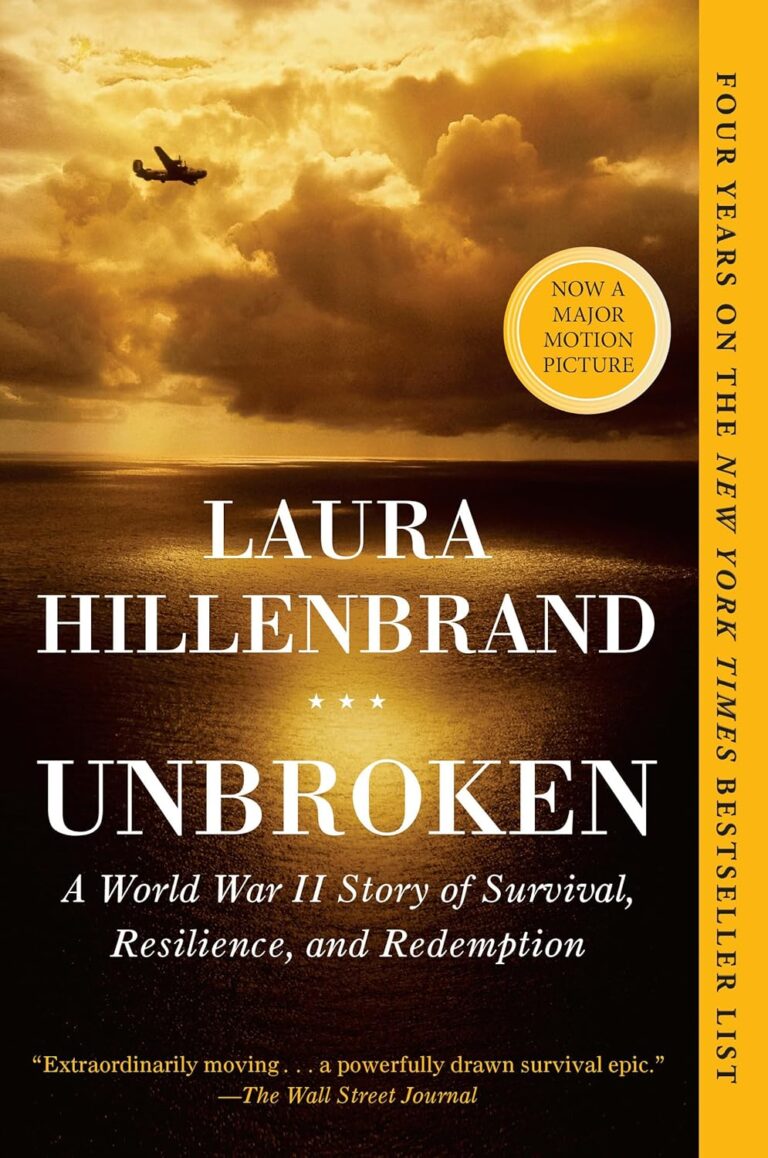
Unbroken: A World War II Story of Survival, Resilience, and Redemption
Unbroken: A World War II Story of Survival, Resilience, and Redemption 2010, Pages: 528 Genres Writer Laura Hillenbrand Characters Louie Zamperini, Russell Allen Phillips, Pete Zamperini An Olympic runner turned WWII bombardier survives a plane crash, 47 days at sea, and brutal torture as a POW, only to face his hardest battle at home: forgiving…
-
Silence
Silence 1966, Reading Time: 8-10h, Pages: 300 Genres Writer Shūsaku Endō Characters Sebastião Rodrigues, Cristóvão Ferreira, Kichijiro, Tokugawa Inoue Two 17th-century Jesuit priests journey to a Japan hostile to their faith to locate their missing mentor, only to face a test that questions the very nature of God’s presence in suffering. ☕Thus says AI: 89/100…
-
Apocalyptic | Books | Christian Fiction | Christianity | Dystopian | Fantasy | Fiction | Religion | Science Fiction | Suspense/Thriller
Left Behind: A Novel of the Earth’s Last Days
Left Behind: A Novel of the Earth’s Last Days 1995, 5h 21m Genres Authors Jerry B. Jenkins, Larry LaHaye “In the blink of an eye, millions vanished—now, the real nightmare begins for those who stayed.” ☕Our No Cap Review Left Behind in a Nutshell Left Behind is a 1995 novel by evangelical pastor Tim LaHaye and…
-
Books | Christian | Christian Living | Christian Non Fiction | Christianity | Evangelism | Faith | NonFiction | Religion
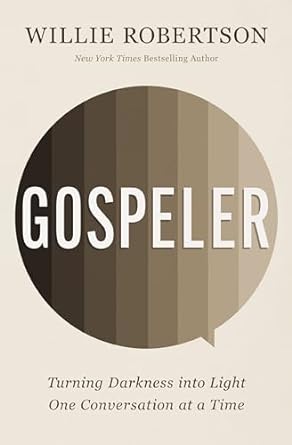
Gospeler
Gospeler: Turning Darkness into Light One Conversation at a Time Willie Robertson (author) A bold, heartfelt call to share the hope of Jesus through simple conversations that can change a life forever. Genres 224 pages, Paperback First published May 14, 2024 Our No Cap Review Plot Summary Gospeler is Willie Robertson’s personal and practical exploration…
-
Books | Business | Communication | Leadership | Management | NonFiction | Personal Development | Personal Growth | Psychology | Self Help
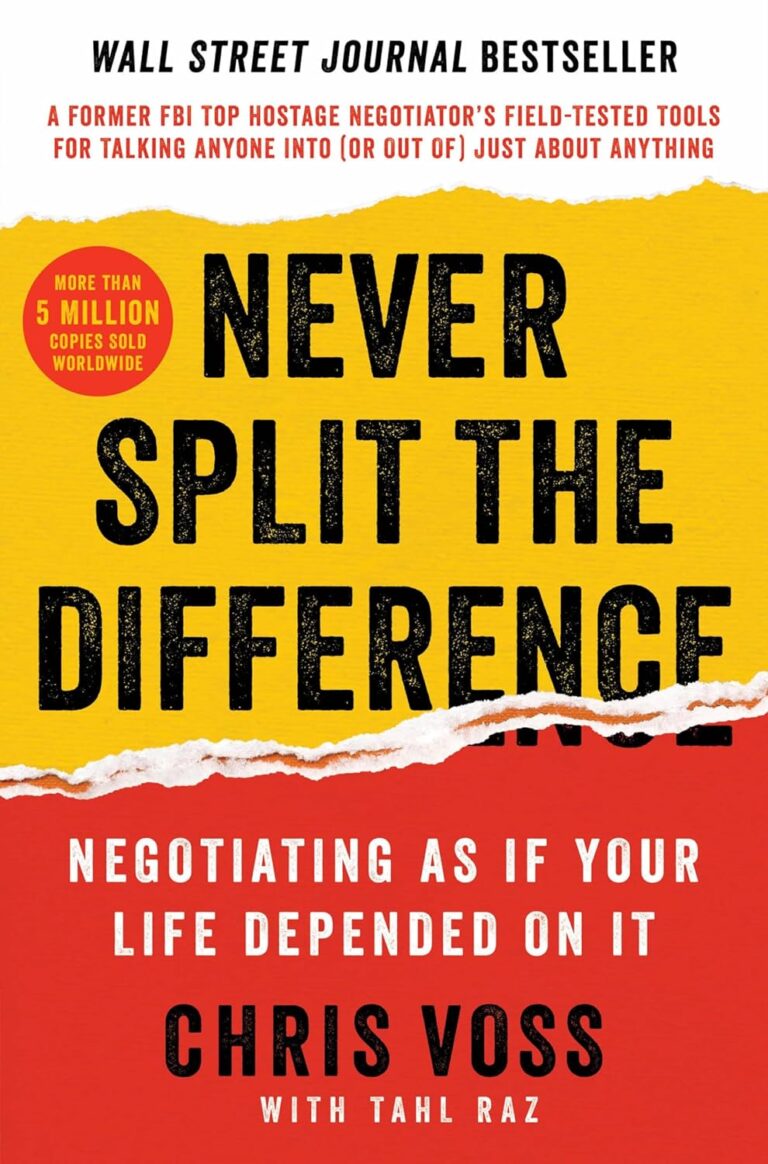
Never Split the Difference: Negotiating As If Your Life Depended on It
Never Split the Difference: Negotiating As If Your Life Depended on It Chris Voss (Author), Tahl Raz (co-author) Never Split the Difference is a bestselling negotiation book written by former FBI lead international hostage negotiator Chris Voss, with journalist Tahl Raz. Drawing from real high-stakes hostage scenarios, corporate negotiations, and cross-cultural conflict resolution, Voss presents…
-
The Hobbit
Middle-earth #0 The Hobbit, or There and Back Again J. R. R. Tolkein The Hobbit is a timeless fantasy adventure that follows Bilbo Baggins, a comfort-loving hobbit from the peaceful Shire, who is unexpectedly swept into a daring quest. When the wizard Gandalf arrives at his doorstep with thirteen determined dwarves led by Thorin Oakenshield,…


Explore Latest Movie Reviews
-
The King of Kings
The King of Kings The King of Kings | © 2025 Angel Studios Category None Light Moderate Heavy Profanity ✓ Violence & Gore ✓ Drug & Alcohol Use ✓ Explicit Content ✓ Spiritual Messaging ✓ 2025, 1h 41m Genres Director Seong-ho Jang Writers Seong-ho Jang, Rob Edwards Stars Oscar Isaac, Kenneth Branagh, Uma Thurman, Pierce…
-
Amazing Grace
Amazing Grace 2006, PG, 2h Genres Director Michael Apted Writers Steven Knight Stars Ioan Gruffudd, Albert Finney, Michael Gambon The idealist William Wilberforce maneuvers his way through Parliament in 19th-century England, endeavoring to end the British transatlantic slave trade. Amazing Grace: When Faith Fuels Revolution A Christian Review of the 2006 Biographical Drama 📊 Rating…
-
War Room
War Room 2015, PG, 2h Genres Director Alex Kendrick Writers Alex Kendrick, Stephen Kendrick Stars Priscilla C. Shirer, T.C. Stallings, Karen Abercrombie With her marriage on the brink of collapse, a woman discovers that she can only win the battle for her home by surrendering the fight to God in her “war room.” Is War…
-
Sound of Hope: The Story of Possum Trot
Sound of Hope: The Story of Possum Trot 2024, PG-13, 2h 10m Genres Director Joshua Weigel Writers Joshua Weigel, Rebekah Weigel Stars Nika King, Demetrius Grosse, Elizabeth Mitchell Inspired by a true story, a rural East Texas pastor and his wife ignite a movement within their small church to adopt 77 of the most difficult-to-place…
-
God’s Not Dead 2
God’s Not Dead 2 2016, PG, 2h Genres Director Harold Cronk Writers Chuck Konzelman, Cary Solomon Stars Melissa Joan Hart, Jesse Metcalfe, David A.R. White When a public high school teacher is sued for answering a student’s question about Jesus, she must fight in court to save her career and defend the right to speak…
-
God’s Not Dead
God’s Not Dead 2014, PG, 1h 53m Genres Director Harold Cronk Writers Hunter Dennis, Chuck Konzelman, Cary Solomon Stars Shane Harper, Kevin Sorbo, David A.R. White A devout Christian student must prove God’s existence in a series of debates against his atheist philosophy professor to save his grade and stand up for his faith. ☕Thus…