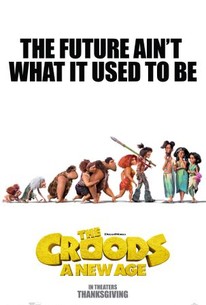
The Croods: A New Age
2020, PG, 1h 35m
Genres
Director
Joel Crawford
Writers
Kevin Hageman, Dan Hageman, Paul Fisher
Stars
Nicolas Cage, Emma Stone, Ryan Reynolds
The first family is back to prove that evolution is a work in progress.
☕Our No Cap Review
The Croods: A New Age in a Nutshell
Director Joel Crawford’s prehistoric adventure sequel is a vibrant, heartwarming romp about two vastly different families learning to coexist. The film champions family unity and commitment while gently mocking both overprotection and cold isolation. At its core, A New Age explores what happens when tradition collides with progress—and discovers that the answer isn’t choosing one over the other, but embracing both with grace.
Plot Synopsis
The Croods—a boisterous, tactile cave family—continue their journey toward “tomorrow,” the promised safe haven they seek with the help of Guy, a modern-thinking young man romantically involved with Grug’s rebellious daughter, Eep. Their quest leads them to an oasis guarded by a towering wall: the domain of the Bettermans, an “evolved” family of technologically advanced Neanderthals who were once Guy’s neighbors. While the Croods celebrate their discovery of abundant food, Grug impulsively eats the forbidden bananas—a tempting fruit the Bettermans keep as bait to ward off aggressive Punch Monkeys. His transgression unleashes catastrophic consequences. Forced to work together against the beasts, both families realize their prejudices blinded them to their shared humanity. The film concludes with reconciliation: the Bettermans invite the Croods to stay as neighbors, and Grug grants his blessing for Eep and Guy to begin their own household together.
Themes & Underlying Messages
Family as God’s Foundation
The film’s beating heart is the belief that family—imperfect, messy, and bound by blood—is humanity’s greatest strength. This resonates profoundly with Scripture. Malachi 4:6 speaks of the importance of fathers and children turning their hearts toward one another: “He will turn the hearts of the fathers to their children, and the hearts of the children to their fathers.” Grug embodies this biblical imperative throughout the film. Though his methods are flawed—keeping his family isolated in fear—his motivation stems from legitimate paternal love. The film doesn’t mock Grug’s desire to protect; rather, it gently shows that love without trust in something greater becomes suffocating. This mirrors the Christian understanding that parental protection must ultimately yield to a child’s need to grow, face challenges, and develop their own faith. When Grug finally releases Eep to build her own life with Guy, he’s not abandoning his role as father; he’s fulfilling it with maturity.
The Leave and Cleave Principle
Guy’s proposal to Eep—to leave the pack and form their own—invokes one of Scripture’s most foundational passages. Genesis 2:24 establishes the principle: “For this reason a man will leave his father and mother and be united to his wife, and they will become one flesh.” Though prehistoric, Eep and Guy’s commitment reflects God’s design for covenant marriage. The film treats this seriously. Guy doesn’t flip his decision when tempted by the Bettermans’ comforts; he wrestles internally, ultimately recognizing that his true “tomorrow” is not a place but a person. By film’s end, Grug approves their arrangement to share one of the Bettermans’ bedrooms—a quiet endorsement of their commitment. While we don’t witness a ceremonial wedding (limitations of a PG animated film), the narrative arc affirms what Ephesians teaches: committed, covenantal love between man and woman is good and honorable.
Repentance and Reconciliation
A standout scene involves Grug eating the forbidden bananas and confessing his transgression to Phil, the Betterman patriarch. Both men admit their failures as fathers: Grug for being overprotective and controlling, Phil for being emotionally distant. Their mutual repentance—not self-flagellation, but honest acknowledgment of sin—mirrors the biblical posture described in 1 John 1:9: “If we confess our sins, he is faithful and just and will forgive us our sins and purify us from all unrighteousness.” What’s particularly poignant is Grug’s confession immediately preceding their forced collaboration to rescue their families. This sequence illustrates a biblical truth: genuine repentance often precedes reconciliation and unified action.
Common Grace in Innovation
The Bettermans’ technological sophistication—their tools, their agriculture, their orderly compound—represents what theologians call common grace: God’s unmerited favor extended to all humanity, believer and unbeliever alike. Reformed theologian John Calvin observed that human reason and ingenuity, even outside saving faith, are “clothed and ornamented with God’s excellent gifts.” Grug’s initial contempt for Betterman innovation gradually gives way to respect. The film doesn’t suggest that the Croods’ primitive ways are inherently superior, nor that civilization equals superiority; rather, it affirms that God grants wisdom and skill across all cultures. This aligns with Scripture’s teaching that every good gift comes from God, and that human flourishing often requires combining strength with intelligence, tradition with innovation.
Unity and Patience in Diversity
Ephesians 4:2-3 calls believers to walk “with all humility and gentleness, with patience, bearing with one another in love.” The film demonstrates this virtue through the Bettermans’ gradual shift from superiority to acceptance. Though their initial condescension is portrayed comically, the film doesn’t let them—or Grug—off the hook. Both families must “bear with one another,” embodying the patient love Paul describes. When Eep befriends Down in an instant bond of sisterhood, the film celebrates what unity looks like when prejudice is set aside. Eep even takes Down outside the Betterman walls to experience the real world—a sisterly act of liberation.
The Dangers of Isolation
Phil’s “mancave,” where he hides from his family in pursuit of personal peace, embodies a subtle spiritual danger. While the film plays it for laughs—Grug’s bewilderment at the concept is hilarious—the message runs deeper: isolation as an escape from relational responsibility is not freedom but a trap. Grug’s visceral rejection of this concept (“I’m gonna be with Ugga!”) unwittingly prophesies Christian truth. Hebrews 10:24-25 warns against forsaking “the assembling of ourselves together.” Community—messy, demanding, sometimes frustrating—is the arena where God shapes us into His image. The Croods’ physical togetherness, their literal sleeping in a pile, may seem primitive, but the film subtly affirms that human beings need physical presence and vulnerability, not digital or emotional distance.
Motherhood and Female Strength
Ugga, Eep’s mother, deserves special mention. Though less developed than Grug, she represents steadiness, wisdom, and the feminine strength that balances masculine protection. Gran, the grandmother character (voiced by the late Cloris Leachman), is portrayed as a formidable Thunder Sister warrior in her youth—subverting the notion that older women are weak or irrelevant. When Eep and Down band together against the male-dominated world, they’re not rejecting family or tradition but expanding beyond limiting stereotypes. This aligns with biblical women’s strength: consider Proverbs 31’s portrait of the capable woman, or the bold heroines of Scripture (Deborah, Ruth, Esther) who exercised agency within covenantal frameworks.
Main Characters—Positive or Negative Role Models?
| Character | Voice Actor | Role Model Assessment | Reasoning |
|---|---|---|---|
| Grug | Nicolas Cage | Flawed but Ultimately Positive | Grug’s overprotection stems from genuine paternal love, not malice. His journey from controlling fear-monger to trusting father who blesses his daughter’s independence models biblical fatherhood’s most crucial lesson: Ephesians 6:4 teaches fathers to “bring up children in the training and instruction of the Lord,” not in paralyzing fear. His willingness to repent and change makes him aspirational. However, his overprotection itself is cautionary—a reminder that even good intentions can strangle growth if not tempered by trust. |
| Eep | Emma Stone | Positive with Nuance | Eep’s desire to leave the cave and explore embodies healthy individuation, a prerequisite for the biblical “leave and cleave” of Genesis 2:24. She respects her parents while gently resisting their control. Her love for Guy is genuine and committed, not frivolous. Her friendship with Down shows emotional maturity and the capacity to extend grace across cultural divides. The primary caution: her youthful impulsiveness occasionally manifests in rule-breaking, though she learns consequences. Overall, a strong model of growing autonomy rooted in family bonds. |
| Guy | Ryan Reynolds | Positive | Guy embodies forward-thinking hope without arrogance. His mantra, “follow the light to tomorrow,” suggests trust in a destiny beyond present circumstances—a metaphor for faith. He’s devoted to Eep, unswayed by the Bettermans’ attempts to separate them. His patience with Grug’s suspicion and his willingness to work alongside both families demonstrate humility and unity. He represents the principle of seeking an “upgrade” in life—moving from survival to thriving—but only within the bounds of covenant commitment to Eep. |
| Phil Betterman | Peter Dinklage | Redeemable but Cautionary | Phil’s technological advancement masks emotional bankruptcy. His obsession with “better” living and subtle disdain for the Croods reflects a spiritual danger: the belief that human achievement and polish can substitute for genuine connection. His mancave escapism is presented as pathetic. However, his repentance alongside Grug is sincere, and his willingness to invite the Croods into his home permanently suggests real transformation. He serves as a cautionary tale of how prosperity and control can hollow out the soul if not tethered to relational values. |
| Hope Betterman | Leslie Mann | Positive with Growth | Hope begins as a snob, viewing the Croods as beneath the Bettermans. Yet she’s portrayed as capable and eventually warm. Her protection of Down mirrors Grug’s of Eep—a parallel that humanizes her. By film’s end, she accepts the Croods as genuine family. She represents how pride and class consciousness can be overcome through shared struggle and exposure to others’ humanity. |
| Down | Kelly Marie Tran | Positive | Down is sheltered but kind-hearted. Her instant friendship with Eep, her willingness to break rules, and her appreciation for Eep’s “scars” (literal and metaphorical) show openness to growth. She’s a gentle counterbalance to Eep’s wildness, yet both learn from each other. |
| Ugga | Catherine Keener | Positive | Ugga is steady, wise, and ultimately supportive. She loves Grug but doesn’t enable his fear-driven control. She nurtures Eep while respecting her autonomy. She’s the moral center of the Crood family, embodying Proverbs 31’s capable woman. |
| Gran | Cloris Leachman | Comedic but Strong | Gran provides comic relief, yet her backstory as a warrior woman adds depth. She’s not a burden but a link to ancestral strength. |
Content Warnings
Violence & Gore
The film is rated PG for “peril, action, and rude humor.” Violence is entirely cartoonish and slapstick. Grug’s family fights off prehistoric creatures—wolf-spiders, land sharks, and punch monkeys—but with no graphic injury or death. A running gag involves characters being poked in the eye by sticks, played for physical comedy. Eep and Down break rules and return “injured” (Eep with bruises, Down with a swollen hand from a bee sting), but these are played for laughs, not pathos. The film’s peril is genuine—families do face mortal danger—but the tone is adventure-movie silly, never genuinely frightening. Verdict: Appropriate for ages 6+, though sensitive children may find the chaos intense.
Drug & Alcohol Use
None. There is one scene where Down is stung by a prehistoric bee and the venom intoxicates her, causing her to stagger and act disoriented. However, it’s clearly portrayed as an allergic reaction, not a choice to consume mind-altering substances. The film doesn’t glorify intoxication; rather, it humorously shows Down’s inexperience with physical danger. Verdict: No genuine drug or alcohol content.
Profanity
The MPAA rating specifies no profanity. There are minor exclamations (“What the heck?”, “Oh my gosh!”, someone is called a “twit”), but nothing crude. One scene shows Hope (the Betterman mother) appearing to curse, but her words are deliberately obscured by ice glaziers sliding up—a clever joke that demonstrates the film’s self-awareness about maintaining a family-friendly atmosphere. Verdict: Completely clean.
Romantic or Explicit Content
Eep and Guy share a few kisses, always chaste and portrayed as the natural affection of committed partners. Eep and Guy discuss marriage and starting their own “pack,” and by film’s end, they share a bedroom (platonic implication given the PG rating). Several characters appear in minimal clothing: Gran briefly reveals herself in bra and underwear-like garments; Grug and Phil are shown in a steam-filled mancave wearing only loincloths (though Grug’s fur makes him look fully clothed). Some female characters have visible cleavage due to their clothing style. Nothing is suggestive or gratuitous; it’s consistent with the prehistoric setting and the film’s comedic tone. Verdict: Age-appropriate; content is not sexualized.
Verdict: Reasons For and Against
Reasons to Read The Croods: A New Age
- Biblical Themes of Family, Sacrifice, and Redemption. The film’s affirmation of family unity, commitment in marriage, and the capacity for repentance and reconciliation speaks directly to Christian values. Parents and teens will find their own dynamics reflected and redeemed in Grug and Eep’s journey.
- Humor That Works Across Ages. Directed by Joel Crawford, who emphasized “celebration and joy” in his approach, the film delivers genuine laughs without crude humor. Nicolas Cage’s voice acting is inspired—unpredictable and deeply human.
- Positive Treatment of Female Characters. Eep, Down, Ugga, and Gran are neither damsels nor token fighters; they’re full-bodied characters with agency, humor, and heart. Their friendship transcends the tired “catty girl” trope.
- Celebration of Diversity and Growth. The film’s message that different families and cultures can coexist, learn, and strengthen each other is timely and biblical. Ephesians 4:2-3 calls believers to maintain “unity of the Spirit in the bond of peace”—precisely what the Croods and Bettermans eventually achieve.
- Excellent Animation and World-Building. The prehistoric landscapes are vibrant, imaginative, and gorgeously rendered. The film is visually stunning without being overstimulating.
Reasons to Avoid or Approach with Caution
- Evolutionary Worldview (Implicit, Not Explicit). The film assumes a naturalistic prehistoric setting and Neanderthal/Cro-Magnon distinctions rooted in evolutionary theory. However, this is never discussed or emphasized. The “evolution” is merely backdrop; the film’s real interest is in human nature and family dynamics. Conservative Christian viewers may simply choose to reframe the setting mentally—it’s hardly intrusive.
- Grug’s Initial Fear-Based Parenting Could Be Misread. While the film ultimately critiques overprotection, some viewers might initially identify with Grug’s isolationist approach and miss the film’s gentle rebuke. Parents should be prepared to discuss why fear-driven control, though motivated by love, ultimately fails. The film teaches this implicitly; you may need to make it explicit.
- Mild Scatological Humor. The film includes several toilet and bodily humor jokes—not crude, but present. Plugged In noted “a handful of toilet jokes.” Families sensitive to such humor should know this element exists, though it’s minimal.
- Screen Addiction Metaphor Might Fly Over Some Heads. Thunk’s obsession with a “window”—a transparent pane that frames the world—is a clever metaphor for screen addiction, but younger viewers may not grasp it. Parents might explain: “Thunk is so focused on watching life through that window, he forgets to actually live it.”
Explore Latest Book Reviews
-
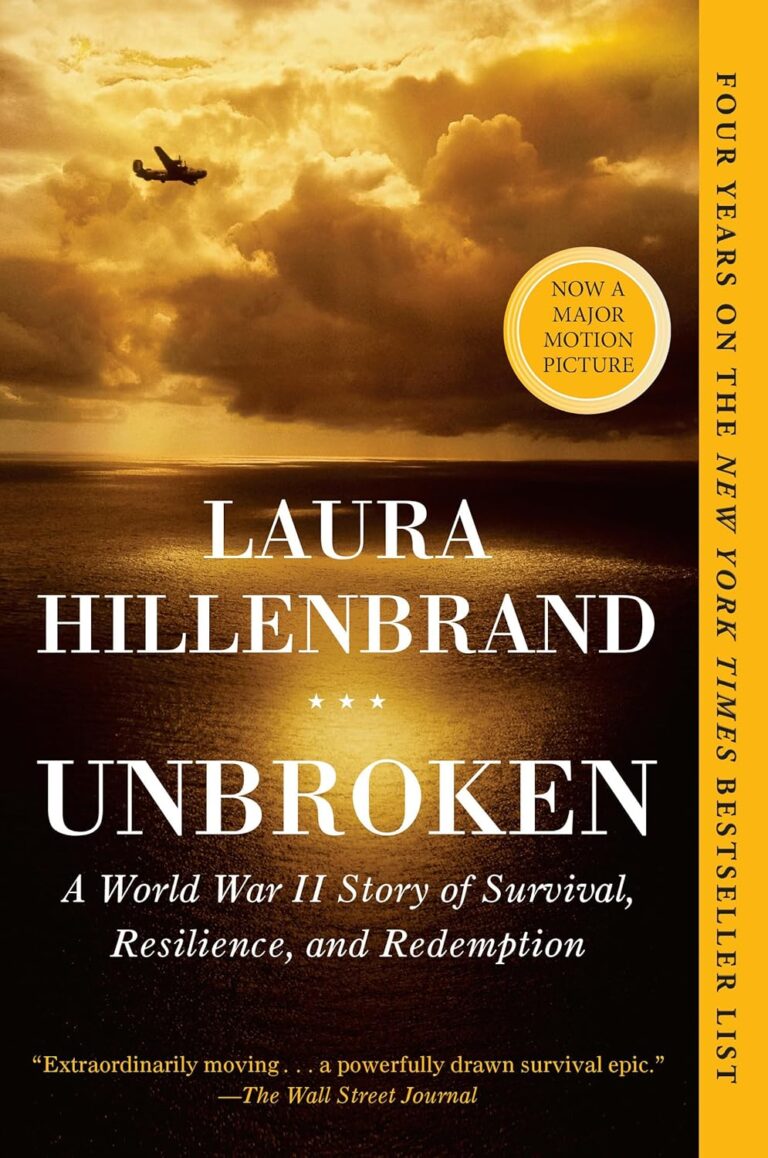
Unbroken: A World War II Story of Survival, Resilience, and Redemption
Unbroken: A World War II Story of Survival, Resilience, and Redemption 2010, Pages: 528 Genres Writer Laura Hillenbrand Characters Louie Zamperini, Russell Allen Phillips, Pete Zamperini An Olympic runner turned WWII bombardier survives a plane crash, 47 days at sea, and brutal torture as a POW, only to face his hardest battle at home: forgiving…
-
Silence
Silence 1966, Reading Time: 8-10h, Pages: 300 Genres Writer Shūsaku Endō Characters Sebastião Rodrigues, Cristóvão Ferreira, Kichijiro, Tokugawa Inoue Two 17th-century Jesuit priests journey to a Japan hostile to their faith to locate their missing mentor, only to face a test that questions the very nature of God’s presence in suffering. ☕Thus says AI: 89/100…
-
Apocalyptic | Books | Christian Fiction | Christianity | Dystopian | Fantasy | Fiction | Religion | Science Fiction | Suspense/Thriller
Left Behind: A Novel of the Earth’s Last Days
Left Behind: A Novel of the Earth’s Last Days 1995, 5h 21m Genres Authors Jerry B. Jenkins, Larry LaHaye “In the blink of an eye, millions vanished—now, the real nightmare begins for those who stayed.” ☕Our No Cap Review Left Behind in a Nutshell Left Behind is a 1995 novel by evangelical pastor Tim LaHaye and…
-
Books | Christian | Christian Living | Christian Non Fiction | Christianity | Evangelism | Faith | NonFiction | Religion
Gospeler
Gospeler: Turning Darkness into Light One Conversation at a Time Willie Robertson (author) A bold, heartfelt call to share the hope of Jesus through simple conversations that can change a life forever. Genres 224 pages, Paperback First published May 14, 2024 Our No Cap Review Plot Summary Gospeler is Willie Robertson’s personal and practical exploration…
-
Books | Business | Communication | Leadership | Management | NonFiction | Personal Development | Personal Growth | Psychology | Self Help
Never Split the Difference: Negotiating As If Your Life Depended on It
Never Split the Difference: Negotiating As If Your Life Depended on It Chris Voss (Author), Tahl Raz (co-author) Never Split the Difference is a bestselling negotiation book written by former FBI lead international hostage negotiator Chris Voss, with journalist Tahl Raz. Drawing from real high-stakes hostage scenarios, corporate negotiations, and cross-cultural conflict resolution, Voss presents…
-
The Hobbit
Middle-earth #0 The Hobbit, or There and Back Again J. R. R. Tolkein The Hobbit is a timeless fantasy adventure that follows Bilbo Baggins, a comfort-loving hobbit from the peaceful Shire, who is unexpectedly swept into a daring quest. When the wizard Gandalf arrives at his doorstep with thirteen determined dwarves led by Thorin Oakenshield,…

Explore Latest Movie Reviews
-
The King of Kings
The King of Kings The King of Kings | © 2025 Angel Studios Category None Light Moderate Heavy Profanity ✓ Violence & Gore ✓ Drug & Alcohol Use ✓ Explicit Content ✓ Spiritual Messaging ✓ 2025, 1h 41m Genres Director Seong-ho Jang Writers Seong-ho Jang, Rob Edwards Stars Oscar Isaac, Kenneth Branagh, Uma Thurman, Pierce…
-
Amazing Grace
Amazing Grace 2006, PG, 2h Genres Director Michael Apted Writers Steven Knight Stars Ioan Gruffudd, Albert Finney, Michael Gambon The idealist William Wilberforce maneuvers his way through Parliament in 19th-century England, endeavoring to end the British transatlantic slave trade. Amazing Grace: When Faith Fuels Revolution A Christian Review of the 2006 Biographical Drama 📊 Rating…
-
War Room
War Room 2015, PG, 2h Genres Director Alex Kendrick Writers Alex Kendrick, Stephen Kendrick Stars Priscilla C. Shirer, T.C. Stallings, Karen Abercrombie With her marriage on the brink of collapse, a woman discovers that she can only win the battle for her home by surrendering the fight to God in her “war room.” Is War…
-
Sound of Hope: The Story of Possum Trot
Sound of Hope: The Story of Possum Trot 2024, PG-13, 2h 10m Genres Director Joshua Weigel Writers Joshua Weigel, Rebekah Weigel Stars Nika King, Demetrius Grosse, Elizabeth Mitchell Inspired by a true story, a rural East Texas pastor and his wife ignite a movement within their small church to adopt 77 of the most difficult-to-place…
-
God’s Not Dead 2
God’s Not Dead 2 2016, PG, 2h Genres Director Harold Cronk Writers Chuck Konzelman, Cary Solomon Stars Melissa Joan Hart, Jesse Metcalfe, David A.R. White When a public high school teacher is sued for answering a student’s question about Jesus, she must fight in court to save her career and defend the right to speak…
-
God’s Not Dead
God’s Not Dead 2014, PG, 1h 53m Genres Director Harold Cronk Writers Hunter Dennis, Chuck Konzelman, Cary Solomon Stars Shane Harper, Kevin Sorbo, David A.R. White A devout Christian student must prove God’s existence in a series of debates against his atheist philosophy professor to save his grade and stand up for his faith. ☕Thus…