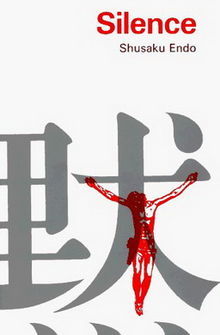
Silence
1966, Reading Time: 8-10h, Pages: 300
Genres
Writer
| Shūsaku Endō |
Characters
Sebastião Rodrigues, Cristóvão Ferreira, Kichijiro, Tokugawa Inoue
Two 17th-century Jesuit priests journey to a Japan hostile to their faith to locate their missing mentor, only to face a test that questions the very nature of God’s presence in suffering.
☕Thus says AI: 89/100
⭐ Rating: Thus Says AI –
Silence earns this score for artistic excellence and theological depth, NOT endorsement of its controversial conclusions. Endō crafted a masterpiece that forces honest Christians to grapple with faith’s hardest questions. However, the novel’s ambiguous resolution on apostasy troubles evangelical orthodoxy. The writing is extraordinary; the theology demands careful discernment.
Article Summary
| Concern | Level | Notes |
|---|---|---|
| Violence | HIGH | Graphic torture scenes—hanging upside down, ear slitting, crucifixion in ocean. Emotionally disturbing. |
| Language | MODERATE | Period-appropriate dialogue; some profanity reflecting 1600s distress. Not gratuitous. |
| Drug Use | LOW | Minimal. Brief references only. |
| Explicit Content | LOW | No sexual content. Rodrigues remains celibate. Ferreira married (off-page implications). |
| Spiritual Messaging | COMPLEX | Profound exploration of faith vs. doubt, God’s presence in suffering. Controversial ending. |
| Emotional Intensity | VERY HIGH | Despair, betrayal, impossible moral choices. Readers feel Rodrigues’ anguish. |
🎬 Silence in a Nutshell
🔤 Title: Silence
🎬 Author: Shūsaku Endō (1923–1996)
📺 Genre: Religious Historical Fiction / Philosophical Drama
⏱️ Reading Time: 8–10 hours (approx. 300 pages, depending on edition)
📅 Original Publication: 1966 (Japan); English translation 1969
🎭 Protagonist: Father Sebastian Rodrigues (Portuguese Jesuit priest)
📖 Setting: 17th-Century Japan (Edo Period), 1600s—during the Tokugawa shogunate’s brutal suppression of Christianity
🎬 Plot Synopsis
Father Rodrigues, a young Portuguese Jesuit, travels secretly to Japan on a clandestine mission: discover the truth about his venerated mentor, Father Cristovão Ferreira, who reportedly apostatized (renounced his Catholic faith). The year is 1643, and Christianity has been outlawed in Japan. Those caught practicing face horrific torture and death.
Upon arrival, Rodrigues encounters hidden Christian communities living in absolute secrecy—farmers, mothers, children risking everything to maintain their faith. He ministers to them in hiding, administering sacraments and providing spiritual comfort. But the authorities are relentless. Betrayed by his guide, Kichijiro (a cowardly Christian who repeatedly denies his faith out of fear), Rodrigues is captured.
In captivity, Rodrigues faces a psychological and spiritual nightmare. Officials force him to witness the torture of Japanese Christians—particularly a horrific scene where believers are hung upside down over a pit, their ears sliced to allow slow, agonizing bleeding. The authorities make clear: step on the fumie (a bronze image of Jesus and Mary), publicly renounce Christianity, and this suffering ends.
Rodrigues struggles mightily with God’s apparent silence in the face of such evil. Where is God? Why doesn’t He intervene? In his darkest moment, awaiting execution, Rodrigues hears what he believes is the voice of Christ emanating from the fumie itself: “Trample! Trample! I more than anyone know of the pain in your foot. Trample! It was to be trampled on by men that I was born into this world. It was to share men’s pain that I carried my cross.”
Rodrigues steps on the image.
The torture stops. The Christians are freed. But Rodrigues is condemned to live—forced to work as an agent of the state, identifying Christian objects and believers, living under a Japanese name, never again publicly acknowledging his faith. The novel ends in ambiguity: Did he commit mortal sin, or the most profound act of love? Did Christ truly speak to him, or did desperation invent that voice?
💭 Themes & Messages of Luther
1. God’s Silence in the Face of Suffering (Central Theme)
The title itself articulates the novel’s haunting question: Why does God remain silent when His people suffer? Rodrigues doesn’t doubt God’s existence—he doubts God’s compassion and presence. He prays desperately for a sign, a word, anything, and receives only silence.
Biblical Lens: This echoes the lament tradition of Scripture itself. Psalm 22:1-2 captures Rodrigues’ cry: “My God, my God, why have you forsaken me? Why are you so far from saving me, from the words of my groaning? O my God, I cry out by day, but you do not answer; and by night, but I find no rest.” Christ Himself prayed these words on the cross. The novel suggests that doubt born from suffering isn’t spiritual weakness but honest faith wrestling with reality.
However, Endō offers a paradoxical resolution: God is not silent but rather suffering alongside the sufferer. In A Life of Jesus (a companion work), Endō emphasizes Christ’s deep sadness and solidarity with pain. The novel’s controversial ending—where Christ tells Rodrigues to trample—suggests God understands suffering so thoroughly that He would accompany believers even into moral compromise for the sake of alleviating others’ agony.
Evangelical Caution: This interpretation troubles traditional Protestant theology. Most evangelicals argue that God’s silence isn’t endorsement of sin, even merciful sin. Romans 6:1-2 warns: “What shall we say then? Are we to continue in sin that grace may abound? By no means!” God’s compassion doesn’t necessitate His approval of apostasy.
2. Apostasy: The Deepest Temptation
The novel’s most controversial element is Rodrigues’ apostasy—his public renunciation of Christ by stepping on the fumie. This act becomes the lens through which all other themes refract.
Ferreira, Rodrigues’ mentor (now apostate himself), argues that Christ Himself would have apostatized in this situation because Christ prioritizes human suffering over doctrinal purity. He frames apostasy as the “most painful act of love.”
Biblical Lens: Scripture seems unambiguous on this point. Matthew 10:32-33 presents Christ’s words: “Everyone therefore who acknowledges me before others, I will also acknowledge before my Father in heaven; but whoever denies me before others, I will also deny before my Father in heaven.” Additionally, Revelation 3:16 warns of being “spit out” for lukewarmness.
Yet Endō complicates this through the character of Kichijiro, a cowardly believer who repeatedly denies Christ out of weakness and fear—and who seems to receive grace despite his failures. Some theologians (like Fr. James Martin) suggest that Rodrigues’ apostasy, unlike Ferreira’s, is fundamentally different: Rodrigues does it sacrificially for others, not to escape his own suffering.
The Evangelical Debate: Serious Christian thinkers divide here. Some (like Philip Yancey) see redemptive possibility in Rodrigues’ maintained inward faith, drawing parallels to Peter’s denial and restoration. Others (like Catholic critic reviewers) insist that true apostasy—even for love—corrupts the soul irredeemably. The novel intentionally refuses to resolve this.
3. Cultural Adaptation vs. Faith Integrity
Endō explores whether Christianity can authentically survive in non-Western soil. Japan is described as a “swamp” that absorbs and transforms everything foreign into itself. The Jesuits attempted to adapt Catholic practice to Japanese sensibilities—creating lay ministers, modifying liturgy—yet Ferreira claims this adaptation itself killed Christianity’s roots.
Biblical Lens: This echoes tensions in 1 Corinthians 9:19-23, where Paul discusses becoming “all things to all people.” Yet 1 John 2:15-17 warns: “Do not love the world or the things in the world… the world and its desires are passing away, but whoever does the will of God lives forever.”
The tension is real: How much cultural accommodation honors incarnational gospel (God meeting people where they are) versus how much compromises the gospel itself? Endō suggests Japan’s cultural ethos—its indifference to guilt, sin, and individual accountability—makes Western Christian categories foreign. But he doesn’t conclude Christianity cannot survive; rather, it must transform and remain faithful. This is left unresolved, leaving readers to judge.
4. Pride Masquerading as Faithfulness
Rodrigues begins his mission with spiritual pride. He imagines glorious martyrdom, Christlike suffering that proves his devotion. He looks somewhat down on the Japanese Christians, viewing them as needing his Western spiritual sophistication.
Only through suffering does he recognize that his pride is the real poison. He wasn’t prepared to sacrifice himself for others; he was romanticizing the idea of personal sacrifice as glory.
Biblical Lens: Proverbs 16:18: “Pride goes before destruction, and a haughty spirit before a fall.” 1 Peter 5:5-6 echoes: “Clothe yourselves with humility toward one another, because ‘God opposes the proud but gives grace to the humble.'”
The novel’s spiritual maturation lies here: Rodrigues’ breakdown removes the veneer of righteous certainty and exposes him to genuine compassion. Whether that compassion justifies his apostasy remains the novel’s unresolved riddle.
5. The Nature of Christ’s Suffering (Profound Theological Layer)
Endō reimagines Christ not as triumphant judge but as suffering servant—one who understands agony so intimately that He would embrace even betrayal to alleviate others’ pain. The fumie scene crystallizes this: Christ tells Rodrigues, “It was to be trampled on by men that I was born into this world.”
This derives from the Christian understanding of kenosis—God’s self-emptying in Philippians 2:5-8. But Endō pushes it further: If Christ emptied Himself so completely as to suffer alongside sinners, might He not also permit or even encourage compromises made in genuine love?
Evangelical Response: Most evangelical theology insists that Christ’s suffering redeems but doesn’t enable our sin. 1 Corinthians 15:57 declares: “But thanks be to God, who gives us the victory through our Lord Jesus Christ.” Christ’s death was once for all; believers don’t replicate it through apostasy but through identification with His victory, not His defeat.
🎞️ Scene Examples & Biblical Analysis
Scene 1: The Pit (Midpoint Climax)
What Happens: Rodrigues hears the anguished moans of Japanese Christians hung upside down in a deep pit. Officials inform him that these believers have already apostatized—stepped on the fumie—yet remain suspended because Rodrigues has not. Their torture continues until he renounces.
Spiritual Significance: This scene embodies the core moral dilemma. Traditional martyrdom theology says: “Hold fast; accept death rather than deny the faith.” But what if your faithfulness costs others their lives? What if pride in your own purity becomes the whip that torments the innocent?
Biblical Resonance: 1 Corinthians 13:4-8—love “does not insist on its own way” and “bears all things.” Does Rodrigues’ refusal to apostatize demonstrate love or its absence? The novel forces readers to wrestle with Romans 12:15: “Rejoice with those who rejoice, weep with those who weep.” Rodrigues weeps—he’s not unmoved. But are his tears enough?
Scene 2: The Fumie Moment (Climax)
What Happens: Rodrigues stands before the bronze image of Christ and Mary, his foot raised. As he lifts it to step, he hears a voice: “Trample! Trample! I more than anyone know of the pain in your foot. Trample! It was to be trampled on by men that I was born into this world. It was to share men’s pain that I carried my cross.”
He steps. The torture stops.
Spiritual Significance: The fumie becomes a symbol of Christ being trampled—which is precisely what Christ predicted and accepted. By trampling the image, is Rodrigues participating in Christ’s self-offering, or betraying it?
Biblical Analysis: The voice claims to be Christ, but 1 Corinthians 12:3 says no one speaking by the Spirit calls Jesus accursed. Does Rodrigues hear Christ or his own desperation? Galatians 1:8-9 warns: “But even if we or an angel from heaven should preach a gospel contrary to the one we preached to you, let them be accursed!” Apostasy, by definition, preaches a “different gospel.”
Yet some readers detect genuine Christ-presence—not in approval of apostasy but in presence during apostasy. Christ doesn’t abandon Rodrigues; rather, He suffers with him. This is theologically provocative and requires careful theological discernment.
Scene 3: The Ferreira Meeting (Temptation Scene)
What Happens: Rodrigues finally meets his legendary mentor, Father Ferreira, who now lives as a married man under a Japanese name. Ferreira explains his apostasy not as weakness but as enlightenment: Western Christianity doesn’t fit Japan; the “seedling” rotted in the “swamp.” He tells Rodrigues, “Now you are going to perform the most painful act of love that has ever been performed.”
Spiritual Significance: Ferreira tempts Rodrigues with a reframing of apostasy as compassion. He argues Christ would have apostatized in this situation because Christ loved humanity more than theological purity.
Biblical Lens: This echoes the Devil’s temptation strategy in Matthew 4:1-11—the Devil doesn’t ask Jesus to do something obviously evil; he asks Jesus to pursue good (turn stones to bread; save yourself) through disobedience. The genius of temptation is making sin sound righteous.
Ferreira’s words sound like love. But his own life—described as increasingly “blackhearted,” serving the state that persecutes Christians—suggests that even mercy-motivated apostasy corrupts the soul over time. External acts shape internal character. Proverbs 23:7: “As a man thinks in his heart, so is he.” If Rodrigues acts like an apostate, can his heart remain faithful?
Scene 4: Kichijiro’s Betrayal and Grace (Subplot of Hope)
What Happens: Kichijiro, the cowardly Christian guide, betrays Rodrigues to authorities out of fear and desperation. He represents the weakest of believers—unreliable, frightened, prone to denial. Yet after Rodrigues’ apostasy, Kichijiro continues seeking confession, returning again and again despite his repeated apostasies.
Spiritual Significance: In a novel obsessed with apostasy and faithfulness, Kichijiro offers a counterpoint: Can grace persist despite repeated moral failure? Rodrigues comes to see Kichijiro as a kind of “Japanese Peter”—like Matthew 26:34-35, Peter denies Jesus but is later restored in John 21:15-19.
Biblical Resonance: 1 Peter 1:6-7: “In this you rejoice, though now for a little while, if necessary, you have been grieved by various trials, so that the tested genuineness of your faith—more precious than gold that perishes though it is tested by fire—may be found to result in praise and honor and glory at the revelation of Jesus Christ.” Kichijiro’s faith is tested repeatedly and remains somehow alive, though faltering.
This subplot suggests Endō’s ultimate theology: Not that apostasy is good, but that Christ’s grace persists even for apostates if they continue seeking Him. This is more compassionate than triumphalist, yet also pastorally dangerous if it softens the call to faithfulness.
Scene 5: The Post-Apostasy Prayers (Spiritual Aftermath)
What Happens: In the novel’s epilogue, Rodrigues (living under his new Japanese name) continues praying in secret. He tells Christ: “My faith in you is different from what it was; but I love you still.” He continues to live, to serve (corrupted as that service may be), and to maintain inward devotion despite outward renunciation.
Spiritual Significance: Endō suggests that faith can be transformed rather than destroyed. Rodrigues’ faith is no longer the proud, confident faith of a young priest; it’s a wounded, compromised, hidden faith. But is it faith at all, or self-deception?
Biblical Lens: This echoes Romans 3:3-4: “What if some were unfaithful? Does their faithlessness nullify the faithfulness of God? By no means!” Yet it also faces Hebrews 10:38-39: “If he shrinks back, my soul has no pleasure in him. But we are not of those who shrink back and are destroyed, but of those who believe and are saved.”
The novel refuses easy answers. Readers must decide: Is Rodrigues’ hidden faith genuine or a comfortable lie he tells himself?
⚠️ Content Warnings
Violence
Endō doesn’t flinch from depicting the cruelty of religious persecution:
- The Pit Torture: Christians hung upside down; ears sliced to allow blood to drip. Detailed description of slow, agonizing death.
- Crucifixion in the Ocean: Christian martyrs crucified on rocks in rising tide, left to die as waves crash.
- General Beatings & Interrogations: Violent interrogations; descriptions of physical pain and exhaustion.
- Psychological Torture: Forced to witness others’ suffering while imprisoned.
Drug & Alcohol Use
- Brief mentions of sake (Japanese rice wine) in social contexts. Not a significant element of the narrative. No drug use depicted.
Profanity
- Rodrigues occasionally exclaims in distress or uses strong language reflecting his anguish.
- Period-appropriate dialogue sometimes includes coarse language from Japanese officials.
- No gratuitous profanity, but believers sensitive to strong language should note its presence.
Romantic or Explicit Content: ✅ Minimal
- Rodrigues remains celibate throughout.
- Ferreira is mentioned as having married a Japanese woman, but the relationship is never depicted on page.
- No sexual content or descriptions. The novel is entirely focused on spiritual struggle, not physical desire.
Spiritual Messaging
This is where the novel demands careful discernment. Spiritual messaging is not straightforward encouragement but rather existential questioning:
- Questions about God’s Nature: Is God powerful? Present? Good? Why does He permit evil?
- The Apostasy Problem: The novel suggests apostasy may be an act of love in certain circumstances. This directly contradicts evangelical teaching on the unforgivable nature of denying Christ.
- Doubt as Spiritual Legitimacy: The novel validates doubt as a authentic expression of faith, not its absence.
- Eastern vs. Western Christianity: The novel subtly critiques Western Christianity’s confidence and individualism as culturally conditioned rather than universally true.
🎯Verdict: Reasons To Watch
Reasons to Watch ✅
- ✅ Honest Engagement with Suffering & Doubt: The novel refuses platitudes. It doesn’t say, “God is good, so trust Him,” and leave it there. Instead, it asks: How do you trust God when He seems absent? This is biblical—the Psalms are full of lament, and Job spends 37 chapters complaining to God. Psalm 13:1-2: “How long, O LORD? Will you forget me forever? How long will you hide your face from me?” Silence gives voice to this biblical lament tradition.
- ✅ Challenges Western Christian Complacency: Endō critiques the confidence and certainty many Western Christians take for granted. He asks: Is our faith truly universal, or culturally contingent? Are we spiritually arrogant? These questions deserve wrestling with. 1 Corinthians 10:12 warns: “Therefore let anyone who thinks that he stands take heed lest he fall.” Rodrigues’ fall from confidence to desperation mirrors this warning.
- ✅ Explores Authentic Compassion vs. Self-Righteous Purity: The novel forces readers to ask: When does my commitment to purity become an excuse to ignore others’ suffering? This is a needed corrective to spiritual elitism. Matthew 23:23-28 shows Jesus condemning Pharisees for tithing mint while ignoring justice and mercy.
- ✅ Literary Excellence: Endō’s prose is spare, poetic, and haunting. The novel’s structure—shifting from first-person interior monologue to third-person observation to documentary-style appendices—is artistically sophisticated. This is literature, not propaganda.
- ✅ Theologically Productive Conversation: The novel doesn’t settle debates; it deepens them. Christian book clubs, seminary courses, and faith-seeking groups will find Silence generates honest, urgent conversation about faith’s boundaries and God’s character.
❌ REASONS TO AVOID
- ❌ Graphic Depiction of Torture: If you’re sensitive to detailed descriptions of suffering and violence, this novel will be emotionally grueling. The pit scene alone haunts readers for days. While not gratuitous, the violence is sustained and specific.
- ❌ Not Recommended for Those Recently Persecuted or Traumatized: If you or your community have experienced religious persecution, this novel might retraumatize rather than comfort. The torture scenes are visceral and specific.
Explore Latest Book Reviews
-
Unbroken: A World War II Story of Survival, Resilience, and Redemption
Unbroken: A World War II Story of Survival, Resilience, and Redemption 2010, Pages: 528 Genres Writer Laura Hillenbrand Characters Louie Zamperini, Russell Allen Phillips, Pete Zamperini An Olympic runner turned WWII bombardier survives a plane crash, 47 days at sea, and brutal torture as a POW, only to face his hardest battle at home: forgiving…
-
Apocalyptic | Books | Christian Fiction | Christianity | Dystopian | Fantasy | Fiction | Religion | Science Fiction | Suspense/Thriller
Left Behind: A Novel of the Earth’s Last Days
Left Behind: A Novel of the Earth’s Last Days 1995, 5h 21m Genres Authors Jerry B. Jenkins, Larry LaHaye “In the blink of an eye, millions vanished—now, the real nightmare begins for those who stayed.” ☕Our No Cap Review Left Behind in a Nutshell Left Behind is a 1995 novel by evangelical pastor Tim LaHaye and…
-
Books | Christian | Christian Living | Christian Non Fiction | Christianity | Evangelism | Faith | NonFiction | Religion
Gospeler
Gospeler: Turning Darkness into Light One Conversation at a Time Willie Robertson (author) A bold, heartfelt call to share the hope of Jesus through simple conversations that can change a life forever. Genres 224 pages, Paperback First published May 14, 2024 Our No Cap Review Plot Summary Gospeler is Willie Robertson’s personal and practical exploration…
-
Books | Business | Communication | Leadership | Management | NonFiction | Personal Development | Personal Growth | Psychology | Self Help
Never Split the Difference: Negotiating As If Your Life Depended on It
Never Split the Difference: Negotiating As If Your Life Depended on It Chris Voss (Author), Tahl Raz (co-author) Never Split the Difference is a bestselling negotiation book written by former FBI lead international hostage negotiator Chris Voss, with journalist Tahl Raz. Drawing from real high-stakes hostage scenarios, corporate negotiations, and cross-cultural conflict resolution, Voss presents…
-
The Hobbit
Middle-earth #0 The Hobbit, or There and Back Again J. R. R. Tolkein The Hobbit is a timeless fantasy adventure that follows Bilbo Baggins, a comfort-loving hobbit from the peaceful Shire, who is unexpectedly swept into a daring quest. When the wizard Gandalf arrives at his doorstep with thirteen determined dwarves led by Thorin Oakenshield,…



Explore Latest Movie Reviews
-
The King of Kings
The King of Kings The King of Kings | © 2025 Angel Studios Category None Light Moderate Heavy Profanity ✓ Violence & Gore ✓ Drug & Alcohol Use ✓ Explicit Content ✓ Spiritual Messaging ✓ 2025, 1h 41m Genres Director Seong-ho Jang Writers Seong-ho Jang, Rob Edwards Stars Oscar Isaac, Kenneth Branagh, Uma Thurman, Pierce…
-
Amazing Grace
Amazing Grace 2006, PG, 2h Genres Director Michael Apted Writers Steven Knight Stars Ioan Gruffudd, Albert Finney, Michael Gambon The idealist William Wilberforce maneuvers his way through Parliament in 19th-century England, endeavoring to end the British transatlantic slave trade. Amazing Grace: When Faith Fuels Revolution A Christian Review of the 2006 Biographical Drama 📊 Rating…
-
War Room
War Room 2015, PG, 2h Genres Director Alex Kendrick Writers Alex Kendrick, Stephen Kendrick Stars Priscilla C. Shirer, T.C. Stallings, Karen Abercrombie With her marriage on the brink of collapse, a woman discovers that she can only win the battle for her home by surrendering the fight to God in her “war room.” Is War…
-
Sound of Hope: The Story of Possum Trot
Sound of Hope: The Story of Possum Trot 2024, PG-13, 2h 10m Genres Director Joshua Weigel Writers Joshua Weigel, Rebekah Weigel Stars Nika King, Demetrius Grosse, Elizabeth Mitchell Inspired by a true story, a rural East Texas pastor and his wife ignite a movement within their small church to adopt 77 of the most difficult-to-place…
-
God’s Not Dead 2
God’s Not Dead 2 2016, PG, 2h Genres Director Harold Cronk Writers Chuck Konzelman, Cary Solomon Stars Melissa Joan Hart, Jesse Metcalfe, David A.R. White When a public high school teacher is sued for answering a student’s question about Jesus, she must fight in court to save her career and defend the right to speak…
-
God’s Not Dead
God’s Not Dead 2014, PG, 1h 53m Genres Director Harold Cronk Writers Hunter Dennis, Chuck Konzelman, Cary Solomon Stars Shane Harper, Kevin Sorbo, David A.R. White A devout Christian student must prove God’s existence in a series of debates against his atheist philosophy professor to save his grade and stand up for his faith. ☕Thus…