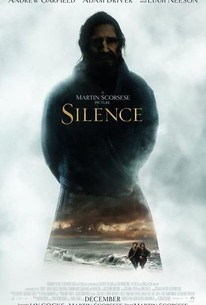
Silence
2003, PG-13, 2h 3m
Genres
Director
Martin Scorsese
Writers
Jay Cocks, Martin Scorsese, Shûsaku Endô
Stars
Andrew Garfield, Adam Driver, Liam Neeson
Two 17th-century Jesuit priests journey to a Japan hostile to their faith to locate their missing mentor, only to face a test that questions the very nature of God’s presence in suffering.
☕Thus says AI: 82/100
⭐ Rating: Thus Says AI –
A staggeringly crafted exploration of faith under fire. Scorsese’s masterpiece asks the hardest questions Christians face—and refuses to offer easy answers. Theologically troubling yet spiritually necessary viewing.
Article Summary
| Concern | Level | Notes |
|---|---|---|
| Violence | 🔴 SEVERE | Graphic torture, crucifixions, drowning deaths, bodies burned. Psychological torment is the real violence. |
| Language | 🟢 MINIMAL | One instance of “whore” (subtitled), proper usage of “hell.” No typical profanity. |
| Drug Use | 🟡 MILD | One scene: Kichijiro drunk, vomiting. Minor alcohol consumption. |
| Explicit Content | 🟢 NONE | Zero sexual or romantic content; zero nudity. Purely spiritual/intellectual film. |
| Spiritual Messaging | 🟡 COMPLEX | Profound theological exploration of apostasy, God’s silence, Christ’s presence in suffering. Controversial interpretations included. |
| Emotional Intensity | 🔴 SEVERE | Watching Christians tortured to death. Existential despair. A heavy 161-minute journey. |
🎬 Silence in a Nutshell
🔤 Title: Silence
🎬 Director: Martin Scorsese
📺 Genre: Religious Drama / Historical
⏱️ Runtime: 161 minutes
📅 Release: December 2016
⭐ Rating: R (Disturbing Violent Content)
🎭 Stars: Andrew Garfield, Adam Driver, Liam Neeson, Issei Ogata, Yōsuke Kubozuka
📖 Based on: Shūsaku Endō’s 1966 novel Silence
🎬 Plot Synopsis
Two Portuguese Jesuit priests—the idealistic Father Rodrigues and his steadier companion Father Garrupe—embark on a secret mission to 17th-century Japan. Their objective? Locate their mentor, Father Ferreira, who has vanished amid rumors he abandoned his faith.
What they discover shakes them to their cores.
Japan has become a black swamp for Christianity. The shogunate forbids the faith entirely. Christians are hunted, tortured, and forced to renounce Jesus by stepping on a fumi-e—a carved image of Christ. Those who refuse face slow, horrifying deaths: crucifixion by tides, drowning, immolation.
As Rodrigues ministers to underground believers—peasants living in spiritual poverty who’ve found hope in Christ—he’s forced to answer an unbearable question: Is my faith worth the screams of innocent people?
The film culminates in apostasy, ambiguity, and a devastating final act that asks whether hidden faith can survive public betrayal.
💭 Themes & Messages of Luther
1. The Silence of God Amid Human Suffering 🤐
The Core Struggle
Rodrigues’ anguished prayer becomes Silence’s emotional heartbeat: “You hear their prayers. But do you hear their screams? How can I explain your silence?” This is theodicy in its rawest form—the oldest theological wound Christianity carries.
Biblical Lens:
This theme echoes Psalm 22:1-2 (Christ’s own cry of abandonment on the cross) and Lamentations 3:8 (“When I cry and call for help, he shuts out my prayer”). But the film doesn’t resolve the tension—it lives in it.
Unlike Hollywood theology, Silence respects suffering believers enough not to package their pain into a three-act redemption arc. Instead, it forces us into the devastating gap between God’s transcendence and His seeming absence. This honors the real experience of persecuted Christians across millennia.
2. Apostasy as an Act of Love—Or Is It? 💔
The Moral Dilemma
Ferreira presents the film’s most seductive argument: stepping on the fumi-e is “merely a formality, a symbol.” If doing so ends the torture of innocent people—if you can save lives through outward apostasy while keeping faith hidden—isn’t that the most loving choice?
Biblical Lens:
Here’s where the film becomes theologically explosive. Scripture says otherwise:
- Matthew 10:32-33: “Everyone who acknowledges me before men, I also will acknowledge before my Father who is in heaven. But whoever denies me before men, I also will deny before my Father who is in heaven.”
- Revelation 2:10: Jesus tells persecuted believers: “Be faithful unto death, and I will give you the crown of life.” Not escape suffering—be faithful through it.
Yet the film never lets viewers comfortably dismiss Rodrigues as simply weak. Father Garrupe, his foil, refuses apostasy and drowns—choosing martyrdom over saving others. The film respects both paths without endorsing either, which is precisely what troubles evangelical critics.
3. Pride Masquerading as Conviction 👑
The Hidden Agenda
A devastating revelation emerges: Rodrigues went to Japan partly to save Ferreira and prove his own faith’s superiority. His pride—wanting to be the hero-priest, the spiritual champion—blinds him to real suffering until it breaks him.
Biblical Lens:
This mirrors 1 Corinthians 13:4-7, which warns that love “does not boast…is not proud.” Scorsese suggests Rodrigues’ suffering becomes redemptive only when he abandons his need to be the victor. True Christian love demands seeing the other person’s pain as more important than your own righteousness.
The film’s wisdom here is profound: sometimes our theological certainty is just ego in disguise.
4. Hidden Faith and the Question of Works 🤫
Can Faith Without Public Witness Survive?
After apostasy, Rodrigues lives as a Buddhist in name, continuing confession-work in secret. Does this hidden faith matter? The epilogue suggests it does—his wife slips a crucifix into his hand as he’s buried.
Biblical Lens:
This directly challenges James 2:26: “Faith without works is dead.” But Silence asks a provocative question: are the works of a hidden confessor less valid than the martyrdom of a public witness?
Most evangelical theology says no—faith must be confessed. But the film’s dedication—”For Japanese Christians and their pastors”—suggests Scorsese believes hidden faith, even in apostasy, preserved Japan’s underground church for 400 years. This is where Catholic and Protestant interpretations diverge sharply.
5. Christ’s Solidarity in Suffering (Not Rescue From It) ✝️
The Most Controversial Moment
When Rodrigues hears Jesus speak—“Go ahead. Step on me. I was born into this world to share men’s pain. I carried this cross for your pain”—the film suggests Christ endures the desecration rather than prevents it.
Biblical Lens:
This echoes Romans 8:17 (“If we suffer with him, we will also be glorified with him”) and Colossians 1:24 (“I fill up in my flesh what is still lacking in regard to Christ’s afflictions”).
But here’s the rub: This “Jesus” endorsing apostasy is not biblical. An evangelical Protestant will immediately recognize this as extra-scriptural—a voice that sounds divine but contradicts Scripture’s clear teaching on confession and faithfulness unto death. This is the film’s greatest theological liability.
🎞️ Scene Examples & Biblical Analysis
🌊 The Seaside Crucifixion: “Four Days of Witnessing”
What Happens:
Four brave Japanese Christians—including young Kichijiro, pressured by his village—are tied to crosses at the shoreline. The tide rises and falls; they endure for days, singing hymns about paradise, their bodies slowly submerged. One believer, Mokichi, lasts four days before drowning, clutching a hymn. Before his death, he gives Rodrigues a crudely carved crucifix—the faith distilled into a handheld object.
Theological Weight:
This scene embodies Hebrews 11:36-40, which honors saints who were “tortured, not accepting deliverance…They were stoned, they were sawn in two, they were killed with the sword.” These aren’t failures to have faith—they’re the pinnacle of it.
Yet Rodrigues, watching, breaks. His question—“How can I explain your silence?”—is authentic, human, and deeply biblical. Job asked it. Jeremiah asked it. Christ asked it on the cross. The film honors suffering without romanticizing it.
😈 The Inquisitor’s Manipulation: “The Price of Your Glory”
What He Says:
“The price of your glory is their suffering.” The Inquisitor tells Rodrigues that by refusing apostasy, he’s choosing the torture of innocents. It’s a masterclass in psychological torment.
Theological Analysis:
This inverts a fundamental Christian principle. 1 Peter 2:21 says Christ “left you an example, that you should follow in his steps,” and 2 Timothy 2:3 calls believers to “share in suffering” as soldiers of Christ. Suffering is not something to be minimized—it’s the birthright of discipleship.
Yet the film asks: At what point does watching others suffer become complicity? This is why Rodrigues eventually apostatizes. The Inquisitor weaponizes compassion itself, and Scorsese doesn’t flinch from showing how effective that weapon is.
🔄 Kichijiro’s Cycle: “Forgive Me, Padre”
The Pattern:
Kichijiro apostatizes, seeks forgiveness through confession, apostatizes again—ad infinitum. His family burned alive because they refused to step on the icon; he lived by desecrating it. He’s wracked with guilt, yet he keeps coming back to Rodrigues, begging absolution.
Spiritual Significance:
Kichijiro is Silence’s most underrated character. At first, he seems comic—his weakness frustrating. But by film’s end, he represents something profound: perpetual access to God’s mercy.
1 John 1:9 promises that “if we confess our sins, he is faithful and just to forgive us our sins and to cleanse us from all unrighteousness.” Kichijiro proves it. No matter how many times he falls, grace meets him.
Decades later, in the epilogue, Kichijiro—now old and worn—seeks Rodrigues one final time. The former priest, who has himself apostatized, still hears his confession. This moment redeems the entire film. It suggests that hidden faith, even among apostates, preserves the channels of grace.
👨🦰 Ferreira’s Seduction: “This is a Swamp”
The Argument:
Ferreira tells Rodrigues that Christianity cannot grow in Japan. The soil is unsuitable. The people misunderstand the gospel. After 15 years of ministry, Ferreira abandoned hope—and now finds peace in Buddhist study and Japanese assimilation.
The Troubling Truth:
Scorsese never fully refutes Ferreira’s logic. This is maddening to evangelical viewers, but also honest. The film acknowledges a real theological weakness in missionary work: cultural appropriation.
The Western priests assume they can simply transplant European Christianity into Japanese soil. The Japanese Christians, by contrast, are trying to understand Christ through their own cultural framework—which the priests dismiss as syncretism or misunderstanding.
Biblical Lens:
1 Corinthians 9:19-23 says Paul became “all things to all people” to win some. But Ferreira takes this to its limit—becoming so acculturated that he renounces the faith entirely. The film doesn’t resolve where the line is between cultural sensitivity and theological compromise.
⚠️ Content Warnings
Violence
The film’s R rating is earned through psychological and visual brutality, not quick action beats.
- Beach executions: Christians tied to crosses, slowly drowned by incoming tides over multiple days
- Body burning: Executed believers’ corpses set aflame
- Hanging scenes: Priests witness friends’ deaths
- Implied torture: Characters beaten, imprisoned, starved
- Spiritual desecration: Forced spitting on religious icons, trampling sacred images
Drug & Alcohol Use
- Kichijiro is shown drunk and vomiting after stumbling around a tavern
- Minor scenes of sake/alcohol consumption
- Nothing glamorized or prolonged
Profanity
- One instance: Japanese characters demand Kichijiro blaspheme, calling the Virgin Mary a “whore” (subtitled)
- Two proper usages: “hell” and “damned” used in theological context
- No casual cursing whatsoever
Romantic or Explicit Content: ✅ Minimal
- No romance, no sexual scenes, no nudity
- One brief mention: Rodrigues later “takes a wife” (mentioned, not shown—historical concession to the Inquisitor)
Spiritual Messaging
What You’ll Encounter:
- A disembodied voice of Jesus endorsing apostasy—this is not biblical and will trouble Protestants
- Celebration of hidden faith over martyrdom—implies Catholic ecclesiology where priests are irreplaceable conduits of grace
- Suggestion that pragmatic compassion outweighs doctrinal purity—directly contradicts evangelical understanding of confession
- Extended exploration of suffering without resolution—there’s no “God had a plan” comfort here
For Mature Believers Only:
This film is not for new Christians or those with weak theological foundations. It will shake your faith—intentionally—and only deepen it if you’re ready to wrestle with Scripture’s hardest passages.
🎯Verdict: Reasons To Watch
Reasons to Watch ✅
If you’re willing to sit with hard theological questions…
- Artistic Excellence 🎨
Scorsese’s cinematography is sparse and stunning. Japan is rendered as simultaneously beautiful and hostile. The visual storytelling rivals the dialogue—sometimes surpasses it. This is filmmaking at the highest level. - Genuine Intellectual Rigor 🧠
Unlike most Christian media, Silence doesn’t patronize believers or non-believers. It asks questions theology professors debate. Christianity Today called it “the most important religious film in decades”—not because it’s comforting, but because it’s honest. - Character Performances That Gut You 🎭
Andrew Garfield’s Rodrigues is a master class in internal anguish. You feel his theological collapse. Adam Driver’s Garrupe is the conscience Rodrigues loses. And Yōsuke Kubozuka’s Kichijiro—perpetually weak, perpetually forgiven—might be the most spiritually alive character in cinema. - A Mirror for American Christians 🪞
Most Western believers never face persecution. Silence forces you to ask: Would I recant under torture? This isn’t academic. It’s the fundamental question of discipleship. - Deep Meditation on Grace and Weakness ⚪
The film’s central paradox—that God’s mercy persists even through apostasy, that faith survives even when denied—is profoundly Christian. Grace that only works when we’re strong isn’t grace; it’s performance. - Scorsese’s Spiritual Pilgrimage 🙏
The director himself is a lapsed seminarian grappling with faith. In interviews, he describes Silence as a “major stage in [his] pilgrimage of faith.” You’re watching a genuine spiritual search, not a product.
❌ REASONS TO AVOID
If you’re looking for encouragement or affirmation…
- It’s Theologically Troubling 🚩
The film suggests that hidden apostasy can coexist with genuine faith—and that God endorses it. This directly contradicts evangelical theology. Unless you’re prepared to wrestle with this, you’ll leave frustrated or shaken. - The Violence Is Really Disturbing 💀
This isn’t superhero violence or action-movie adrenaline. It’s intended to traumatize—watching innocent people tortured to death in slow motion. If you have trauma histories related to suffering or persecution, this could be retraumatizing. - There’s No Resolution or Comfort 📖
If you need your faith affirmed, watch something else. The epilogue refuses to tell you whether Rodrigues’ hidden faith “counted.” The final shot of the crucifix is ambiguous by design. Some find this honest; others find it cruel. - It’s Long and Slow ⏱️
161 minutes. No action sequences. Mostly dialogue, narration, and extended shots of suffering. This isn’t a film you watch—it’s a film you endure. That’s intentional, but it’s not for everyone. - It Endorses Catholic Ecclesiology in Ways Protestants Reject ⛪
The film assumes priests are irreplaceable conduits of divine grace—a Catholic doctrine Protestants flatly deny. If you’re Reformed, these assumptions will feel foreign and wrong. - It Might Destabilize Rather Than Strengthen Your Faith ⚠️
One evangelical critic noted: “There is no real God in Scorsese’s film, just icons and pain.” If you’re fragile in your faith, this film could push you toward doubt rather than deeper belief.
Explore Latest Book Reviews
-
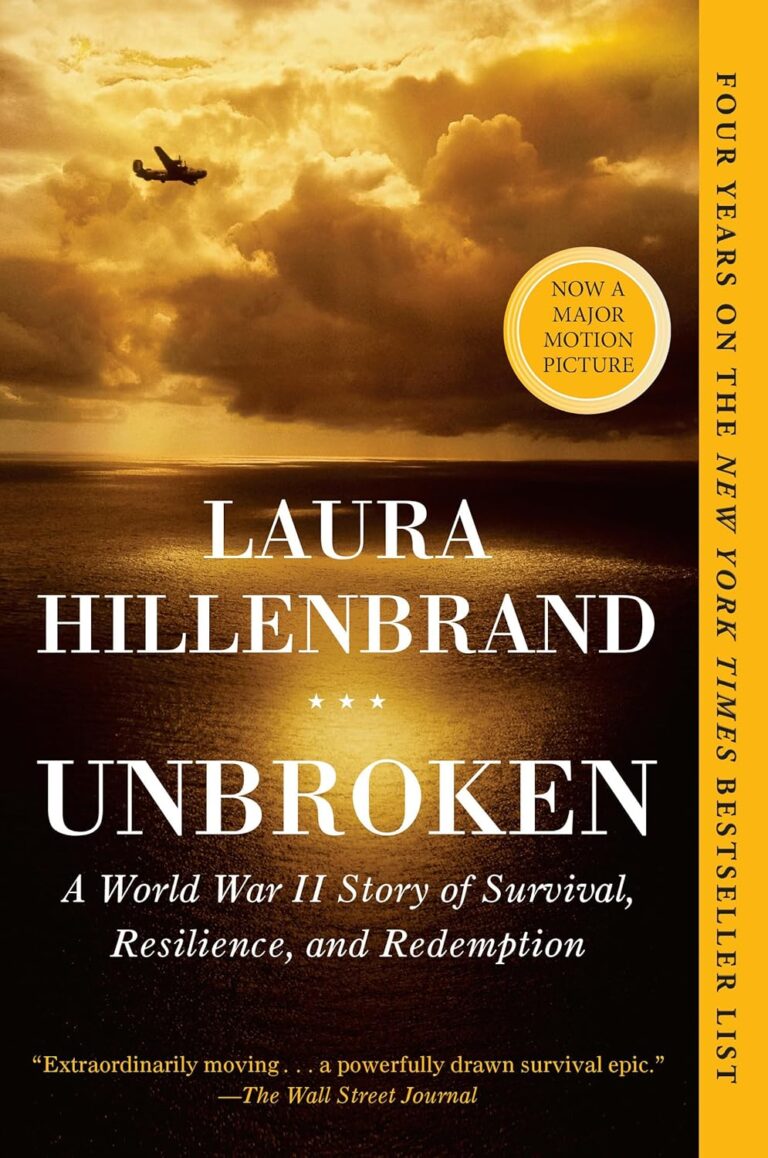
Unbroken: A World War II Story of Survival, Resilience, and Redemption
Unbroken: A World War II Story of Survival, Resilience, and Redemption 2010, Pages: 528 Genres Writer Laura Hillenbrand Characters Louie Zamperini, Russell Allen Phillips, Pete Zamperini An Olympic runner turned WWII bombardier survives a plane crash, 47 days at sea, and brutal torture as a POW, only to face his hardest battle at home: forgiving…
-
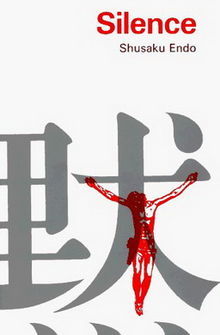
Silence
Silence 1966, Reading Time: 8-10h, Pages: 300 Genres Writer Shūsaku Endō Characters Sebastião Rodrigues, Cristóvão Ferreira, Kichijiro, Tokugawa Inoue Two 17th-century Jesuit priests journey to a Japan hostile to their faith to locate their missing mentor, only to face a test that questions the very nature of God’s presence in suffering. ☕Thus says AI: 89/100…
-
Apocalyptic | Books | Christian Fiction | Christianity | Dystopian | Fantasy | Fiction | Religion | Science Fiction | Suspense/Thriller
Left Behind: A Novel of the Earth’s Last Days
Left Behind: A Novel of the Earth’s Last Days 1995, 5h 21m Genres Authors Jerry B. Jenkins, Larry LaHaye “In the blink of an eye, millions vanished—now, the real nightmare begins for those who stayed.” ☕Our No Cap Review Left Behind in a Nutshell Left Behind is a 1995 novel by evangelical pastor Tim LaHaye and…
-
Books | Christian | Christian Living | Christian Non Fiction | Christianity | Evangelism | Faith | NonFiction | Religion
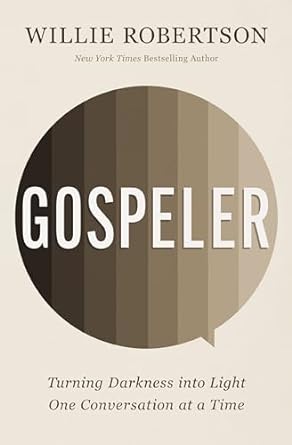
Gospeler
Gospeler: Turning Darkness into Light One Conversation at a Time Willie Robertson (author) A bold, heartfelt call to share the hope of Jesus through simple conversations that can change a life forever. Genres 224 pages, Paperback First published May 14, 2024 Our No Cap Review Plot Summary Gospeler is Willie Robertson’s personal and practical exploration…
-
Books | Business | Communication | Leadership | Management | NonFiction | Personal Development | Personal Growth | Psychology | Self Help
Never Split the Difference: Negotiating As If Your Life Depended on It
Never Split the Difference: Negotiating As If Your Life Depended on It Chris Voss (Author), Tahl Raz (co-author) Never Split the Difference is a bestselling negotiation book written by former FBI lead international hostage negotiator Chris Voss, with journalist Tahl Raz. Drawing from real high-stakes hostage scenarios, corporate negotiations, and cross-cultural conflict resolution, Voss presents…
-
The Hobbit
Middle-earth #0 The Hobbit, or There and Back Again J. R. R. Tolkein The Hobbit is a timeless fantasy adventure that follows Bilbo Baggins, a comfort-loving hobbit from the peaceful Shire, who is unexpectedly swept into a daring quest. When the wizard Gandalf arrives at his doorstep with thirteen determined dwarves led by Thorin Oakenshield,…


Explore Latest Movie Reviews
-
The King of Kings
The King of Kings The King of Kings | © 2025 Angel Studios Category None Light Moderate Heavy Profanity ✓ Violence & Gore ✓ Drug & Alcohol Use ✓ Explicit Content ✓ Spiritual Messaging ✓ 2025, 1h 41m Genres Director Seong-ho Jang Writers Seong-ho Jang, Rob Edwards Stars Oscar Isaac, Kenneth Branagh, Uma Thurman, Pierce…
-
Amazing Grace
Amazing Grace 2006, PG, 2h Genres Director Michael Apted Writers Steven Knight Stars Ioan Gruffudd, Albert Finney, Michael Gambon The idealist William Wilberforce maneuvers his way through Parliament in 19th-century England, endeavoring to end the British transatlantic slave trade. Amazing Grace: When Faith Fuels Revolution A Christian Review of the 2006 Biographical Drama 📊 Rating…
-
War Room
War Room 2015, PG, 2h Genres Director Alex Kendrick Writers Alex Kendrick, Stephen Kendrick Stars Priscilla C. Shirer, T.C. Stallings, Karen Abercrombie With her marriage on the brink of collapse, a woman discovers that she can only win the battle for her home by surrendering the fight to God in her “war room.” Is War…
-
Sound of Hope: The Story of Possum Trot
Sound of Hope: The Story of Possum Trot 2024, PG-13, 2h 10m Genres Director Joshua Weigel Writers Joshua Weigel, Rebekah Weigel Stars Nika King, Demetrius Grosse, Elizabeth Mitchell Inspired by a true story, a rural East Texas pastor and his wife ignite a movement within their small church to adopt 77 of the most difficult-to-place…
-
God’s Not Dead 2
God’s Not Dead 2 2016, PG, 2h Genres Director Harold Cronk Writers Chuck Konzelman, Cary Solomon Stars Melissa Joan Hart, Jesse Metcalfe, David A.R. White When a public high school teacher is sued for answering a student’s question about Jesus, she must fight in court to save her career and defend the right to speak…
-
God’s Not Dead
God’s Not Dead 2014, PG, 1h 53m Genres Director Harold Cronk Writers Hunter Dennis, Chuck Konzelman, Cary Solomon Stars Shane Harper, Kevin Sorbo, David A.R. White A devout Christian student must prove God’s existence in a series of debates against his atheist philosophy professor to save his grade and stand up for his faith. ☕Thus…