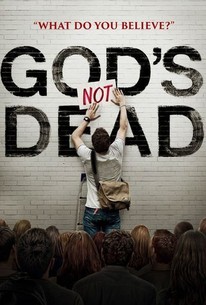
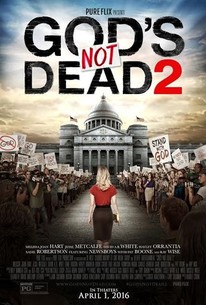
God’s Not Dead 2
2016, PG, 2h
Genres
Director
Harold Cronk
Writers
Chuck Konzelman, Cary Solomon
Stars
Melissa Joan Hart, Jesse Metcalfe, David A.R. White
When a public high school teacher is sued for answering a student’s question about Jesus, she must fight in court to save her career and defend the right to speak about faith.
☕Thus says AI: 68/100
⭐ Rating: Thus Says AI –
This rating reflects both the film’s earnest apologetic ambitions and its significant artistic limitations. While the courtroom testimony scenes provide substantive historical arguments, the movie suffers from heavy-handed characterization and legal implausibility.
📊 Review Summary
| Concern | Level | Notes |
|---|---|---|
| Violence | Minimal | One slap across the face; heated courtroom arguments |
| Language | None | Completely clean; no profanity whatsoever |
| Drug Use | None | No substance use depicted |
| Explicit Content | None | Family-appropriate throughout |
| Spiritual Messaging | Very High | Evangelical Christian worldview; persecution narrative; apologetics focus |
| Verdict | Encouraging for believers; polarizing for skeptics | Strong faith affirmation but lacks nuance in character portrayal |
🎬 God’s Not Dead in a Nutshell
🔤 Title: God’s Not Dead 2 (also “He’s Surely Alive”)
🎬 Director: Harold Cronk
📺 Genre: Christian Drama / Legal Thriller
⏱️ Runtime: 120 minutes
📅 Release: April 1, 2016
⭐ MPAA Rating: PG (Some thematic elements)
🎭 Stars: Melissa Joan Hart (Grace Wesley), Jesse Metcalfe (Tom Endler), David A.R. White (Rev. David Hill), Hayley Orrantia (Brooke Thawley), Paul Kwo (Martin Yip), Ray Wise (Pete Kane), Pat Boone (Grace’s grandfather)
🎬 Plot Synopsis
Grace Wesley teaches AP History at Martin Luther King Jr. High School. She’s beloved by students and passionate about her subject matter. When discussing civil rights leaders like Gandhi and MLK, student Brooke Thawley asks whether their nonviolent philosophies connect to Jesus’s teachings in the Sermon on the Mount.
Grace answers honestly. “Love your enemies and pray for those who persecute you.”
That single response ignites a firestorm. The school board summons Grace. Principal Kinney demands an apology. Grace refuses. She violated no law by answering a historical question about a historical figure. But ACLU attorney Pete Kane sees an opportunity to “prove once and for all that God is dead.” He convinces Brooke’s grieving, atheist parents to sue.
Enter Tom Endler, a young defense attorney who isn’t religious but believes in Grace’s constitutional rights. His strategy? Prove Jesus was a real historical figure, making discussion of Him legitimate in a history class. He brings expert witnesses, including apologists Lee Strobel and J. Warner Wallace, to testify about Jesus’s historicity.
Meanwhile, subplots weave through the narrative. Pastor Dave serves on the jury before appendicitis strikes. Martin Yip faces rejection from his father after converting to Christianity. Cancer survivor Amy Ryan continues her faith journey. And Brooke herself begins reading her deceased brother’s Bible, searching for hope.
The trial crescendos as Grace takes the stand. Tom puts her through an emotional cross-examination, forcing her to articulate why she won’t compromise her faith. The jury deliberates. Outside, protesters chant. Inside, everything hangs in balance.
💭 Themes & Messages of Luther
1. Standing Firm Under Persecution
The film’s central theme echoes 1 Peter 3:14-15: “But even if you should suffer for righteousness’ sake, you will be blessed. Have no fear of them, nor be troubled, but in your hearts honor Christ the Lord as holy, always being prepared to make a defense to anyone who asks you for a reason for the hope that is in you.”
Grace embodies this completely. She doesn’t seek confrontation. She simply answers a student’s question honestly. When pressured to recant, she remains steadfast without being combative.
Biblical Resonance: Grace’s refusal to apologize mirrors the apostles in Acts 4:19-20, who declared, “Whether it is right in the sight of God to listen to you rather than to God, you must judge, for we cannot but speak of what we have seen and heard.” Her peaceful resistance reflects Christ’s own demeanor before Pilate. She doesn’t rail against her accusers. She trusts God with the outcome.
The film rightly emphasizes that Christian courage isn’t about being loud or aggressive. It’s about quiet conviction. Grace tells her grandfather, “The teacher is always quiet during the test.” This wisdom comes straight from Isaiah 30:15: “In quietness and in trust shall be your strength.”
2. The Historical Reality of Jesus
Tom’s defense strategy centers on proving Jesus existed as a historical person. Lee Strobel testifies about ancient sources documenting Jesus’s life. J. Warner Wallace applies forensic analysis to the Gospel accounts, arguing they bear the marks of authentic eyewitness testimony.
Biblical Resonance: This approach aligns with 1 Corinthians 15:3-8, where Paul grounds Christianity in historical events: “For I delivered to you as of first importance what I also received: that Christ died for our sins in accordance with the Scriptures, that he was buried, that he was raised on the third day… and that he appeared to Cephas, then to the twelve. Then he appeared to more than five hundred brothers at one time.”
Christianity isn’t mythology. It’s rooted in history. Jesus walked Palestinian roads. Roman soldiers crucified Him. Witnesses testified to His resurrection. The film reminds viewers that faith isn’t blind. It rests on evidence.
However, the movie conflates Jesus’s historical existence with proving Christianity’s truth claims. Just because Jesus existed doesn’t automatically validate His divinity. That requires the work of the Holy Spirit, not merely historical investigation.
Biblical Dissonance: The film places excessive confidence in human reason to produce saving faith. 1 Corinthians 2:14 warns, “The natural person does not accept the things of the Spirit of God, for they are folly to him, and he is not able to understand them because they are spiritually discerned.” Apologetics can remove intellectual barriers, but only the Spirit converts hearts.
3. Religious Freedom and Cultural Conflict
The film portrays American Christians as increasingly marginalized. Pete Kane literally states he wants to eliminate Christianity from the public square. School boards silence prayer. Governments subpoena sermon transcripts. The message? Persecution is here.
Biblical Resonance: Jesus warned in John 15:18-20, “If the world hates you, know that it has hated me before it hated you. If you were of the world, the world would love you as its own; but because you are not of the world, but I chose you out of the world, therefore the world hates you.”
Christians throughout history have faced opposition. Early believers died in Roman arenas. Today, believers in China, Iran, and North Korea face imprisonment and death. The film’s concern about Western religious liberty isn’t baseless. Cultural hostility toward Christianity is real.
Biblical Dissonance: The film exaggerates American persecution to dangerous levels. Comparing a courtroom case to martyrdom under Nero trivializes genuine suffering. Additionally, the movie conflates American constitutional rights with biblical faithfulness. Christians globally thrive without First Amendment protections.
The film also risks promoting what Scripture calls fear of man (Proverbs 29:25). Rather than trusting God’s sovereignty over nations, it fuels anxiety about cultural decline. Jesus never promised America would remain Christian. He promised the gates of Hell wouldn’t prevail against His church (Matthew 16:18).
4. Suffering, Grief, and Finding Hope in Christ
Brooke grieves her brother’s death. Her atheist parents show no emotion. They’re more upset their son read a Bible than that he’s dead. Brooke asks Grace where she finds her hope. Grace answers simply: “Jesus.”
Biblical Resonance: This captures the Gospel’s essence. Christ offers hope in suffering. Romans 5:3-5 says, “We rejoice in our sufferings, knowing that suffering produces endurance, and endurance produces character, and character produces hope, and hope does not put us to shame, because God’s love has been poured into our hearts through the Holy Spirit.”
Brooke’s journey illustrates how Christ meets us in our pain. She doesn’t encounter Christianity through intellectual arguments first. She encounters it through a teacher’s genuine care and unexplainable peace. This reflects John 13:35: “By this all people will know that you are my disciples, if you have love for one another.”
Biblical Dissonance: The film portrays Brooke’s atheist parents as monstrous caricatures. They show zero grief over their son’s death. This undermines the Gospel by suggesting atheists lack normal human emotions. Scripture teaches all people are made in God’s image (Genesis 1:27), capable of love and suffering regardless of belief.
5. Faith Tested by Fire
Multiple characters face trials. Grace loses her career. Martin loses his father’s blessing. Pastor Dave collapses from appendicitis while serving on the jury. Each trial reveals what they truly believe.
Biblical Resonance: 1 Peter 1:6-7 explains, “In this you rejoice, though now for a little while, if necessary, you have been grieved by various trials, so that the tested genuineness of your faith—more precious than gold that perishes though it is tested by fire—may be found to result in praise and glory and honor at the revelation of Jesus Christ.”
The film shows faith isn’t about comfort. It’s about clinging to Christ when everything collapses. Grace’s willingness to lose her teaching license demonstrates she values Jesus more than her career. This echoes Philippians 3:8, where Paul counts everything as loss compared to knowing Christ.
🎞️ Scene Examples & Biblical Analysis
1. Grace’s Initial Answer to Brooke’s Question
During a lesson on Gandhi and MLK’s nonviolent resistance, Brooke asks if their teachings connect to Jesus’s Sermon on the Mount. Grace responds by quoting Matthew 5:44: “Love your enemies and pray for those who persecute you.”
Biblical Analysis: This scene captures what Christians should do—answer honest questions with grace and truth. Jesus commanded in Matthew 10:32-33, “So everyone who acknowledges me before men, I also will acknowledge before my Father who is in heaven, but whoever denies me before men, I also will deny before my Father who is in heaven.”
Grace doesn’t proselytize. She doesn’t preach. She simply acknowledges that Jesus’s teachings influenced history’s most significant moral leaders. This is both factually accurate and spiritually faithful.
The scene also illustrates how God uses believers’ everyday faithfulness. Grace had no idea her simple answer would become a defining moment. She was just teaching history. Yet God orchestrated circumstances around her obedience. This reflects Proverbs 16:9: “The heart of man plans his way, but the LORD establishes his steps.”
2. Lee Strobel’s Courtroom Testimony
Strobel, playing himself, testifies about Jesus’s historical existence. He cites 39 ancient sources documenting Jesus’s life, including hostile witnesses like Jewish historian Josephus and Roman historian Tacitus. He argues that even skeptical scholars acknowledge Jesus existed.
Biblical Analysis: Strobel’s approach echoes Paul in Acts 26:25-26, where he tells King Agrippa, “I am not out of my mind, most excellent Festus, but I am speaking true and rational words. For the king knows about these things, and to him I speak boldly. For I am persuaded that none of these things has escaped his notice, for this has not been done in a corner.”
Christianity welcomes investigation. It invites scrutiny. Unlike mystery religions that hide truth from outsiders, the Gospel happened in public. Jesus was crucified under Pontius Pilate, a known historical figure. The resurrection occurred in Jerusalem during Passover, witnessed by hundreds.
Believers shouldn’t fear questions. 2 Timothy 2:15 commands, “Do your best to present yourself to God as one approved, a worker who has no need to be ashamed, rightly handling the word of truth.” Christians should study, learn, and articulate why they believe.
However, the scene oversimplifies complex historical debates. Scholars disagree about many details regarding Jesus’s life. The film presents consensus where nuance exists. This can give believers false confidence in purely intellectual approaches to faith.
3. J. Warner Wallace’s Forensic Analysis
Wallace, a former cold-case detective, applies forensic statement analysis to the Gospels. He argues the four accounts show signs of genuine eyewitness testimony—they agree on core facts while differing in details, exactly as independent witnesses do.
Biblical Analysis: Wallace’s method has merit. The Gospels do bear hallmarks of authentic testimony. Luke 1:1-4 explicitly claims to record eyewitness accounts: “Inasmuch as many have undertaken to compile a narrative of the things that have been accomplished among us, just as those who from the beginning were eyewitnesses and ministers of the word have delivered them to us, it seemed good to me also… to write an orderly account for you, most excellent Theophilus, that you may have certainty.”
The Gospel writers weren’t spinning fairy tales. They recorded what they saw. This matters because Christianity’s claims are either true or false. If Jesus didn’t rise from the dead, Christianity collapses (1 Corinthians 15:14).
Yet the scene glosses over deeper questions about Gospel authorship and dating. It also doesn’t address why proving Jesus existed as a historical figure should legally protect classroom religious speech. The argument conflates historical Jesus studies with Grace’s constitutional rights.
4. Grace’s Tearful Testimony Under Tom’s Cross-Examination
In the film’s climax, Tom puts Grace on the stand as a hostile witness. He aggressively questions her about her faith, bringing her to tears. He paints a dystopian future where Christians are fined, jailed, and silenced. This theatrical display somehow convinces the jury to rule in Grace’s favor.
Biblical Analysis: This scene attempts to capture 2 Timothy 1:7-8: “For God gave us a spirit not of fear but of power and love and self-control. Therefore do not be ashamed of the testimony about our Lord.”
Grace’s willingness to suffer for her convictions mirrors the apostles’ boldness. When threatened, they prayed not for protection but for greater courage (Acts 4:29).
However, the scene’s execution is problematic. Tom’s courtroom histrionics would result in sanctions, not victory. The judge charges him with contempt, and he shouts, “I accept the charge! I am in total contempt of these proceedings!” This isn’t biblical courage. It’s theatrical grandstanding.
Additionally, the film’s slippery-slope argument—that losing this case will lead to Christian genocide—is manipulative. While vigilance about religious freedom matters, fearmongering contradicts Philippians 4:6-7: “Do not be anxious about anything, but in everything by prayer and supplication with thanksgiving let your requests be made known to God. And the peace of God, which surpasses all understanding, will guard your hearts and your minds in Christ Jesus.”
5. Martin Yip’s Confrontation with His Father
Martin, a Chinese student who converted to Christianity in the first film, tells his father about his faith. His father immediately slaps him across the face and disowns him, shouting, “You are no longer my son!”
Biblical Analysis: Jesus warned that following Him would divide families. Matthew 10:34-37 says, “Do not think that I have come to bring peace to the earth. I have not come to bring peace, but a sword. For I have come to set a man against his father, and a daughter against her mother… Whoever loves father or mother more than me is not worthy of me.”
Many Christians worldwide face rejection from family for their faith. Martin’s experience is real for countless believers in China, India, the Middle East, and elsewhere. The Gospel demands absolute allegiance to Christ, even when it costs earthly relationships.
The scene illustrates Luke 14:26, where Jesus says, “If anyone comes to me and does not hate his own father and mother and wife and children and brothers and sisters, yes, and even his own life, he cannot be my disciple.” “Hate” here means loving Christ supremely, so that all other loves seem like hatred in comparison.
Martin’s courage is commendable. He doesn’t hide his faith. He boldly confesses Christ despite knowing the cost. This fulfills Romans 1:16: “For I am not ashamed of the gospel, for it is the power of God for salvation to everyone who believes.”
However, the scene’s execution is abrupt and lacks nuance. The father’s instant violence makes him a cartoon villain rather than a complex human struggling with his son’s conversion. Better writing would show his internal conflict, making the tragedy more poignant.
6. Pastor Dave’s Jury Service and Appendicitis
Pastor Dave, from the first film, serves on Grace’s jury. He wants to support her but knows he must remain impartial. During deliberations, he collapses from appendicitis. ACLU attorney Pete Kane sneers, “That proves there is no God.”
Biblical Analysis: Kane’s comment echoes Psalm 14:1: “The fool says in his heart, ‘There is no God.'” His response to suffering is to mock, not comfort. This reveals spiritual blindness.
Scripture never promises believers immunity from illness or pain. Paul himself had a “thorn in the flesh” (2 Corinthians 12:7). Job suffered catastrophic loss while remaining faithful. Jesus told his disciples they would face tribulation (John 16:33).
The film could have used Dave’s appendicitis to explore Romans 8:28: “And we know that for those who love God all things work together for good, for those who are called according to his purpose.” Perhaps his removal from the jury served God’s larger plan. But the movie doesn’t develop this theologically.
Instead, it uses Dave’s suffering as narrative convenience, removing him from the jury so the plot can proceed. This feels manipulative rather than meaningful.
⚠️ Content Warnings
Violence
- Martin’s father slaps him hard across the face after learning of his conversion to Christianity Heated, aggressive arguments in courtroom scenes, with lawyers shouting Pastor Dave collapses in pain from appendicitis, clutching his side and groaning (no graphic medical images) Protesters outside courthouse shout and jostle, though no physical violence occurs Verbal confrontation between Grace and school administrators, though not physically violent Judge bangs gavel forcefully multiple times during tense courtroom moments
Drug & Alcohol Use
- None
Profanity
- None
Romantic or Explicit Content
- No romantic subplot whatsoever No kissing, no sexual content, no innuendo Brief appearance of low-cut tops showing modest cleavage in background One female student wears a short skirt (non-sexualized) Film maintains complete modesty and appropriateness for family viewing
Spiritual Messaging
- Very high evangelical Christian content throughout the entire film
- Central plot revolves around defending Christianity in court
- Multiple scenes of Christian prayer, worship, and testimony
- Real-life Christian apologists appear as themselves promoting their books
- The Newsboys Christian rock band performs “God’s Not Dead” in full
- Heavy emphasis on Christian persecution narrative in modern America
- Atheist characters portrayed almost uniformly as cold, hateful, and mocking
- ACLU attorney literally states goal is to “prove once and for all that God is dead”
- Atheist parents shown caring more about their dead son reading a Bible than his actual death
- Implied message that atheism leads to emotional emptiness and cruelty
- Post-credits scene shows pastor being arrested for refusing to hand over sermon transcripts
- Film explicitly promotes specific apologetics books and ministries
- Subtle suggestion that opposition to Christianity is Satanic (Ray Wise, who famously played the Devil, cast as lead antagonist)
- References to spiritual warfare and battle against secular culture
- One character mentions visiting a psychic (portrayed negatively)
- Strong emphasis on American constitutional rights as connected to Christian faith
- Film blurs lines between patriotism and Christianity
- Note for Discerning Viewers: While the film’s heart is clearly pro-Christian, mature believers should recognize its heavy-handed approach. The characterizations lack nuance, potentially reinforcing unhelpful stereotypes about non-believers. Parents should discuss with teens the difference between standing firm in faith and demonizing those who disagree.
🎯Verdict
Reasons to Watch ✅
1. Encouragement for Believers Facing Opposition
Grace’s peaceful courage inspires. If you’re navigating workplace hostility or social pressure for your faith, her example offers encouragement. She doesn’t fight fire with fire. She simply stands firm.
2. Substantive Apologetics Content
Lee Strobel and J. Warner Wallace provide condensed versions of arguments from their books. For believers wanting to understand historical evidence for Jesus, these scenes offer a starting point. They demonstrate Christianity welcomes intellectual scrutiny.
3. Melissa Joan Hart’s Performance
Hart brings warmth and authenticity to Grace Wesley. She avoids melodrama, making Grace relatable rather than preachy. Her tearful testimony scene, despite the script’s flaws, conveys genuine emotion.
4. Conversation Starter About Religious Freedom
The film raises legitimate questions about faith in public spaces. While exaggerated, it can spark discussions about how Christians should engage culture. What does faithful witness look like when the culture is hostile?
5. Family-Friendly Content
Parents seeking clean entertainment will appreciate the complete absence of profanity, sexuality, or substance abuse. It’s genuinely safe for all ages.
6. Multiple Subplots About Faith Journeys
Martin’s costly conversion, Brooke’s search for hope after loss, and Amy’s cancer remission create a tapestry of faith stories. Not every subplot lands, but they show faith looks different for different people.
7. Pat Boone’s Humor
Boone, as Grace’s grandfather, provides levity. His breakfast table banter about bacon offers needed comic relief in an otherwise heavy film.
❌ REASONS TO AVOID
1. Cartoonish Villains Undermine the Message
Every atheist character is cruel, manipulative, or emotionally dead. ACLU attorney Pete Kane literally sneers and cackles like a Disney villain. This caricature harms the Gospel by suggesting non-believers lack basic humanity.
Scripture commands believers to love enemies (Matthew 5:44), not demonize them. The film’s portrayal of atheists contradicts its own message about Jesus’s command to love. If you watch with unbelievers, prepare for justified offense.
2. Legal Implausibility Damages Credibility
Multiple Christian reviewers, including legal experts, noted the courtroom proceedings are absurd. Cases don’t proceed this quickly. Unions protect teachers. The ACLU historically defends Christians facing discrimination. Tom’s contempt-of-court grandstanding would result in sanctions, not victory.
By building its case on false premises, the film undermines legitimate concerns about religious freedom. Skeptics will dismiss valid issues because the movie cries wolf.
3. Conflates American Rights with Biblical Faithfulness
The film treats the First Amendment almost as sacred Scripture. While religious liberty is valuable, Christians globally thrive without it. The early church exploded under Roman persecution.
Daniel 3:17-18 shows proper perspective: “If this be so, our God whom we serve is able to deliver us from the burning fiery furnace, and he will deliver us out of your hand, O king. But if not, be it known to you, O king, that we will not serve your gods.” Faith isn’t contingent on constitutional protection.
4. Persecution Complex Feeds Fear, Not Faith
The film’s slippery-slope argument—that losing this case leads to Christian genocide—is manipulative. While vigilance matters, fearmongering contradicts 2 Timothy 1:7: “For God gave us a spirit not of fear but of power and love and self-control.”
Christians living under actual persecution in China, Iran, and North Korea might find American complaints about courtroom cases trivializing. The film risks making believers anxious rather than bold.
5. Oversimplifies Apologetics and Faith
The movie suggests historical evidence compels belief. But 1 Corinthians 2:14 teaches, “The natural person does not accept the things of the Spirit of God, for they are folly to him, and he is not able to understand them because they are spiritually discerned.”
Apologetics removes obstacles, but only the Spirit regenerates hearts. The film risks promoting rationalism—trusting human reason to produce faith—over dependence on God’s sovereign grace.
6. Product Placement Feels Exploitative
Lee Strobel and J. Warner Wallace literally name-drop their books during testimony. The Newsboys perform their hit song in full. End credits advertise the Alliance Defending Freedom. While Christian resources have value, the constant marketing undermines artistic integrity.
7. Subplots Distract from Main Narrative
Martin’s storyline, Amy’s cancer journey, Pastor Dave’s jury service—all receive insufficient development. The film tries to pack too much in, leaving everything feeling shallow. A tighter focus would serve the story better.
8. Condescending Racial Dynamics
One particularly tone-deaf scene features Tom (white attorney) lecturing Principal Kinney (Black educator) about Martin Luther King Jr.’s true meaning. This white-savior moment undermines the film’s moral authority and reveals cultural blind spots.
💭 Final Thoughts
God’s Not Dead 2 means well. It wants to encourage beleaguered believers and defend Christianity’s intellectual credibility. It succeeds partially.
Grace Wesley is genuinely admirable. Her peaceful courage, rooted in trust rather than fear, models faithful witness. Melissa Joan Hart’s performance brings warmth to what could have been a preachy character. The apologetics testimony, while oversimplified, introduces viewers to historical arguments for Jesus’s existence and resurrection. For believers unfamiliar with Christian evidences, these scenes offer starting points for deeper study.
The film also correctly diagnoses cultural hostility toward Christianity. While it exaggerates American persecution, the broader concern isn’t baseless. Western culture increasingly marginalizes religious conviction, treating faith as private opinion rather than public truth. Christians do face professional consequences for their beliefs. The film’s warning to remain vigilant has merit.
However, the execution undermines the message. By portraying every atheist as a sneering villain, the movie betrays Christ’s command to love enemies. Matthew 5:44-45 says, “Love your enemies and pray for those who persecute you, so that you may be sons of your Father who is in heaven.” The film demonizes rather than loves.
This matters theologically. Non-believers are image-bearers (Genesis 1:27), capable of love, reason, and virtue. Common grace means even those who reject God can display kindness, integrity, and wisdom. By making every atheist character cruel and irrational, the film denies this biblical truth.
The legal implausibility also damages credibility. Christian reviewers noted numerous errors in courtroom procedure. Cases don’t proceed this quickly. Teachers have union protections. The ACLU has historically defended Christians facing discrimination. By building on false premises, the film gives skeptics ammunition to dismiss legitimate religious freedom concerns.
Most troublingly, the movie conflates American constitutional rights with biblical faithfulness. While the First Amendment is valuable, Christianity doesn’t depend on it. The early church exploded under Roman persecution. Chinese house churches thrive under Communist oppression. Acts 4:12 says, “There is salvation in no one else, for there is no other name under heaven given among men by which we must be saved.” Christ, not the Constitution, is our foundation.
The film’s fear-based approach also concerns me. Jesus promised tribulation (John 16:33), not perpetual cultural dominance. Rather than anxiously defending Christian privilege, believers should focus on faithful witness. 1 Peter 2:12 says, “Keep your conduct among the Gentiles honorable, so that when they speak against you as evildoers, they may see your good deeds and glorify God on the day of visitation.”
So should you watch God’s Not Dead 2?
If you’re a believer seeking encouragement to stand firm amid opposition, the film offers that. Grace’s example of peaceful courage will inspire. If you want a completely clean movie for family viewing, this qualifies. If you’re curious about basic Christian apologetics, Strobel and Wallace provide accessible introductions.
But approach with discernment. Recognize the film’s artistic limitations and theological oversimplifications. Don’t absorb its caricatures of non-believers. Don’t conflate American rights with biblical faithfulness. And don’t let fear replace faith.
Better alternatives exist. Watch Hacksaw Ridge for authentic courage under persecution. Read Timothy Keller’s The Reason for God for substantive apologetics. Study Scripture to see how the early church faced hostility with grace, boldness, and love.
Ultimately, God’s Not Dead 2 is a well-intentioned but flawed film. It champions important truths while undermining them through poor execution. Watch it if you want, but balance it with better theology and more thoughtful engagement with non-believers.
The real test of Christian faithfulness isn’t winning courtroom battles. It’s loving enemies, speaking truth with grace, and trusting God’s sovereignty even when culture turns hostile. That’s the message God’s Not Dead 2 needed to communicate. Sometimes it does. Often it doesn’t.
May we be faithful whether the verdict favors us or not.
Explore Latest Book Reviews
-
Unbroken: A World War II Story of Survival, Resilience, and Redemption
Unbroken: A World War II Story of Survival, Resilience, and Redemption 2010, Pages: 528 Genres Writer Laura Hillenbrand Characters Louie Zamperini, Russell Allen Phillips, Pete Zamperini An Olympic runner turned WWII bombardier survives a plane crash, 47 days at sea, and brutal torture as a POW, only to face his hardest battle at home: forgiving…
-
Silence
Silence 1966, Reading Time: 8-10h, Pages: 300 Genres Writer Shūsaku Endō Characters Sebastião Rodrigues, Cristóvão Ferreira, Kichijiro, Tokugawa Inoue Two 17th-century Jesuit priests journey to a Japan hostile to their faith to locate their missing mentor, only to face a test that questions the very nature of God’s presence in suffering. ☕Thus says AI: 89/100…
-
Apocalyptic | Books | Christian Fiction | Christianity | Dystopian | Fantasy | Fiction | Religion | Science Fiction | Suspense/Thriller
Left Behind: A Novel of the Earth’s Last Days
Left Behind: A Novel of the Earth’s Last Days 1995, 5h 21m Genres Authors Jerry B. Jenkins, Larry LaHaye “In the blink of an eye, millions vanished—now, the real nightmare begins for those who stayed.” ☕Our No Cap Review Left Behind in a Nutshell Left Behind is a 1995 novel by evangelical pastor Tim LaHaye and…
-
Books | Christian | Christian Living | Christian Non Fiction | Christianity | Evangelism | Faith | NonFiction | Religion
Gospeler
Gospeler: Turning Darkness into Light One Conversation at a Time Willie Robertson (author) A bold, heartfelt call to share the hope of Jesus through simple conversations that can change a life forever. Genres 224 pages, Paperback First published May 14, 2024 Our No Cap Review Plot Summary Gospeler is Willie Robertson’s personal and practical exploration…
-
Books | Business | Communication | Leadership | Management | NonFiction | Personal Development | Personal Growth | Psychology | Self Help
Never Split the Difference: Negotiating As If Your Life Depended on It
Never Split the Difference: Negotiating As If Your Life Depended on It Chris Voss (Author), Tahl Raz (co-author) Never Split the Difference is a bestselling negotiation book written by former FBI lead international hostage negotiator Chris Voss, with journalist Tahl Raz. Drawing from real high-stakes hostage scenarios, corporate negotiations, and cross-cultural conflict resolution, Voss presents…
-
The Hobbit
Middle-earth #0 The Hobbit, or There and Back Again J. R. R. Tolkein The Hobbit is a timeless fantasy adventure that follows Bilbo Baggins, a comfort-loving hobbit from the peaceful Shire, who is unexpectedly swept into a daring quest. When the wizard Gandalf arrives at his doorstep with thirteen determined dwarves led by Thorin Oakenshield,…



Explore Latest Movie Reviews
-
The King of Kings
The King of Kings The King of Kings | © 2025 Angel Studios Category None Light Moderate Heavy Profanity ✓ Violence & Gore ✓ Drug & Alcohol Use ✓ Explicit Content ✓ Spiritual Messaging ✓ 2025, 1h 41m Genres Director Seong-ho Jang Writers Seong-ho Jang, Rob Edwards Stars Oscar Isaac, Kenneth Branagh, Uma Thurman, Pierce…
-
Amazing Grace
Amazing Grace 2006, PG, 2h Genres Director Michael Apted Writers Steven Knight Stars Ioan Gruffudd, Albert Finney, Michael Gambon The idealist William Wilberforce maneuvers his way through Parliament in 19th-century England, endeavoring to end the British transatlantic slave trade. Amazing Grace: When Faith Fuels Revolution A Christian Review of the 2006 Biographical Drama 📊 Rating…
-
War Room
War Room 2015, PG, 2h Genres Director Alex Kendrick Writers Alex Kendrick, Stephen Kendrick Stars Priscilla C. Shirer, T.C. Stallings, Karen Abercrombie With her marriage on the brink of collapse, a woman discovers that she can only win the battle for her home by surrendering the fight to God in her “war room.” Is War…
-
Sound of Hope: The Story of Possum Trot
Sound of Hope: The Story of Possum Trot 2024, PG-13, 2h 10m Genres Director Joshua Weigel Writers Joshua Weigel, Rebekah Weigel Stars Nika King, Demetrius Grosse, Elizabeth Mitchell Inspired by a true story, a rural East Texas pastor and his wife ignite a movement within their small church to adopt 77 of the most difficult-to-place…
-
God’s Not Dead
God’s Not Dead 2014, PG, 1h 53m Genres Director Harold Cronk Writers Hunter Dennis, Chuck Konzelman, Cary Solomon Stars Shane Harper, Kevin Sorbo, David A.R. White A devout Christian student must prove God’s existence in a series of debates against his atheist philosophy professor to save his grade and stand up for his faith. ☕Thus…
-
Drama | Epic | Historical Epic | History | Movies | Period Drama
Silence
Silence 2003, PG-13, 2h 3m Genres Director Martin Scorsese Writers Jay Cocks, Martin Scorsese, Shûsaku Endô Stars Andrew Garfield, Adam Driver, Liam Neeson Two 17th-century Jesuit priests journey to a Japan hostile to their faith to locate their missing mentor, only to face a test that questions the very nature of God’s presence in suffering….