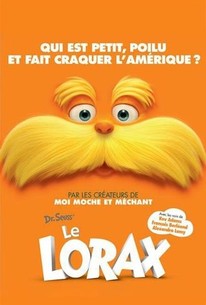
Dr Seuss’ the Lorax
2012, PG, 1h 26m
Genres
Directors
Kyle Balda, Chris Renaud
Writers
Dr. Seuss, Cinco Paul, Ken Daurio
Stars
Zac Efron, Taylor Swift, Danny DeVito
To bring nature back to a synthetic city, a boy must uncover the dark secret of the Once-ler and heed the warning of the Lorax.
☕Our No Cap Review
Dr Seuss’ the Lorax in a Nutshell
Directors Chris Renaud and Kyle Balda craft a visually stunning cautionary tale about greed, stewardship, and the enduring power of hope. Based on Dr. Seuss’s 1971 environmental parable, this animated musical tells the story of how one man’s unchecked appetite for profit can destroy an entire ecosystem—and how one young boy’s courageous action can spark redemption. While the film carries an unmistakable environmentalist message, it simultaneously addresses timeless biblical themes of stewardship, repentance, and the corrupting influence of materialism.
Plot Synopsis
Twelve-year-old Ted Wiggins lives in Thneedville, a gleaming suburban city where every tree is plastic and fresh air is bottled and sold by the sinister entrepreneur Aloysius O’Hare. Desperate to impress his crush, Audrey—who longs to see a real tree—Ted ventures beyond the city wall into a barren wasteland. There, he meets the Once-ler, a reclusive old man living in a decrepit factory. The Once-ler reluctantly recounts his tragic history: as a young entrepreneur, he discovered a beautiful forest of Truffula trees and invented the “Thneed,” a multi-purpose garment. Initially motivated by innocent ambition, his greed metastasized. Despite the warnings of the Lorax, the forest’s diminutive guardian, the Once-ler cut down every last tree, destroyed the ecosystem, and abandoned the land to ruins. Before departing, the Lorax left behind a single stone inscribed with the word “UNLESS.” Armed with the last remaining Truffula seed and the Once-ler’s cryptic wisdom, Ted returns to Thneedville to plant hope itself. O’Hare violently opposes him, but Ted’s courage ignites a community uprising. The seed is planted, and life begins returning to the barren world.
Themes & Underlying Messages
- Stewardship and Dominion: A Biblical Framework
The film’s central concern—proper treatment of creation—resonates deeply with Scripture. Genesis 1:26-28 grants humanity dominion over the earth, but this is frequently misinterpreted as permission to exploit ruthlessly. A careful reading reveals the true intent. Genesis 2:15 clarifies: God placed humans in the garden “to work it and take care of it.” The Hebrew words—abad (work/serve) and shamar (keep/protect)—suggest not dominion through destruction but through cultivation and stewardship. The Once-ler’s journey from naive entrepreneur to greedy despot models what happens when humanity abandons the protective mandate. His youthful vision to create jobs and provide goods is legitimate. But his love of money transforms ambition into exploitation. 1 Timothy 6:10 warns: “The love of money is a root of all kinds of evil.” The Once-ler exemplifies this precisely. What begins as providing genuine value—employment for his family, useful products—becomes the wholesale destruction of creation for personal enrichment. This is not mere environmental concern; it’s biblical diagnosis of human sinfulness.
2. The Depravity of the Human Heart
Readers often wonder: did the Once-ler become evil, or was he always sinful? Ephesians 2:1-3 answers: we are “by nature children of wrath.” The Once-ler didn’t transition from good to bad; rather, circumstances revealed his latent greed. His family’s mockery of him as a boy, his hunger for recognition, his inability to resist the Lorax’s repeated warnings—all expose the human condition. The film doesn’t explicitly teach this theology, but astute Christian viewers will recognize the portrait of depravity. Even more troubling is O’Hare’s calculated evil: he profits from the very desolation the Once-ler created. Two generations of greed compound the original sin. This illustrates a biblical truth often overlooked: systems of injustice perpetuate themselves. The cure requires more than individual repentance; it demands collective action and, ultimately, grace.
3. The Limits of Human Redemption
Here lies the film’s central biblical tension. The Once-ler’s repentance is genuine—he gives Ted the last seed and offers cryptic encouragement: “Unless someone like you cares a whole awful lot, nothing’s going to get better. It’s not.” Yet redemption comes only through Ted’s action, not through divine intervention or Christ’s atonement. James 2:26 teaches that “faith without works is dead,” and the film celebrates Ted’s faithfulness. However, Scripture makes clear that human effort, however heroic, cannot restore what sin has destroyed without God’s grace. Ted succeeds in planting the seed, but only because the Once-ler preserved it. Only because nature’s resilience—itself a gift of God’s sovereignty—permits regrowth. The film presents a inspiring parable of human responsibility but falls short of acknowledging that true restoration requires Christ’s redemptive work, not merely moral heroism. Christian viewers should recognize Ted’s courage as reflecting the kingdom ethic of Matthew 5:13-16: being “salt” and “light” in a world darkened by greed. Yet they should also recognize what the film cannot articulate: that such salt loses its saltiness without Christ’s transforming grace.
4. Greed as Spiritual Death
The film’s portrayal of O’Hare deserves theological reflection. Unlike the Once-ler, who struggles with conscience and eventually repents, O’Hare shows no internal conflict. He has manufactured an entire economic system to perpetuate his profit—selling bottled air to a people who have forgotten trees exist. This reflects a spiritual principle: ongoing sin hardens the heart. Romans 1:24-25 describes those who “exchanged the truth about God for a lie and worshiped and served the creature rather than the Creator.” O’Hare’s citizens have become so accustomed to artificiality that they no longer desire the real. They worship the convenience of bottled air rather than gratefully receiving God’s creation. O’Hare is the architect of this spiritual death. The film’s climax—when the crowd turns on him and he’s launched into the sky—suggests that injustice eventually collapses under its own weight. But it doesn’t explore repentance. Evangelical viewers might pray for O’Hare’s conversion; the film offers only his removal. This is where the gospel transcends the story’s moral economy: Christ offers redemption even to those as entrenched in greed as O’Hare.
5. Environmental Stewardship as Spiritual Act
A significant strength of The Lorax is its implicit claim that environmental care is not a secular concern but a spiritual one. Psalm 24:1 declares, “The earth is the LORD’s.” Creation belongs to God, not to humans. We are tenants, not owners. The film never explicitly invokes this theology, but Christian stewardship presupposes it. When Ted plants the seed, he’s not asserting human dominion; he’s participating in God’s creative work. He becomes, in a sense, a gardener, echoing Genesis 2:15‘s original calling. The musical moment accompanying the seed’s planting—complete with gospel-inflected tones and the refrain “Let’s celebrate the world’s rebirth”—captures something profoundly true: restoration is a cause for rejoicing. What Christians must add is the recognition that Christ, who sustains “all things… by the word of his power” (Hebrews 1:3), is the ultimate gardener. Our stewardship participates in His work.
6. The Lorax as Unheeded Prophet
The Lorax’s role invites theological reflection, though the film itself doesn’t pursue it. He “speaks for the trees”—those voiceless creatures who cannot defend themselves against the Once-ler’s axes. His repeated warnings go unheeded. He is dismissed, mocked, finally left with no choice but to depart, leaving only the cryptic “UNLESS.” In this arc, viewers might discern echoes of biblical prophecy. Jeremiah warned Judah against idolatry and injustice, yet the people “did not listen” (Jeremiah 7:27). The prophetic voice is often lonely and ineffectual in real time. What distinguishes the Lorax from true biblical prophets, however, is his powerlessness. He cannot compel change. He can only warn and ultimately withdraw. Jesus, by contrast, possessed absolute authority—yet freely chose not to force belief. He wept over Jerusalem: “How often would I have gathered your children together as a hen gathers her brood under her wings, and you were not willing!” (Matthew 23:37). The Lorax’s departure suggests resignation; Christ’s crucifixion and resurrection suggest redemptive hope even in the face of rejection.
Main Characters—Positive or Negative Role Models?
| Character | Voice Actor | Role Model Assessment | Reasoning |
|---|---|---|---|
| Ted Wiggins | Zac Efron | Positive | Ted embodies the biblical call to be salt and light (Matthew 5:13-16). He sees a wrong (the absence of real trees) and acts courageously despite opposition. His willingness to venture beyond his comfortable, artificial city and confront powerful interests reflects a Kingdom ethic of prophetic witness. His initial motivation—impressing Audrey—is shallow, but maturity transforms it into genuine concern for his community’s welfare. He doesn’t succeed through violence or cunning but through persistent, humble witness. The primary caution: his triumph depends on the Once-ler’s repentance and seed preservation. Christians should recognize that individual heroism, while admirable, is insufficient without grace working through creation’s resilience and others’ cooperation. |
| The Once-ler | Ed Helms | Redeemable but Instructive | The Once-ler’s arc is the film’s theological heart. He begins as an ambitious young man with legitimate entrepreneurial gifts—hardly evil in himself. But 1 Timothy 6:10‘s warning manifests: “The love of money is a root of all kinds of evil.” His family’s pressure (“You have to do what’s good for the company! And your mamma!”) reveals how greed spreads through systems and relationships. Yet his eventual repentance is crucial. He preserves the final seed. He confesses his sin to Ted. He encourages the boy’s courage. This models 2 Corinthians 7:10: “Godly sorrow brings repentance that leads to salvation.” However, the film doesn’t explore the cost of his repentance or the restitution he might owe. Christian viewers might ponder: what would genuine repentance demand of the Once-ler? Restitution? Lifelong reforestation work? The film’s mercy is moving but incomplete. |
| The Lorax | Danny DeVito | Righteous but Limited | The Lorax speaks truth without fear. He calls out the Once-ler’s greed directly: “You are crazy with greed.” He “speaks for the trees”—advocating for the voiceless, embodying the biblical mandate to “defend the weak and the fatherless” (Psalm 82:3). Yet his ultimate powerlessness is tragic. He cannot prevent destruction; he can only warn. This limitation reflects the prophetic condition in a fallen world. However, unlike Jeremiah or John the Baptist, the Lorax has no proclamation of redemption—only judgment. His departure, though symbolically powerful (floating into the clouds), lacks the hope embedded in biblical prophecy. Christian prophets speak judgment but also grace. The Lorax’s voice is incomplete without the message of restoration that Christ brings. Still, his stubborn advocacy for the vulnerable is exemplary. |
| Aloysius O’Hare | Rob Riggle | Negative—Cautionary Example | O’Hare represents greed perfected into systematic evil. Unlike the Once-ler, who struggles with conscience, O’Hare feels none. He has rationalized his greed into an entire economic system. He manufactures the very desolation that drives his profits. His commercials mock genuine desire for natural beauty by co-opting it for consumerism. He’s not a person to imitate but to avoid. Proverbs 28:16 captures him: “A tyrant oppresses the poor, but whoever loves his people will be blessed.” O’Hare oppresses the poor by denying them air except at inflated prices. His removal from the city is justly earned, but the film offers no path to his redemption. This reflects a real limitation: while God’s grace is sufficient for all, the film presents a world where some are simply expelled rather than redeemed. Christian theology would insist that even O’Hare is redeemable if he repents. |
| Audrey | Taylor Swift | Positive but Underdeveloped | Audrey’s longing for a real tree reflects a human instinct toward authentic beauty, rooted in the fact that we’re made in God’s image to appreciate His creation. She serves as the impetus for Ted’s quest but remains largely passive. Her value lies in representing what has been lost: a genuine desire for the natural world. The film could have developed her as an active agent in the restoration, but instead she becomes a prize to be won. This is less a theological flaw than a storytelling limitation. |
| Grammy Norma | Betty White | Positive—Wisdom and Courage | Grammy Norma represents the faithful remnant who remembers truth. She alone knows of the Once-ler and directs Ted toward him. She’s portrayed as spry and encouraging, challenging stereotypes of elderly women as passive. Her role echoes 2 Timothy 2:2: faithful believers pass truth to the next generation. She doesn’t accomplish the restoration herself, but she enables it by opening Ted’s eyes to possibility. Her presence reminds viewers that intergenerational wisdom matters. |
Content Warnings
Violence & Gore
The film is rated PG for “brief mild language.” Violence is entirely cartoonish and slapstick. The most disturbing scenes involve the deforestation itself: trees toppling with dramatic music and screams from fleeing creatures. This may unsettle young children (under age 5), but the absence of graphic injury or blood makes it acceptable for most elementary-aged viewers. The Once-ler’s bed careening toward a waterfall, with him nearly swept away, creates genuine peril but is resolved comically with static electricity “CPR.” Bears are thrown like footballs and collide with trees—played entirely for laughs. Ted is kicked by mechanical boots and lifted by pincers. The Lorax and Grizelda (the Once-ler’s aunt) almost come to blows. A statue’s head is sliced off. Cars crash. Truffula trees are chainsawed and bulldozed, with woodland creatures fleeing in distress. Verdict: Appropriate for ages 6+, with parental awareness. The deforestation itself carries emotional weight that may trouble sensitive children.
Drug & Alcohol Use
None. The film is remarkably clean in this regard. There are no depictions of substance abuse, smoking, or drunkenness. Commercials for O’Hare’s bottled air parody beer advertisements in tone and glamour, but this is satirical and harmless. Verdict: Completely appropriate.
Profanity
Minimal. The MPAA’s PG rating specifies “brief mild language.” Specific instances include one unfinished “What the—?” as well as uses of “gosh,” “darn,” “idiot,” “loser,” “dirt bag,” and “beanpole.” No genuine profanity or crude language. Verdict: Family-friendly; the language is mild enough for ages 6+.
Romantic or Explicit Content
Entirely innocent. Ted imagines giving Audrey a real tree for her birthday, and she gives him a brief, chaste kiss of gratitude in front of her party guests. The kiss is fleeting and genuinely sweet—nothing suggestive. Several animated characters wear bathing suits (some bikinis) in background scenes, but they’re not presented in sexualized ways; it’s simply consistent with a beach/water setting. When Ted dashes through a bathroom, he glimpses a shower curtain and hears a male voice yelp; nothing is shown. Verdict: Completely appropriate. The romantic element is handled with genuine innocence.
Verdict: Reasons For and Against
Reasons to Read The Croods: A New Age
- A Powerful Parable of Greed and Responsibility. The film’s environmental message aligns with biblical stewardship. Christian families can use it as a springboard for discussing what God expects of us as stewards of the earth. The Once-ler’s downfall illustrates 1 Timothy 6:10‘s warning concretely.
- Visually Stunning and Engaging. Directors Chris Renaud and Kyle Balda craft vivid, colorful animation. The Truffula forest is breathtaking; Thneedville’s plastic artificiality is unsettling in the right way. The film holds children’s attention while offering aesthetic pleasure for adults.
- Genuinely Clean Family Entertainment. In an era of crude humor and veiled sexual content, The Lorax is refreshingly wholesome. No toilet jokes, no double entendres, no profanity. This is worth celebrating.
- Courage and Individual Action. Ted’s willingness to defy the powerful O’Hare and plant a seed—with no guarantee of success—models the kind of prophetic witness Christians are called to. The film affirms that individuals can effect change.
- Intergenerational Transmission of Truth. Grammy Norma’s role reminds viewers that elders preserve wisdom for the young. This resonates with Deuteronomy 6:6: “These commandments that I give you today are to be on your hearts.”
- Repentance and Redemption. The Once-ler’s transformation—from greedy despot to humble recluse who helps restore what he destroyed—illustrates 2 Corinthians 7:10.
Reasons to Avoid or Approach with Caution
- Environmental Message Without Biblical Foundation. While the film advocates stewardship, it never mentions God as Creator or ourselves as accountable to Him. The message becomes: “Humans should care for nature because nature is inherently valuable.” Christianity insists: “We care for creation because it belongs to God, and we will answer to Him for our stewardship.” This distinction matters. Without it, environmentalism can become a substitute religion. Evangelical Christians should affirm the film’s environmental concern while explicitly rooting it in Scripture.
- Redemption Through Human Action Alone. Ted’s success relies entirely on human courage and the Once-ler’s preserved seed. The film offers no prayer, no invocation of transcendent help, no acknowledgment of God’s sovereignty. Nature heals itself because it’s resilient—a wonderful truth, but incomplete. Christians know that restoration ultimately depends on Christ’s redemptive work. The film’s humanism is inspiring but insufficient.
- Limited View of Justice. O’Hare is simply expelled; there’s no exploration of restitution, court accountability, or genuine transformation. The film suggests that removing bad actors solves problems, but biblical justice demands accountability and reconciliation. Romans 12:18-21 calls believers to overcome evil with good, not merely to defeat evildoers.
- Potential Misuse as Secular Activism. Some may watch this film and come away with a purely political or environmentalist agenda disconnected from Christian faith. Parents should be prepared to guide children toward a robustly biblical perspective on creation care.
- Audrey’s Passivity. While minor, the fact that Audrey is largely a prize to be won rather than an active agent reflects outdated gender dynamics. Modern viewers—and Christian ones especially, who value women as image-bearers—might note this.
Explore Latest Book Reviews
-
Unbroken: A World War II Story of Survival, Resilience, and Redemption
Unbroken: A World War II Story of Survival, Resilience, and Redemption 2010, Pages: 528 Genres Writer Laura Hillenbrand Characters Louie Zamperini, Russell Allen Phillips, Pete Zamperini An Olympic runner turned WWII bombardier survives a plane crash, 47 days at sea, and brutal torture as a POW, only to face his hardest battle at home: forgiving…
-
Silence
Silence 1966, Reading Time: 8-10h, Pages: 300 Genres Writer Shūsaku Endō Characters Sebastião Rodrigues, Cristóvão Ferreira, Kichijiro, Tokugawa Inoue Two 17th-century Jesuit priests journey to a Japan hostile to their faith to locate their missing mentor, only to face a test that questions the very nature of God’s presence in suffering. ☕Thus says AI: 89/100…
-
Apocalyptic | Books | Christian Fiction | Christianity | Dystopian | Fantasy | Fiction | Religion | Science Fiction | Suspense/Thriller
Left Behind: A Novel of the Earth’s Last Days
Left Behind: A Novel of the Earth’s Last Days 1995, 5h 21m Genres Authors Jerry B. Jenkins, Larry LaHaye “In the blink of an eye, millions vanished—now, the real nightmare begins for those who stayed.” ☕Our No Cap Review Left Behind in a Nutshell Left Behind is a 1995 novel by evangelical pastor Tim LaHaye and…
-
Books | Christian | Christian Living | Christian Non Fiction | Christianity | Evangelism | Faith | NonFiction | Religion
Gospeler
Gospeler: Turning Darkness into Light One Conversation at a Time Willie Robertson (author) A bold, heartfelt call to share the hope of Jesus through simple conversations that can change a life forever. Genres 224 pages, Paperback First published May 14, 2024 Our No Cap Review Plot Summary Gospeler is Willie Robertson’s personal and practical exploration…
-
Books | Business | Communication | Leadership | Management | NonFiction | Personal Development | Personal Growth | Psychology | Self Help
Never Split the Difference: Negotiating As If Your Life Depended on It
Never Split the Difference: Negotiating As If Your Life Depended on It Chris Voss (Author), Tahl Raz (co-author) Never Split the Difference is a bestselling negotiation book written by former FBI lead international hostage negotiator Chris Voss, with journalist Tahl Raz. Drawing from real high-stakes hostage scenarios, corporate negotiations, and cross-cultural conflict resolution, Voss presents…
-
The Hobbit
Middle-earth #0 The Hobbit, or There and Back Again J. R. R. Tolkein The Hobbit is a timeless fantasy adventure that follows Bilbo Baggins, a comfort-loving hobbit from the peaceful Shire, who is unexpectedly swept into a daring quest. When the wizard Gandalf arrives at his doorstep with thirteen determined dwarves led by Thorin Oakenshield,…




Explore Latest Movie Reviews
-
The King of Kings
The King of Kings The King of Kings | © 2025 Angel Studios Category None Light Moderate Heavy Profanity ✓ Violence & Gore ✓ Drug & Alcohol Use ✓ Explicit Content ✓ Spiritual Messaging ✓ 2025, 1h 41m Genres Director Seong-ho Jang Writers Seong-ho Jang, Rob Edwards Stars Oscar Isaac, Kenneth Branagh, Uma Thurman, Pierce…
-
Amazing Grace
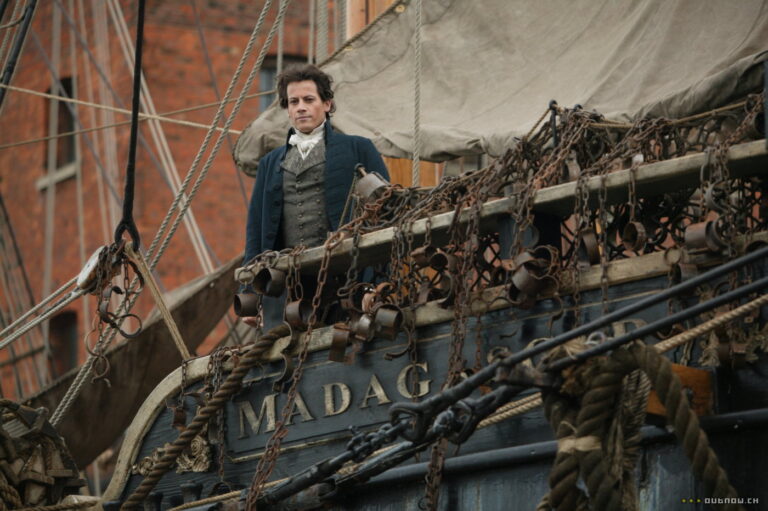
Amazing Grace 2006, PG, 2h Genres Director Michael Apted Writers Steven Knight Stars Ioan Gruffudd, Albert Finney, Michael Gambon The idealist William Wilberforce maneuvers his way through Parliament in 19th-century England, endeavoring to end the British transatlantic slave trade. Amazing Grace: When Faith Fuels Revolution A Christian Review of the 2006 Biographical Drama 📊 Rating…
-
War Room
War Room 2015, PG, 2h Genres Director Alex Kendrick Writers Alex Kendrick, Stephen Kendrick Stars Priscilla C. Shirer, T.C. Stallings, Karen Abercrombie With her marriage on the brink of collapse, a woman discovers that she can only win the battle for her home by surrendering the fight to God in her “war room.” Is War…
-
Sound of Hope: The Story of Possum Trot
Sound of Hope: The Story of Possum Trot 2024, PG-13, 2h 10m Genres Director Joshua Weigel Writers Joshua Weigel, Rebekah Weigel Stars Nika King, Demetrius Grosse, Elizabeth Mitchell Inspired by a true story, a rural East Texas pastor and his wife ignite a movement within their small church to adopt 77 of the most difficult-to-place…
-
God’s Not Dead 2
God’s Not Dead 2 2016, PG, 2h Genres Director Harold Cronk Writers Chuck Konzelman, Cary Solomon Stars Melissa Joan Hart, Jesse Metcalfe, David A.R. White When a public high school teacher is sued for answering a student’s question about Jesus, she must fight in court to save her career and defend the right to speak…
-
God’s Not Dead
God’s Not Dead 2014, PG, 1h 53m Genres Director Harold Cronk Writers Hunter Dennis, Chuck Konzelman, Cary Solomon Stars Shane Harper, Kevin Sorbo, David A.R. White A devout Christian student must prove God’s existence in a series of debates against his atheist philosophy professor to save his grade and stand up for his faith. ☕Thus…