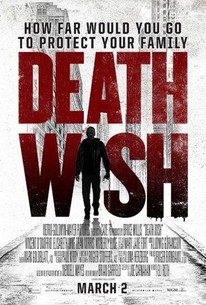
Death Wish
R, 2018, 1h 47m
Genres
Director
Eli Roth
Writers
Joe Carnahan, Brian Garfield, Wendell Mayes
Stars
Bruce Willis, Vincent D’Onofrio, Elisabeth Shue
A Chicago surgeon takes vigilante justice into his own hands after police are unable to catch the men who brutally attacked his family.
Our No Cap Review
☕Review on the Go
Yes or No: Should You Watch This?
NO — with significant reservations. While Death Wish is technically competent as an action film with some decent performances, it serves as a cautionary tale wrapped in an entertaining package. The film’s core message—that vigilante justice is justified and satisfying—directly contradicts biblical principles about vengeance, justice, and the rule of law. Beyond theology, the graphic violence, pervasive profanity (nearly 50 f-words), and glorification of killing make it spiritually problematic for most believers. There are far better films that explore grief, loss, and justice without endorsing lawlessness.
Death Wish in a Nutshell
A Chicago trauma surgeon’s wife is killed and daughter left comatose in a home invasion robbery. Frustrated with police inaction, he becomes a hooded vigilante called “The Grim Reaper,” methodically hunting down and murdering the criminals responsible—and eventually anyone he deems criminal enough. The film frames his descent into violence as justified, even heroic, with minimal consequences and a wink-and-nudge ending that suggests he’ll continue his killing spree.
Plot Synopsis
Dr. Paul Kersey (Bruce Willis) is a respected trauma surgeon living a comfortable suburban Chicago life with his wife Lucy (Elisabeth Shue), college-bound daughter Jordan (Camila Morrone), and his struggling brother Frank (Vincent D’Onofrio). When Paul’s family is brutally attacked by three masked home invaders, Lucy is shot and killed, and Jordan is shot in the head, falling into a coma. The police investigation stalls, and Paul becomes increasingly frustrated with their inability to find leads.
Unable to wait for the system to work, Paul obtains a handgun and begins practicing in secret. His first intervention—stopping a carjacking—goes viral on social media, earning him the nickname “Grim Reaper.” Rather than stop, Paul escalates. He methodically tracks down the men responsible for his wife’s death, torturing one for information and systematically executing each criminal he identifies. The film intercuts these vigilante acts with radio personalities debating whether he’s a hero or villain, and Paul increasingly enjoys his role as an executioner. The story culminates with Paul confronting Knox, the man who shot his wife, in Paul’s own home. After defeating him, Paul promises Detective Raines that his vigilante days are over. Yet in the film’s final scene, as Paul drops Jordan at NYU, he spots a petty shoplifter and gives him a sinister “finger gun” gesture—suggesting his killing spree will continue.
Any Major Concerns Right off the Bat?
Yes. The fundamental problem is that Death Wish is a revenge fantasy that asks viewers to cheer for murder dressed up as justice. It presents a sympathetic protagonist whose escalating violence is portrayed as increasingly justified and even entertaining. There’s a significant racial subtext: Paul, a wealthy white man, executes primarily Black and Latino criminals with minimal consequences, while the film attempts to inoculate itself against criticism by showing him save a Black woman early on and by including radio commentary. The film also releases exactly when national conversations about gun violence are intensifying, which many critics viewed as either grossly tone-deaf or deliberately provocative. For Christians, the ethical problems are even more acute: the film directly contradicts Scripture regarding vengeance, justice, and the sanctity of life, while offering no moral correction or consequences for Paul’s actions.
Content Warnings
Violence & Gore: SEVERE
The violence is relentless and graphic. Key instances include:
- Home invasion: Lucy is shot (we see her corpse with blood-stained clothing in the morgue); Jordan is shot in the head and left in a coma with severe facial bruising.
- The torture scene: Paul cuts a criminal’s sciatic nerve with a scalpel, then pours brake fluid into the open wound while the man screams. Paul describes this as “perhaps the most painful thing that can be done to a human body without going into cardiac arrest.” The camera lingers on the bubbling wound. Later, Paul pulls a car jack, crushing the man’s head grotesquely (visible blood and matter).
- Shootings: Multiple head shots with blood and brain matter spraying across walls. One man falls off a staircase, neck snapping, with blood pooling. Numerous gunshot wounds to chests and other body parts, often in close range.
- Carjacking scene: A woman is shot and a man bleeds from neck wounds.
- Bathroom shootout: Gunfire in a crowded public restroom; one man shot in the shoulder, another in the chest.
- Bowling ball incident: A man’s head is crushed by a bowling ball in a darkly comedic moment.
- Sexual threat: During the home invasion, a gunman places his pistol between Jordan’s legs and touches her thigh while she pleads for him to stop—a deeply disturbing sexual threat.
The film presents violence with a mix of realistic gore and darkly comedic Rube Goldberg-style kills that create moral confusion about whether we’re meant to find this tragic or entertaining. For believers, this escalation from protective grief to casual killing is profoundly troubling.
Drug & Alcohol Use: MILD
- Social drinking in restaurant/bar scenes.
- References to drug dealing (the “Ice Cream Man” subplot involving a dealer pressuring a boy).
- No depiction of drug use among main characters.
Profanity: SEVERE
- Nearly 50 f-words (including one accompanied by an obscene gesture).
- More than 20 s-words.
- God’s name misused 4 times (including with “damn”).
- Jesus’ name abused 7 times.
- Other profanities include “hell,” “pissed,” and “pussy.”
This constant stream of coarse language aligns with what Ephesians 5:4 warns against: “Nor should there be obscenity, foolish talk or crude joking, which are out of place, but rather thanksgiving.” The casual blasphemy—particularly the repeated abuse of Jesus’ name—should concern believers who take the Third Commandment seriously. This profanity can desensitize viewers to irreverent speech, potentially weakening our sensitivity to language that dishonors God.
Sexual or Romantic Content: MILD
- A woman wears a low-cut top revealing cleavage and partial bra.
- Wounded men shown shirtless in hospital scenes (bare chests and legs).
- A photo on a cell phone of a woman in a bikini in a suggestive pose.
- Several bikini-clad women pictured on a bar wall (cleavage, bare shoulders, partial buttocks).
- The deeply disturbing sexual threat during the home invasion (described above under Violence).
Other Concerns
The film’s moral ambiguity about vigilante justice: The central issue is not merely content but message. The film presents Paul’s transformation from a man who saves lives to one who kills with minimal narrative condemnation. The detectives suspect him but cover it up. His daughter recovers and goes to college. And the final scene—Paul eyeing a shoplifter and giving a finger gun—explicitly suggests he’ll continue killing. This is presented as darkly amusing, not tragic. For Christians, this is spiritually dangerous because it can reinforce fleshly desires for revenge while undercutting biblical submission to God’s justice.
Racial subtext: Critics have noted that Paul, a wealthy suburban white man, executes primarily Black and Latino criminals. While the film attempts to address this (Paul saves a Black woman; radio personalities debate it; some criminals are white), the visual narrative remains troubling. If an anonymous person of color from a poor neighborhood were executing street justice, the film’s tone would be entirely different. This double standard reflects real-world racial disparities in vigilantism and law enforcement.
Gun glorification: The film opens by listing Chicago’s violence statistics, then presents Paul purchasing firearms as the solution. A gun shop scene ridicules gun control advocates while glorifying firepower. The film was released just weeks after the Parkland shooting and MGM had initially postponed its release, yet decided to proceed anyway. Whether intentionally or not, the film functions as pro-gun messaging during a national crisis.
Verdict: Is Death Wish Worth it?
Don’t watch this film. Here’s why:
From a Christian perspective, Death Wish fundamentally contradicts biblical teaching on justice, vengeance, and the sanctity of life. Romans 12:19 is unambiguous: “Do not take revenge, my dear friends, but leave room for God’s wrath, for it is written: ‘It is mine to avenge; I will repay,’ says the Lord.” The film’s hero does precisely what Scripture forbids, and the narrative frames his actions as increasingly justified. There’s no moment of repentance, no recognition that Paul has violated God’s order. Instead, the final scene winks at continued violence.
From a practical perspective, the relentless graphic violence, torture scenes, and near-constant profanity make this spiritually corrosive for most viewers. You will be asked to invest emotionally in a protagonist whose solution to suffering is systematic murder. The film is technically competent—Eli Roth’s direction is solid, the action sequences are well-shot, and Willis delivers a credible performance—but technical competence doesn’t redeem a narrative that glorifies vigilantism without consequences.
From a cultural perspective, the film participates in a broader American mythology about self-reliant masculine violence that contradicts both biblical submission to authority and the practical reality that vigilantism destabilizes communities. The Parkland high school shooting had occurred mere weeks before this film’s release, yet the industry proceeded with a film celebrating a man taking justice into his own hands through firepower.
Better alternatives: If you’re interested in stories about grief, justice, and the limits of law, consider Mystic River (2003), which explores similar themes but offers genuine moral complexity and consequences. If you want a revenge narrative with actual biblical depth, The Shack (2017)—though flawed—grapples with forgiveness and God’s justice. For action films that don’t glorify vigilantism, consider John Wick (which at least frames violence as tragic) or simply skip revenge fantasies altogether and invest in stories that move toward redemption rather than away from it.
📝 Full Review
Director & Writers: Background, Beliefs & Worldview
Director: Eli Roth
Eli Roth is a Boston-born filmmaker (born 1972) best known for horror—specifically the “Splat Pack” films Cabin Fever (2002) and the Hostel series (2005-2007), works celebrated for graphic violence and body horror. Roth was raised Jewish and, based on interviews, appears to hold secular or post-religious views. In a 2013 interview, when discussing The Sacrament (a film about a cult), Roth spoke critically of religious zealotry while noting that “ideology can be a terrifying thing when it’s applied to someone who fully will do anything for it.” His father was a psychiatrist and Harvard professor; his mother a painter. This intellectual, secular background shapes his filmmaking.
What’s significant about Roth directing Death Wish is that he’s not a political ideologue but a stylist interested in violence as cinema. In interviews, Roth stated he wanted to explore “the idea that ordinary people have the power to stop crime and fight evil”—essentially a superhero fantasy. He was interested in Paul’s “moral goal posts” shifting, in how a good man justifies increasingly terrible acts. However, Roth’s approach is more fascinated with the visceral spectacle of violence than with its moral weight. The result is a film that presents Paul’s transformation without genuine condemnation.
Writer: Joe Carnahan
Joe Carnahan scripted the remake. Carnahan is a screenwriter-director known for action films (Smokin’ Aces, The A-Team, Stretch). His script updated the 1974 original for social media, adding commentary from radio personalities debating vigilantism and having Paul learn to shoot via YouTube videos. This gives the film a surface-level attempt at “balanced” political commentary—liberal talk radio hosts express concern, conservative hosts celebrate—but the narrative itself tips clearly toward justifying Paul’s actions.
What This Means
A secular director and writer who view violence as entertaining spectacle created a film about justified killing. Without a transcendent moral framework—without God—the film defaults to the logic that suffering justifies revenge and that effective violence is its own vindication. The film is not anti-Christian in an explicit way, but it’s entirely amoral in a Christian sense. It doesn’t offer Paul redemption, doesn’t show him repenting, doesn’t suggest he’s violated God’s order. He’s simply a man who did what needed doing.
The Core Message: How Biblical Is It?
The Central Theological Problem
Death Wish presents a man who commits murder and is ultimately vindicated (or at least not significantly punished). In Christian theology, this is deeply problematic for several reasons:
- Vengeance belongs to God alone. Romans 12:19 is explicit: “Vengeance is mine; I will repay, says the Lord.” When Paul Kersey decides to execute the men who killed his wife, he’s usurping God’s prerogative. He’s declaring himself judge, jury, and executioner—a role that belongs only to God. This isn’t a negotiable issue in Scripture; it’s foundational to Christian ethics.
- The government, not vigilantes, bears the sword. Romans 13:1-4 teaches that government is ordained by God to punish evildoers: “The one in authority is God’s servant for your good. But if you do wrong, be afraid, for rulers do not bear the sword for no reason. They are God’s servants, agents of wrath to bring punishment on the wrongdoer.” The film itself shows the police investigating (Detective Raines and Detective Jackson are portrayed sympathetically). They’re doing their job. Paul’s complaint is that they’re slow, that the system is overwhelmed. But slowness doesn’t justify circumventing God’s ordained structure. Death Wish subtly teaches that when institutions fail, violence is justified—a dangerous theology.
- The film offers no redemption arc. In a biblical narrative, we’d expect Paul to recognize his sin, repent, and find healing through forgiveness and submission to God’s justice. Instead, Paul ends the film promising to stop vigilantism (a lie—the finger gun suggests he’ll continue) and facing no real consequences. The detectives cover for him. His daughter recovers and moves on. This is a completion fantasy, not a redemption narrative. It teaches that revenge solves things.
- Grief does not justify sin. The film is sympathetic to Paul’s pain, and rightly so—his suffering is real. But sympathy for suffering doesn’t justify sin. Proverbs 19:3 notes: “A person’s own folly brings ruin; their heart rages against the Lord.” Paul’s rage—however understandable—leads him to rage against God’s order. A Christian response to such suffering would be lament, grief counseling (which Paul does attend), prayer, submission to God’s justice, and eventually forgiveness. None of these are presented as viable or satisfying. The only satisfaction comes through Paul’s gun.
The “Common Grace” Problem
There is one tiny biblical element: the film acknowledges that protecting one’s family is a legitimate male responsibility. Ephesians 5:25 teaches, “Husbands, love your wives, just as Christ loved the church and gave Himself up for her.” This implies men have a duty to protect and even die for their families. The film’s father-in-law (Len Cariou) articulates this: “If a man really wants to protect what’s his, he has to do it for himself.”
This is common grace—a truth that non-Christians can recognize and that Scripture affirms. Men do have a protective instinct and duty. But the film conflates protection (defensive action) with vengeance (retributive killing). These are not the same. A man protecting his family from immediate threat is different from a man hunting down and murdering people weeks later. The film blurs this distinction to justify Paul’s escalation.
What’s Missing
The film never engages with genuine Christian responses to suffering:
- No real prayer or faith seeking (Paul attends therapy, not church).
- No grappling with why God allowed this evil.
- No model of forgiveness or reconciliation.
- No recognition that Paul is sinning against God’s order.
- No consequences beyond professional inconvenience (Paul simply stops working at the hospital).
The film treats faith and justice system as equal failures. When Paul’s father-in-law wonders aloud how his daughter’s death fits God’s plan, the film doesn’t answer—it just moves on to Paul’s gun. This is theologically irresponsible.
Themes & Messages of the Movie
1. Grief as Justification for Violence
The film’s emotional core is Paul’s grief. We see him sleepless, haunted, attending therapy. This is humanizing, and grief is real and deserves compassion. But the film’s message is: grief justifies violence. When institutional solutions fail (police investigation stalls), and when grief becomes unbearable, taking the law into your own hands is understandable, perhaps even justified. This is spiritually dangerous. Hebrews 12:15 warns: “See to it that no one falls short of the grace of God and that no bitter root grows up to cause trouble and defile many.” Grief unmet by God’s grace becomes bitterness, and bitterness justifies sin. The film shows no movement toward grace; it shows a man nursing bitterness into revenge.
2. Self-Reliance as Virtue
An underlying theme is radical self-reliance: “If you want something done right, do it yourself.” This is deeply American but fundamentally un-Christian. Proverbs 19:21 teaches: “Many are the plans in a human heart, but it is the Lord’s purpose that prevails.” Psalm 37:5 urges: “Commit your way to the Lord; trust in him and he will do this.” The Christian virtue is trust—in God, in His justice, in His timing. Paul learns to trust his gun, not God. The film celebrates this as strength; Scripture calls it pride.
3. Violence as Entertainment
The film’s most disturbing message is that violence is fun. The torture scene has a darkly comedic tone. The final kills are accompanied by rock music and one-liners. The finger gun at the end is played for laughs. This desensitizes viewers to killing and subtly suggests that exercising lethal power is entertaining. Philippians 4:8 instructs: “Finally, brothers and sisters, whatever is true, whatever is noble, whatever is right, whatever is pure, whatever is lovely, whatever is admirable—if anything is excellent or praiseworthy—think about such things.” Gleefully watching torture and murder doesn’t fit this standard.
4. The Myth of the Righteous Vigilante
The film perpetuates a cultural myth: that good people can become executioners if their cause is just. It’s the “white savior” narrative applied to violence. Paul is educated, wealthy, skilled, moral (a surgeon who saves lives). So when he kills, it must be justified. But Scripture doesn’t allow exceptions for the righteous. 1 John 2:9: “Anyone who claims to be in the light but hates a brother or sister is still in the darkness.” Righteous people can commit unrighteous acts. The film doesn’t grapple with this; it assumes Paul’s righteousness justifies his actions.
Iconic Scenes and How Biblical Are They?
Scene 1: The Home Invasion (Opening 20 minutes)
This is the film’s strongest sequence. Eli Roth’s horror background shines. The masked intruders, the dark house, the creeping dread, Jordan’s knife defense, Lucy’s courage throwing scalding milk—it’s viscerally effective. Jordan slashes her attacker’s face, exposing his identity. This matters: she was defending herself and her mother, and her action has consequences. Then gunshots. Lucy dies; Jordan falls into a coma.
Biblical reflection: This scene presents the reality of evil and violence. It doesn’t glorify it. The intruders are faceless, threatening, dehumanized by their masks. This is how sin and evil often appear—sudden, brutal, unmerited. 1 Peter 5:8: “Your enemy the devil prowls around like a roaring lion looking for someone to devour.” The scene doesn’t shy from showing how evil harms the innocent. But then the film asks: How should Paul respond? And it answers: with guns and murder. A biblical response would be different. Lamentations 3:22-23 (amid suffering): “Because of the Lord’s great love we are not consumed, for his compassions never fail. They are new every morning; great is your faithfulness.” Or Psalm 23:4: “Even though I walk through the darkest valley, I will fear no evil, for you are with me.” The film’s answer is: fear evil, and kill it yourself.
Scene 2: The Torture (Approx. 1 hour mark)
Paul corners Joe (the man who killed his wife’s attacker) at an auto body shop. Joe is under a car. Paul cuts his sciatic nerve with a scalpel, then pours brake fluid into the wound. He lectures Joe about the pain while Joe screams and begs. Eventually Joe gives up Knox’s name, and Paul removes the car jack, crushing Joe’s head.
Biblical reflection: This scene is sadistic. There’s no self-defense here; Joe is helpless. Paul is deliberately inflicting maximum pain for information. This is torture—a practice condemned across Christian ethical traditions. But the film presents it ambiguously. Is it funny (the dark comedy tone)? Is it justified (Paul is seeking justice for his wife)? Is it horrifying (which it is, objectively)? The film’s refusal to clearly condemn it is the problem.
Proverbs 12:10 teaches: “The righteous care for the needs of their animals, but the kindest acts of the wicked are cruel.” Paul’s act is cruelty, presented as justice. 1 Corinthians 13:4-5 defines love (and by extension, Christian virtue): “Love is patient, love is kind. It does not envy, it does not boast, it is not proud. It does not dishonor others, it is not self-seeking, it is not easily angered, it keeps no record of wrongs.” Paul’s torture is the antithesis of this. It’s patient only in its deliberation of pain; it’s self-seeking vengeance; it’s angry and recording wrongs. The film should have condemned this unambiguously. Instead, it’s presented as a necessary evil and even darkly humorous.
Scene 3: The Ice Cream Man (Approx. 45 minutes)
Paul confronts a drug dealer known as “Ice Cream Man” in a public place (a street in daylight). The dealer has terrorized a young boy Paul treated at the hospital. Paul walks up and says, “I’m your last customer,” then shoots him multiple times at close range in front of witnesses. The killing is swift, public, and framed as justified because the dealer was a criminal.
Biblical reflection: This is vigilantism in its purest form. Paul has appointed himself judge and executioner based on the man’s criminal history (drug dealing) and threat to a child. The script’s attempt to justify this is that the man deserved it. But Scripture has something to say about judgment: John 5:27-29: “And he has given him authority to judge because he is the Son of Man… Do not be amazed at this, for a time is coming when all who are in their graves will hear his voice and come out—those who have done what is good will rise to live, and those who have done what is evil will rise to be condemned.”
Judgment is Christ’s prerogative, not Paul’s. Romans 2:1-3: “You, therefore, have no excuse, you who pass judgment on someone else, for at whatever point you judge another, you are condemning yourself… Now we know that God’s judgment against those who do such things is based on truth. So when you, a mere human, pass judgment on them and yet do the same things, do you think you will escape God’s judgment?”
The Ice Cream Man scene is exactly what Romans 12:19 forbids. Yet the film presents it as satisfying, even heroic.
Scene 4: The Final Shot (Last 60 seconds)
Paul drops Jordan at NYU for college. She’s recovered, thriving, embarking on her new life. Paul watches her walk away, his face unreadable. Then—crucially—he spots a man stealing a bag from a bellhop. Paul looks directly at the thief, makes a finger gun gesture with his hand, and winks. AC/DC’s “Back in Black” plays over the credits, triumphant.
Biblical reflection: This scene is a moral catastrophe. It suggests that Paul’s killing will continue. The “finger gun” is playful, darkly comic. The music is celebratory. And the crime is small—a petty theft, not the murder of a family member. If Paul will execute a thief the way he executed murderers, then his moral framework has completely collapsed. But the film celebrates this. It’s framed as cool, as a return to form, as Paul remaining true to his nature as the Grim Reaper.
In Christian terms, this is the moment of no redemption. Paul has not repented. He has not submitted to God’s justice. He has not found healing through forgiveness. He’s simply continuing his reign as self-appointed executioner. The film ends not with Paul broken or transformed, but with Paul victorious and ready to kill again. This is spiritually corrosive.
Contrast this with a truly biblical ending: Paul could have visited the graves of his wife and the man he killed (Joe), grieved both, and committed to healing rather than vengeance. Or Paul could have been arrested, faced consequences, and in prison found genuine repentance and faith. Or Paul could have channeled his protective instincts into community work or legitimate justice reform. Instead: finger gun. Rock music. Kill again soon.
Main Characters: Are They Positive or Negative Role Models?
| Character | Actor | Role Model Assessment | Reasoning |
|---|---|---|---|
| Dr. Paul Kersey | Bruce Willis | Negative | Paul begins sympathetically—grief-stricken, protective instinct—but descends into murder without genuine remorse or redemption. He lies to police, rationalizes killing, and ends the film poised to continue vigilantism. He models uncontrolled rage, self-reliance instead of faith, and the belief that violence solves trauma. Not a role model. |
| Detective Kevin Raines | Dean Norris | Complicated/Mixed | Raines is trying to do his job amid resource constraints. He’s portrayed as competent and moral but ultimately covers up Paul’s crimes. While sympathetic, this models institutional complicity in vigilantism. He represents the “good cop” archetype but fails to hold Paul accountable. Mixed, leaning negative. |
| Frank Kersey | Vincent D’Onofrio | Negative | Paul’s brother is a struggling ex-criminal dependent on Paul’s money. He initially enables Paul’s vigilantism but eventually tries to stop him, showing some moral compass. However, he’s ultimately ineffective and represents the failure of family accountability. Negative, though with moments of moral clarity. |
| Jordan Kersey | Camila Morrone | Positive | Jordan is the film’s only truly positive character. She defends herself and her mother during the attack with a knife. She recovers from her coma and moves forward with her life (NYU). She doesn’t seek revenge; she heals. She’s a model of resilience and moving beyond trauma. Positive, though underutilized. |
| Lucy Kersey | Elisabeth Shue | Positive | Though she dies early, Lucy’s brief scenes show her as a protective mother and loving wife. She fights back during the invasion, throws scalding water at her attackers. She’s not a role model through length of character arc, but her courage and maternal protection model Christian virtues of self-sacrifice and defense of the innocent. Positive. |
| Knox | Beau Knapp | Negative | The main antagonist. A violent criminal responsible for Lucy’s death. He’s portrayed as irredeemable, sadistic, and deserving of death. While he’s clearly a villain, the film uses him to justify Paul’s violence. Negative role model (intentionally). |
Key Observation: The film has no genuinely positive male role models for moral leadership. Paul fails spiritually and morally. Raines compromises. Frank is weak. The film teaches that strength comes through violence, not through faith, accountability, or redemption. This is deeply un-Christian.
Why Was This Movie Made?
Commercial Motivation
The original Death Wish (1974) was a successful franchise with five sequels. Hollywood mines nostalgia, and action remakes were profitable in the 2010s (Total Recall, RoboCop, Judge Dredd all received remakes). A Death Wish remake with Bruce Willis—an aging action star—and Eli Roth—a famous horror director—was a commercially viable pitch.
Cultural Moment
The 2018 remake’s production and release coincided with resurgent conversations about gun violence. The Parkland high school shooting occurred on February 14, 2018, just two weeks before Death Wish was scheduled to release on March 2. MGM had originally scheduled the film for November 2017 but delayed it to March 2018. When the Parkland shooting occurred, there was pressure to further delay or cancel the release. MGM decided to proceed.
This decision was controversial. One critic noted: “The ‘Death Wish’ movies are a little more obvious in preaching [the message that ‘a good guy with a gun can stop the bad guys’] than most blockbuster fare, but our cineplexes are so filled with action films that indulge in this wish fulfillment that the ‘Death Wish’ remake hardly stands out.” The film arrived at a moment when America was debating gun control, and it presented a fantasy of justified gun use without consequences.
Political Subtext
The film was made amid Trump’s presidency and the rise of “law and order” rhetoric. Chicago was chosen as the setting partly because it’s been a conservative talking point regarding urban crime and gun violence. Reel World Theology notes: “The primary audience for this movie would appear to be viewers of Fox News Channel or CBS crime shows, both of which depict the inner city as a drug-addled outdoor charnel house.” The film taps into fears (exaggerated or not) about urban crime and the sense that institutions are failing.
Directorial Statement?
Eli Roth has said he was interested in exploring moral compromise—how a good person justifies increasingly terrible acts. He claimed the film wasn’t pro-vigilante but an examination of vigilantism. However, the finished product doesn’t bear this out. The film is entertaining and entertaining doesn’t morally condemn; it aestheticizes. By making Paul’s kills stylish, darkly comedic, and consequence-free, the film endorses rather than examines vigilantism.
Summary: Death Wish was made because (1) the original was commercially successful and nostalgic, (2) the cultural moment seemed ripe for a film about taking law into one’s own hands, and (3) a respected horror director brought credibility and style. It’s a product of Hollywood’s tendency to recycle IP while tapping into contemporary anxieties. For Christians, it’s a cautionary example of how commercially successful entertainment can subtly reinforce unbiblical values.
What Critics Are Saying
Critical Reception: Largely Negative
Death Wish has a 18% on Rotten Tomatoes among critics, though a B+ CinemaScore from opening-weekend audiences. This split reflects different viewing contexts: critics watched with awareness of the gun violence debate and the film’s political implications, while many opening-weekend audiences simply wanted an action film starring Bruce Willis.
Specific Criticisms:
Roger Ebert’s website described the film as “Vigilante Dad Rock,” noting its appeal to a specific demographic while critiquing its lack of substance. Variety called it “a first-person-shooter fantasy” and “less about ideological commitment and more about provoking a reaction.” The review noted: “It serves as a promotion for gun culture, advocating for self-imposed justice and portraying homicide as a means of retribution, all while framing assault weapons as desirable items.”
One critic wrote: “Death Wish comes off as a work of cowardice and opportunism, piggybacking off hard-right fear-mongering and a government that’s completely and utterly disingenuous in its rhetoric about violent crime.” Another argued that “it takes a profound level of either ignorance or craven, willful opportunism to think that this is a moment to make a film about a white man’s rage channeled through the barrel of a gun.”
Christian Critics:
Christian Answers rated it “Not Recommended,” highlighting the vigilantism issue. Movieguide noted the film’s “pro-family” elements but criticized its “false revenge theme” and failure to address the moral implications of vigilante justice. Reel World Theology offered a more nuanced take: “I enjoyed this Death Wish remake, more or less… But the film eventually loses focus, making the audience wonder what they should feel at any given point.” Crucially, the review concluded: “Revenge isn’t good for the soul. It turns the most mild-mannered of men into monsters. It’s an empty, selfish endeavor that will not provide what was intended: making us whole again. Only God can heal us from tragedy and dispense the ultimate justice on evildoers.”
Why the Split?
Critics were judging the film as a cultural text—an artifact saying something about America, guns, justice, and violence. Audiences were judging it as entertainment—does it deliver action, thrills, and emotional catharsis? These are legitimate different frameworks, but for Christians, the cultural text reading is more important. We need to ask not just “Is it entertaining?” but “What is it teaching?” Death Wish teaches that vigilantism is justified when institutions fail. That’s a dangerous lesson.
What Audiences Are Saying
Opening Weekend Audience Reception:
Death Wish earned $13 million domestically in its opening weekend and $34 million total domestically ($48 million worldwide) against a $30 million budget. It was a modest commercial success, though not a blockbuster. Audiences who saw it tended to be divided.
Positive Audience Takes:
Many viewers appreciated the film as straightforward action-revenge entertainment. On Reddit and IMDb, supporters noted: “Bruce Willis is good,” “The action sequences are well-shot,” “It’s entertaining enough,” and “Better than I expected.” Some framed it as cathartic—a fantasy fulfillment of “what I’d want to do if someone hurt my family.”
One positive review noted: “I just watched this the other day and I was pleasantly surprised. Recent Bruce Willis movies have not been great, but he gets a major comeback with this one. This is overall better than the original… It has more action, violence, blood and overall more realistic feel. This is definitely worth a watch for any Bruce Willis or action fan.”
Negative Audience Takes:
Other viewers found it problematic. One critic noted the film’s inability to decide on tone—is it realistic or cartoonish? A Reddit discussion compared it unfavorably to the original, arguing that while the 1974 Death Wish presented vigilantism as a character’s descent into darkness, the 2018 version celebrates it.
Political Reactions:
After screenings, some audience members reportedly shouted, “God bless the NRA! Arm the teachers!” Others walked out uncomfortable with the racial dynamics (white man executing primarily people of color). The film became a Rorschach test: those favoring armed self-defense saw it as validating; those concerned about gun violence saw it as dangerous.
Christian Audience Feedback:
Christian viewers who engaged with the film’s spiritual implications expressed concerns similar to the critics cited above. The consensus: entertaining action, but spiritually problematic message.
Final Verdict for Christians
Death Wish (2018) is a well-crafted action film that, theologically and spiritually, teaches a dangerous message: that grief justifies vengeance, that institutions are replaceable by individual violence, and that the satisfaction of killing is its own reward. The film offers no redemption arc, no genuine grappling with God’s justice, and no modeling of biblical responses to suffering.
For mature Christians discerning this film: You might watch it to understand contemporary culture or as a cultural artifact worth analyzing. But go in aware of what you’re being asked to accept: a moral framework fundamentally at odds with Scripture. The film’s technical competence and entertainment value don’t redeem its spiritual message.
For young or vulnerable believers: I’d strongly recommend avoiding this film. It can normalize revenge fantasies and suggest that when institutions fail, violence is justified. This contradicts what you’re learning about forgiveness, submission to authority, and God’s justice.
For those struggling with grief or loss: Absolutely skip this film. It models unhealthy processing of trauma and offers violence as healing, which is spiritually dangerous for someone vulnerable.
Instead: Invest in narratives that show genuine healing through faith, forgiveness, and submission to God’s justice. Grieve with the Psalms. Find community in the church. Trust God’s timing and justice. These are harder paths than vigilante fantasy, but they’re redemptive.
Similar Movies to Death Wish
If you’re interested in similar themes handled with more theological or moral depth, consider:
Films About Justice and Vengeance:
- Mystic River (2003, directed by Clint Eastwood) — Explores vigilantism’s cost amid trauma. Shows consequences. Morally ambiguous in a thoughtful way.
- In the Bedroom (2001, Todd Field) — Grieving parents considering vengeance. Subtler, more devastating about the emptiness of revenge.
- The Shack (2017, Stuart Hazeldine) — Explicitly Christian narrative about grief, God’s justice, and forgiveness. Flawed but sincere.
- Unforgiven (1992, Clint Eastwood) — A deconstruction of revenge fantasy. Shows violence’s true cost.
Films About Grief and Healing:
- Manchester by the Sea (2016, Kenneth Lonergan) — Explores unresolved grief and the difficulty of moving forward. No vengeful catharsis; just the long work of living.
- Ordinary People (1980, Robert Redford) — Family trauma and therapy. Models healthier processing of grief.
Action Films Without Revenge Fantasy:
- John Wick (2014, Chad Stahelski) — Action-heavy but frames violence as tragic, not satisfying. Wick’s killing spree leads to isolation and loss, not triumph.
- The Raid (2011, Gareth Evans) — Action spectacle, but in a confined space without moral pretense. It’s what it is.
Explicitly Christian Narratives:
Risen (2016, Kevin Reynolds) — Mystery-thriller about resurrection. Explores justice and transformation.
The Passion of the Christ (2004, Mel Gibson) — Brutal but theologically purposeful. Shows violence’s cost and redemptive sacrifice.
Fun Facts
The original novel’s author hated the vigilante message. Brian Garfield, who wrote the 1974 novel Death Wish, was unhappy with how the 1974 film adapted his work. He felt the film glamorized vigilantism, whereas his novel intended to critique it. He was so frustrated that he wrote a sequel novel, Death Sentence (1975), to explicitly argue against vigilantism. His concerns were vindicated—the film’s popularity spawned a franchise of increasingly pro-vigilante sequels that had nothing to do with Garfield’s intentions.
Bruce Willis was not the first choice. The role was offered to several younger action stars before Willis, who was 63 at the time of filming. Ironically, Willis’s age works for the film—he plays a man who’s been living a normal life for decades before being drawn back into violence. His weariness contrasts with the film’s graphic violence.
Eli Roth almost didn’t direct. Roth was brought in relatively late in production. The film had passed through several creative teams before landing with him. This explains some of the tonal inconsistency—it’s not a singular vision but a compromise between multiple filmmakers.
The delayed release due to Parkland. MGM pushed the film from November 2017 to March 2018, partially to avoid the holiday season. When Parkland occurred just two weeks before the new release date, there was pressure to delay further. MGM chose not to, a decision that remains controversial. Some theaters and critics boycotted; others bought tickets specifically because they saw the film as taking a “pro-gun” stance.
The film attempts “balance” through talk radio. Throughout Death Wish, we hear from real-life radio personalities (Sway Calloway, Mancow Muller) and fictional radio hosts debating whether Paul is a hero or villain. This was meant to provide “both sides” politically. However, critics noted that the visual narrative—Paul succeeding, avoiding consequences, and being framed as justified—undercuts any actual balance. The radio commentary becomes mere window dressing.
The carjacking scene was designed to deflect racial criticism. Paul’s first vigilante act saves a Black woman from white carjackers. The filmmakers strategically included this to show Paul isn’t racist. However, critics noted this is a classic “white savior” trope and doesn’t excuse the film’s overall pattern of a white man executing primarily Black and Latino criminals. One killing of a Black woman’s attackers doesn’t balance the execution of an entire neighborhood’s worth of people of color.
Comparison to the 1974 original. Charles Bronson’s Paul Kersey was a conscientious objector and pacifist. His turn to violence was presented as a descent—morally ambiguous at best. Bruce Willis’s Kersey is simply focused and efficient. The 2018 version removes moral complexity and presents vigilantism as straightforward problem-solving. This is a significant shift from ambiguity to endorsement.
Profanity as desensitization. The film contains nearly 50 f-words. While action films are often profane, the sheer quantity can desensitize viewers to coarse language. Ephesians 5:4 warns against this: “Nor should there be obscenity, foolish talk or crude joking, which are out of place, but rather thanksgiving.” Repeated exposure to profanity, particularly the abuse of Jesus’ name (7 times), can weaken our sensitivity to irreverent speech.
Explore Latest Book Reviews
-
Unbroken: A World War II Story of Survival, Resilience, and Redemption
Unbroken: A World War II Story of Survival, Resilience, and Redemption 2010, Pages: 528 Genres Writer Laura Hillenbrand Characters Louie Zamperini, Russell Allen Phillips, Pete Zamperini An Olympic runner turned WWII bombardier survives a plane crash, 47 days at sea, and brutal torture as a POW, only to face his hardest battle at home: forgiving…
-
Silence
Silence 1966, Reading Time: 8-10h, Pages: 300 Genres Writer Shūsaku Endō Characters Sebastião Rodrigues, Cristóvão Ferreira, Kichijiro, Tokugawa Inoue Two 17th-century Jesuit priests journey to a Japan hostile to their faith to locate their missing mentor, only to face a test that questions the very nature of God’s presence in suffering. ☕Thus says AI: 89/100…
-
Apocalyptic | Books | Christian Fiction | Christianity | Dystopian | Fantasy | Fiction | Religion | Science Fiction | Suspense/Thriller
Left Behind: A Novel of the Earth’s Last Days
Left Behind: A Novel of the Earth’s Last Days 1995, 5h 21m Genres Authors Jerry B. Jenkins, Larry LaHaye “In the blink of an eye, millions vanished—now, the real nightmare begins for those who stayed.” ☕Our No Cap Review Left Behind in a Nutshell Left Behind is a 1995 novel by evangelical pastor Tim LaHaye and…
-
Books | Christian | Christian Living | Christian Non Fiction | Christianity | Evangelism | Faith | NonFiction | Religion
Gospeler
Gospeler: Turning Darkness into Light One Conversation at a Time Willie Robertson (author) A bold, heartfelt call to share the hope of Jesus through simple conversations that can change a life forever. Genres 224 pages, Paperback First published May 14, 2024 Our No Cap Review Plot Summary Gospeler is Willie Robertson’s personal and practical exploration…
-
Books | Business | Communication | Leadership | Management | NonFiction | Personal Development | Personal Growth | Psychology | Self Help
Never Split the Difference: Negotiating As If Your Life Depended on It
Never Split the Difference: Negotiating As If Your Life Depended on It Chris Voss (Author), Tahl Raz (co-author) Never Split the Difference is a bestselling negotiation book written by former FBI lead international hostage negotiator Chris Voss, with journalist Tahl Raz. Drawing from real high-stakes hostage scenarios, corporate negotiations, and cross-cultural conflict resolution, Voss presents…
-
The Hobbit
Middle-earth #0 The Hobbit, or There and Back Again J. R. R. Tolkein The Hobbit is a timeless fantasy adventure that follows Bilbo Baggins, a comfort-loving hobbit from the peaceful Shire, who is unexpectedly swept into a daring quest. When the wizard Gandalf arrives at his doorstep with thirteen determined dwarves led by Thorin Oakenshield,…

Explore Latest Movie Reviews
-
The King of Kings
The King of Kings The King of Kings | © 2025 Angel Studios Category None Light Moderate Heavy Profanity ✓ Violence & Gore ✓ Drug & Alcohol Use ✓ Explicit Content ✓ Spiritual Messaging ✓ 2025, 1h 41m Genres Director Seong-ho Jang Writers Seong-ho Jang, Rob Edwards Stars Oscar Isaac, Kenneth Branagh, Uma Thurman, Pierce…
-
Amazing Grace
Amazing Grace 2006, PG, 2h Genres Director Michael Apted Writers Steven Knight Stars Ioan Gruffudd, Albert Finney, Michael Gambon The idealist William Wilberforce maneuvers his way through Parliament in 19th-century England, endeavoring to end the British transatlantic slave trade. Amazing Grace: When Faith Fuels Revolution A Christian Review of the 2006 Biographical Drama 📊 Rating…
-
War Room
War Room 2015, PG, 2h Genres Director Alex Kendrick Writers Alex Kendrick, Stephen Kendrick Stars Priscilla C. Shirer, T.C. Stallings, Karen Abercrombie With her marriage on the brink of collapse, a woman discovers that she can only win the battle for her home by surrendering the fight to God in her “war room.” Is War…
-
Sound of Hope: The Story of Possum Trot
Sound of Hope: The Story of Possum Trot 2024, PG-13, 2h 10m Genres Director Joshua Weigel Writers Joshua Weigel, Rebekah Weigel Stars Nika King, Demetrius Grosse, Elizabeth Mitchell Inspired by a true story, a rural East Texas pastor and his wife ignite a movement within their small church to adopt 77 of the most difficult-to-place…
-
God’s Not Dead 2
God’s Not Dead 2 2016, PG, 2h Genres Director Harold Cronk Writers Chuck Konzelman, Cary Solomon Stars Melissa Joan Hart, Jesse Metcalfe, David A.R. White When a public high school teacher is sued for answering a student’s question about Jesus, she must fight in court to save her career and defend the right to speak…
-
God’s Not Dead
God’s Not Dead 2014, PG, 1h 53m Genres Director Harold Cronk Writers Hunter Dennis, Chuck Konzelman, Cary Solomon Stars Shane Harper, Kevin Sorbo, David A.R. White A devout Christian student must prove God’s existence in a series of debates against his atheist philosophy professor to save his grade and stand up for his faith. ☕Thus…