Amazing Grace
2006, PG, 2h
Genres
Director
Michael Apted
Writers
Steven Knight
Stars
Ioan Gruffudd, Albert Finney, Michael Gambon
The idealist William Wilberforce maneuvers his way through Parliament in 19th-century England, endeavoring to end the British transatlantic slave trade.
Amazing Grace: When Faith Fuels Revolution
A Christian Review of the 2006 Biographical Drama
📊 Rating
| Platform | Rating | Notes |
|---|---|---|
| 🤩 Theological Complexity | 8.5/10 | Rich exploration of faith in action, calling, and redemption |
🌟 Praise for Amazing Grace
What happens when God grabs hold of a politician? Amazing Grace shows us. This isn’t your typical biopic. It’s a window into the soul of William Wilberforce, a man torn between spiritual solitude and political warfare.
the abolition movement. However, this commitment to authenticity comes at a cost: the parliamentary scenes can feel slow and dry. The film doesn’t shy away from slavery’s brutal realities, but it focuses on the political machinations needed to end it rather than graphic depictions of violence.
What sets this film apart from other historical dramas? Its unabashed Christian worldview. Wilberforce’s faith isn’t window dressing. It’s the engine that drives every decision. When he considers leaving politics for the priesthood, his friends remind him that God can use him more powerfully in Parliament. As PluggedIn notes, the film reminds us that God’s calling on our lives isn’t neatly divided into sacred and secular categories.
🎬 Synopsis
The film opens in 1797 with William Wilberforce physically and emotionally broken. Eight years of fighting slavery have destroyed his health. Chronic colitis forces him to retreat to Bath, where he meets Barbara Spooner, a fiery abolitionist. As he recounts his story to her, the film flashes back to his earlier life.
Young Wilberforce was ambitious, popular, and politically gifted. His friendship with William Pitt seemed destined for greatness. But an evangelical conversion changed everything. He confessed to his butler he’d rather study spider webs than engage in politics. God had found him, and it was terribly inconvenient.
His friends convinced him God could use him more powerfully in Parliament than in a monastery. Pitt challenged him: “Do you intend to use your beautiful voice to praise the Lord or change the world?” The answer was both. Wilberforce met abolitionists including Thomas Clarkson and Olaudah Equiano, a former slave whose testimony opened his eyes to the trade’s horrors.
In 1791, Wilberforce presented his first abolition bill. The opposition was fierce. He took Parliament members to a slave ship, forcing them to breathe death’s stench. “Remember that God made men equal,” he declared. The bill failed. It failed again and again. Each defeat ravaged his body. He developed severe colitis and became dependent on laudanum.
Back in 1797, Barbara refused to let him quit. They married. Her support reinvigorated him. He devised new legislative strategies. William Pitt died urging him to finish the work. In 1807, after nearly 20 years, the Abolition of the Slave Trade Act finally passed. The film ends with Wilberforce visiting the now-blind John Newton, who reflects: “I once was blind but now I see. Now at last it’s true.”
🔍 Scenes & Biblical Analysis
1. The Spider Web Scene: When God Finds You
Context: Early in the film, Wilberforce sits outside with his butler Richard, contemplating nature. He confesses that God has found him, and he’d rather study spider webs than engage in politics.
Biblical Analysis:
This scene captures the tension between contemplative faith and active ministry. Wilberforce expresses what many Christians feel: the desire to withdraw from the world and commune with God in solitude. It echoes Mary and Martha in Luke 10:38-42. Martha busies herself with serving while Mary sits at Jesus’s feet.
But here’s the twist: Wilberforce’s friends help him see that his calling isn’t to choose between the two. Like Moses before Pharaoh or Daniel in Babylon, he’s called to serve God precisely where he is. The apostle Paul writes in 1 Corinthians 7:20 that each person should remain in the situation they were in when God called them. For Wilberforce, that situation was Parliament.
The spider web becomes a metaphor for God’s intricate work in the world. While Wilberforce wants to study nature’s beauty, God wants him to weave justice into the fabric of society. Both are valid forms of worship. Both reflect God’s character. But Wilberforce’s particular calling is the harder path.
2. John Newton’s Confession: From Slaver to Saint
Context: Wilberforce visits John Newton, now blind and aging. Newton recounts his past as a slave ship captain. He says, “I wish I could remember all their names. My 20,000 ghosts, they all had names, beautiful African names. We’d call them with just grunts, noises. We were apes, they were human.”
Biblical Analysis:
Albert Finney delivers this confession with devastating power. Newton embodies the gospel truth that no one is beyond redemption. His transformation from slave trader to hymn writer parallels Saul’s conversion on the Damascus Road in Acts 9. Both men were complicit in violence. Both encountered grace that shattered their worldview.
Newton’s blindness adds another layer. The man who wrote Amazing Grace became physically blind late in life. Yet he declares, “I once was blind but now I see. Now at last it’s true.” Physical blindness cannot compare to the spiritual blindness he once lived in.
This scene illustrates 2 Corinthians 5:17: “If anyone is in Christ, the new creation has come: The old has gone, the new is here!” Newton doesn’t excuse his past. He carries his 20,000 ghosts with him. But he also carries the certainty of God’s forgiveness. His life proves that redemption is real and transformation possible.
Newton also embodies the concept of costly discipleship that Dietrich Bonhoeffer wrote about. Grace is free, but it’s not cheap. Newton paid for his transformation with decades of grief and repentance. His ministry flows from that place of brokenness. This reflects 2 Corinthians 1:3-4 where Paul writes that God comforts us so we can comfort others with the same comfort we received.
3. The Slave Ship Visit: Confronting Evil
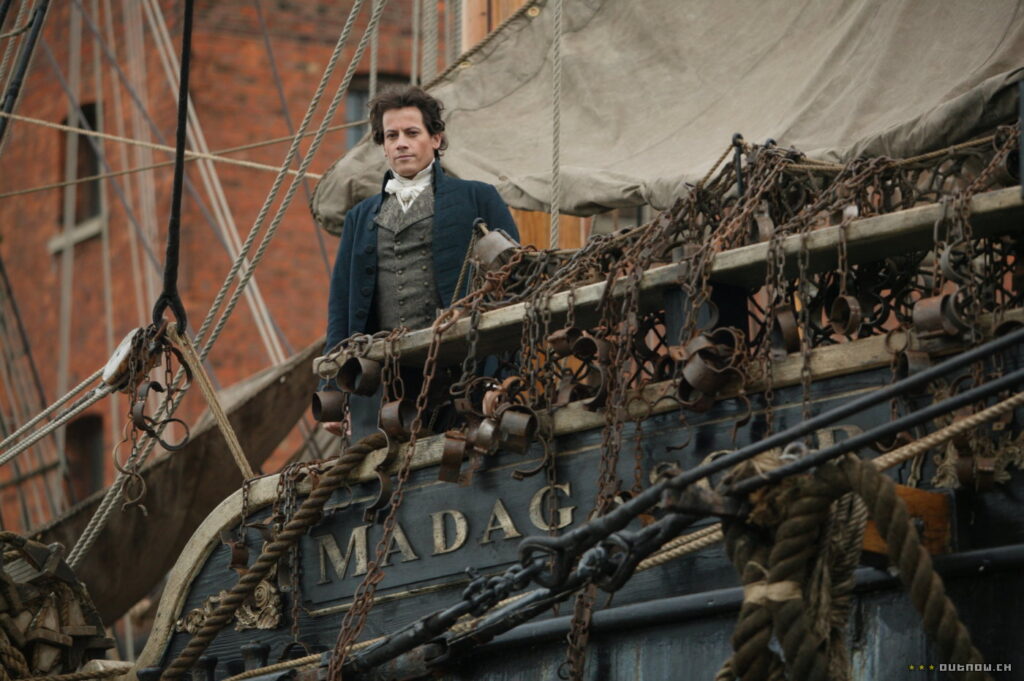
Context: Wilberforce takes members of Parliament to visit a slave ship docked in London. He forces them to smell the stench of death that clings to the vessel. He shouts, “Take those handkerchiefs away from your noses! Remember the Madagascar! Remember that God made men equal.”
Biblical Analysis:
This scene embodies prophetic confrontation. Like Amos denouncing Israel’s injustice in Amos 5:21-24 or Nathan confronting David about Bathsheba in 2 Samuel 12, Wilberforce refuses to let his colleagues hide from reality. He makes them physically experience a fraction of what enslaved Africans endured.
His declaration that God made men equal echoes Genesis 1:27: “God created mankind in His own image, in the image of God He created them.” Every human being bears the imago Dei. Slavery is not just economic or political evil. It’s theological heresy. It denies the fundamental truth that all people are made in God’s image.
Wilberforce’s method here reflects Jesus’s approach. Christ didn’t just preach about loving your neighbor. He touched lepers. He ate with tax collectors. He made people uncomfortable with their complicity in injustice. Wilberforce does the same by forcing Parliament to breathe in the reality they’ve been funding.
This also echoes Isaiah 58:6-7, where God declares the kind of fast He desires: “To loose the chains of injustice, to set the oppressed free, to share your food with the hungry.” True worship isn’t just spiritual exercises. It’s confronting systemic evil.
4. Perseverance in the Face of Defeat: The Long Obedience
Context: The film chronicles Wilberforce’s repeated legislative defeats. Year after year, his abolition bills fail. He becomes physically ill. His friend William Pitt tells him, “Why is it you only feel the thorns in your feet when you stop running?”
Biblical Analysis:
This is where the film’s theological depth shines. Wilberforce doesn’t experience immediate triumph. He doesn’t pray and see mountains move overnight. Instead, he lives out Galatians 6:9: “Let us not become weary in doing good, for at the proper time we will reap a harvest if we do not give up.”
Eugene Peterson called this “a long obedience in the same direction.” Faith isn’t just dramatic conversion or mountaintop experiences. It’s showing up day after day, year after year, even when nothing seems to change. Wilberforce’s story demolishes prosperity gospel lies that suggest faithful Christians always see immediate results.
The film also shows the cost of this obedience. Wilberforce’s health deteriorates. His relationships strain. His addiction to laudanum develops. The New Testament never promises that following Christ will be easy. Jesus Himself warned in Matthew 16:24 that following Him meant taking up a cross. Wilberforce bore his cross for 20 years before seeing victory.
This patience mirrors the patience of the prophets. Hebrews 11:39-40 reminds us that many heroes of faith died without receiving what was promised. They trusted God’s timing, not their own. Wilberforce models this trust beautifully.
John Newton’s advice also captures this: “God sometimes does His work with gentle drizzle, not storms. Drip. Drip. Drip.” This counters our human desire for dramatic, immediate results. God’s work often happens slowly, almost imperceptibly. But over time, the drizzle creates rivers that change landscapes.
5. Barbara’s Role: The Power of Partnership
Context: When Wilberforce is ready to give up, Barbara Spooner reignites his passion. She tells him, “It seems to me that if there is a bad taste in your mouth, you spit it out. You don’t constantly swallow it back.”
Biblical Analysis:
Barbara embodies Proverbs 31:10-31‘s description of a noble wife. She’s not just supportive. She’s prophetic. She challenges Wilberforce when he’s tempted to quit. She reminds him of his calling when he forgets it. This reflects the biblical model of marriage as partnership in ministry.
In Ecclesiastes 4:9-10, we read: “Two are better than one, because they have a good return for their labor. If either of them falls down, one can help the other up.” Barbara literally helps Wilberforce up when he’s fallen. Their marriage becomes a picture of how God uses relationships to sustain us in difficult callings.
Barbara’s role also challenges the common misconception that women in ministry only support behind the scenes. While Wilberforce is the public face, Barbara is the strength behind the scenes. She demonstrates that partnership doesn’t require identical roles. Different gifts working together multiply effectiveness.
⚠️ Content Warnings
Violence
The film handles violence with restraint. There are no graphic depictions of slavery’s brutality. Instead, the horror is conveyed through testimony and implication.
- Opening scene: Two men beat a horse. Wilberforce stops them. The violence is brief and not graphic.
- Verbal descriptions of slave ship conditions. Characters describe women being hung by their ankles and raped. Children thrown overboard. Bodies left to rot in ship holds.
- Olaudah Equiano shows a brand scar on his chest. This is the only visual evidence of slavery’s violence shown in the film.
- John Newton describes killing and abusing Africans. His confession is verbal, not visual.
- Wilberforce has nightmares and visions of slaves suffering. These are brief and not graphic.
Drug & Alcohol Use
Wilberforce takes laudanum (opium-based painkiller) for his colitis. Multiple scenes show him drinking the medicine or being given it by his butler. Social drinking appears in several scenes. Characters drink wine and liquor at parties and social gatherings. Thomas Clarkson jokes about drinking, saying “Well, this one bloody does!” when asked if any saints drink. Pipe smoking appears throughout the film, typical of the period. No drug or alcohol use is glorified. Wilberforce’s laudanum use is portrayed as medical necessity that carries risk of dependence.
Profanity
The film contains minimal profanity, especially compared to modern standards. According to MovieGuide, there are three light obscenities and three light profanities.
- The N-word is used twice by pro-slavery characters to demonstrate their racism
- Bloody – used multiple times (British colloquialism, not considered strong profanity)
- Hell – used in context of historical speech
- Damn – appears occasionally
- Dear God – used as exclamation
Romantic or Explicit Content
The film is remarkably clean in this area. The romance between William and Barbara is tender and appropriate.
- The film shows Barbara pregnant and with children in later scenes. No explicit content.
- William and Barbara flirt and have intellectual banter. Their courtship is quick and wholesome.
- They kiss on their wedding day. The kiss is brief and appropriate.
- Period dress includes some cleavage in formal scenes. Nothing excessive or designed to be provocative.
- Sexual violence is referenced verbally when discussing slave ship conditions. Characters mention women being raped. No visuals accompany these descriptions.
Spiritual Messaging
This is where the film excels. The spiritual content is robust, authentic, and central to the plot.
Positive Elements:
- Wilberforce’s evangelical conversion is portrayed as life-changing and genuine
- Prayer and Bible reading are shown as Wilberforce’s sustaining practices
- John Newton embodies radical grace and redemption
- The film explicitly states that Wilberforce’s faith motivated his abolition work
- Wilberforce declares: “God has set before me two great objects: Suppression of the slave trade and the reformation of society”
- Community and friendship among believers is portrayed as essential for sustaining faith
- The film challenges the false dichotomy between sacred and secular work
Theological Nuance:
- The film acknowledges tension between contemplative faith and active ministry
- Characters struggle with doubts and discouragement
- Faith is portrayed as requiring perseverance, not just initial conversion
- John Newton models how to live with the weight of past sin
Concerns:
- John Newton was Anglican, not evangelical in the modern sense. Film simplifies denominational distinctions.
- Film doesn’t deeply explore theological debates of the period
- Some viewers may find the Christian content too strong or preachy
🎯Verdict
1. Authentic Christian Worldview
Christianity Today praised the film for balancing faith and filmmaking without being preachy. Unlike many Christian films that feel like sermons in disguise, Amazing Grace integrates faith naturally. Wilberforce’s Christianity isn’t a subplot. It’s the engine driving everything. This is refreshing in an era where Hollywood often treats faith as quaint or dangerous.
2. Exceptional Performances
Albert Finney’s John Newton alone is worth the price of admission. The Guardian and multiple reviewers singled out his performance. Ioan Gruffudd brings depth to Wilberforce, showing both his passion and vulnerability. Benedict Cumberbatch shines as William Pitt. The entire cast delivers memorable work.
3. Historical Importance
Most Americans don’t know William Wilberforce’s story. This film educates while entertaining. As PluggedIn notes, it demonstrates that one determined person can make an enormous difference in history, especially when surrounded by friends who help when they stumble.
4. Faith in Action Model
The film demolishes the false dichotomy between sacred and secular work. Wilberforce doesn’t have to choose between serving God and engaging in politics. His political work is his spiritual service. This message desperately needs to be heard by Christians today who feel their vocations don’t matter to God.
5. Realistic Portrayal of Perseverance
The film doesn’t promise easy victories or instant results. Wilberforce fights for 20 years. He gets sick. He struggles with pain medication. He doubts his calling. Yet he perseveres. This is far more realistic than prosperity gospel fantasies. Real faith often looks like Wilberforce: beaten down but not giving up.
6. Redemption Theme
John Newton’s transformation from slave trader to minister proves no one is beyond God’s grace. This is the gospel in action. Newton doesn’t minimize his past. He carries his ghosts with him. But grace transforms him anyway. This message needs to be proclaimed from every Christian pulpit.
7. Slow Pacing
Multiple reviewers noted the film’s deliberate pace. Variety called it “morally irreproachable and flat as a pancake.” The parliamentary scenes, while historically accurate, can feel tedious. If you’re expecting an action film, you’ll be disappointed.
Solution: Watch with family or friends who appreciate historical dramas. Discuss the themes afterward to reinforce engagement.
8. Confusing Timeline
The film jumps between 1797 and earlier periods without always making clear transitions. Some viewers report losing track of when events occur.
Solution: Read a brief biography of Wilberforce beforehand to orient yourself to the timeline.
3. White Savior Narrative
Common Sense Media and other critics noted that the film easily falls into a white savior narrative. The story centers on white British politicians while sidelining Black characters and women. Olaudah Equiano appears briefly but doesn’t get substantial character development.
Solution: Pair this film with resources that tell the stories of African resistance to slavery. Read Equiano’s actual autobiography. Acknowledge the film’s limitations while appreciating its strengths.
9. Intense Subject Matter
While the film avoids graphic visuals, the verbal descriptions of slavery’s brutality are intense. Children and sensitive viewers may find these disturbing.
Solution: Use discretion with younger viewers. The PG rating is appropriate, but parents know their children best.
10. May Feel Preachy to Non-Christians
The film makes no apologies for its Christian content. Some viewers may find this off-putting.
Solution: If sharing with non-believing friends, set expectations upfront. Frame it as a historical film about a man whose faith motivated extraordinary action. Let the story speak for itself.
💭 Final Thoughts
Does the world need another biopic? When it’s this good, absolutely. Amazing Grace stands as one of the finest Christian films ever made precisely because it doesn’t feel like a Christian film in the cheesy, low-budget sense. It’s a legitimate historical drama that happens to have unabashed faith at its center.
What makes this film essential viewing? It shows us what Christian activism actually looks like. Not showy. Not instant. Not even always successful. Wilberforce battles for two decades. He loses repeatedly. His health fails. Yet he perseveres because he knows God has called him to this work.
The film also refuses to let us off the hook. If one man with colitis and no social media could help end the British slave trade, what’s our excuse? Modern Christians face different injustices, but the call remains the same. God still asks us to spend ourselves on behalf of the oppressed, as Isaiah 58:10 commands.
Yes, the pacing drags at times. Yes, the timeline jumps can confuse. Yes, it could have centered African voices more. But these flaws don’t negate the film’s power. Amazing Grace reminds us that faith without works is dead, that perseverance matters more than passion, and that God’s grace really is amazing enough to transform slave traders into hymn writers.
Who should watch this film? Every Christian who’s ever wondered whether their work matters. Every person tempted to quit when results don’t come quickly. Every believer who’s struggled to see how faith connects to justice. In short, all of us.
Watch it alone for inspiration. Watch it with your small group for discussion. Watch it with your teenagers to show them what faithful endurance looks like. Just watch it.
As John Newton wrote and the film beautifully demonstrates: “Amazing grace, how sweet the sound, that saved a wretch like me. I once was blind, but now I see.” We were blind. This film helps us see.
Explore Latest Book Reviews
-
Unbroken: A World War II Story of Survival, Resilience, and Redemption
Unbroken: A World War II Story of Survival, Resilience, and Redemption 2010, Pages: 528 Genres Writer Laura Hillenbrand Characters Louie Zamperini, Russell Allen Phillips, Pete Zamperini An Olympic runner turned WWII bombardier survives a plane crash, 47 days at sea, and brutal torture as a POW, only to face his hardest battle at home: forgiving…
-
Silence
Silence 1966, Reading Time: 8-10h, Pages: 300 Genres Writer Shūsaku Endō Characters Sebastião Rodrigues, Cristóvão Ferreira, Kichijiro, Tokugawa Inoue Two 17th-century Jesuit priests journey to a Japan hostile to their faith to locate their missing mentor, only to face a test that questions the very nature of God’s presence in suffering. ☕Thus says AI: 89/100…
-
Apocalyptic | Books | Christian Fiction | Christianity | Dystopian | Fantasy | Fiction | Religion | Science Fiction | Suspense/Thriller
Left Behind: A Novel of the Earth’s Last Days
Left Behind: A Novel of the Earth’s Last Days 1995, 5h 21m Genres Authors Jerry B. Jenkins, Larry LaHaye “In the blink of an eye, millions vanished—now, the real nightmare begins for those who stayed.” ☕Our No Cap Review Left Behind in a Nutshell Left Behind is a 1995 novel by evangelical pastor Tim LaHaye and…
-
Books | Christian | Christian Living | Christian Non Fiction | Christianity | Evangelism | Faith | NonFiction | Religion
Gospeler
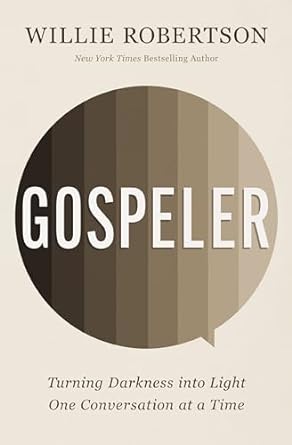
Gospeler: Turning Darkness into Light One Conversation at a Time Willie Robertson (author) A bold, heartfelt call to share the hope of Jesus through simple conversations that can change a life forever. Genres 224 pages, Paperback First published May 14, 2024 Our No Cap Review Plot Summary Gospeler is Willie Robertson’s personal and practical exploration…
-
Books | Business | Communication | Leadership | Management | NonFiction | Personal Development | Personal Growth | Psychology | Self Help
Never Split the Difference: Negotiating As If Your Life Depended on It
Never Split the Difference: Negotiating As If Your Life Depended on It Chris Voss (Author), Tahl Raz (co-author) Never Split the Difference is a bestselling negotiation book written by former FBI lead international hostage negotiator Chris Voss, with journalist Tahl Raz. Drawing from real high-stakes hostage scenarios, corporate negotiations, and cross-cultural conflict resolution, Voss presents…
-
The Hobbit
Middle-earth #0 The Hobbit, or There and Back Again J. R. R. Tolkein The Hobbit is a timeless fantasy adventure that follows Bilbo Baggins, a comfort-loving hobbit from the peaceful Shire, who is unexpectedly swept into a daring quest. When the wizard Gandalf arrives at his doorstep with thirteen determined dwarves led by Thorin Oakenshield,…



Explore Latest Movie Reviews
-
The King of Kings
The King of Kings The King of Kings | © 2025 Angel Studios Category None Light Moderate Heavy Profanity ✓ Violence & Gore ✓ Drug & Alcohol Use ✓ Explicit Content ✓ Spiritual Messaging ✓ 2025, 1h 41m Genres Director Seong-ho Jang Writers Seong-ho Jang, Rob Edwards Stars Oscar Isaac, Kenneth Branagh, Uma Thurman, Pierce…
-
War Room
War Room 2015, PG, 2h Genres Director Alex Kendrick Writers Alex Kendrick, Stephen Kendrick Stars Priscilla C. Shirer, T.C. Stallings, Karen Abercrombie With her marriage on the brink of collapse, a woman discovers that she can only win the battle for her home by surrendering the fight to God in her “war room.” Is War…
-
Sound of Hope: The Story of Possum Trot
Sound of Hope: The Story of Possum Trot 2024, PG-13, 2h 10m Genres Director Joshua Weigel Writers Joshua Weigel, Rebekah Weigel Stars Nika King, Demetrius Grosse, Elizabeth Mitchell Inspired by a true story, a rural East Texas pastor and his wife ignite a movement within their small church to adopt 77 of the most difficult-to-place…
-
God’s Not Dead 2
God’s Not Dead 2 2016, PG, 2h Genres Director Harold Cronk Writers Chuck Konzelman, Cary Solomon Stars Melissa Joan Hart, Jesse Metcalfe, David A.R. White When a public high school teacher is sued for answering a student’s question about Jesus, she must fight in court to save her career and defend the right to speak…
-
God’s Not Dead
God’s Not Dead 2014, PG, 1h 53m Genres Director Harold Cronk Writers Hunter Dennis, Chuck Konzelman, Cary Solomon Stars Shane Harper, Kevin Sorbo, David A.R. White A devout Christian student must prove God’s existence in a series of debates against his atheist philosophy professor to save his grade and stand up for his faith. ☕Thus…
-
Drama | Epic | Historical Epic | History | Movies | Period Drama
Silence
Silence 2003, PG-13, 2h 3m Genres Director Martin Scorsese Writers Jay Cocks, Martin Scorsese, Shûsaku Endô Stars Andrew Garfield, Adam Driver, Liam Neeson Two 17th-century Jesuit priests journey to a Japan hostile to their faith to locate their missing mentor, only to face a test that questions the very nature of God’s presence in suffering….