War Room
2015, PG, 2h
Genres
Director
Alex Kendrick
Writers
Alex Kendrick, Stephen Kendrick
Stars
Priscilla C. Shirer, T.C. Stallings, Karen Abercrombie
With her marriage on the brink of collapse, a woman discovers that she can only win the battle for her home by surrendering the fight to God in her “war room.”
Is War Room the Christian Film We Actually Need?
📊 Ratings
| Platform | Rating | Notes |
|---|---|---|
| 🎞️ IMDb | 6.5/10 | Mixed audience response |
| 🎦 Metacritic | 26/100 Critics / 5.6/10 Audience | Critics found it “overwrought” |
| 🍿 Rotten Tomatoes | 33% Critics / 80%+ Audience | Massive critic-audience divide |
| 🤩 Our Theological Complexity Rating | 7.5/10 | Robust prayer theology with controversial spiritual warfare elements. Simplifies cause-effect but champions biblical intimacy with God. |
📊 Review Summary
War Room isn’t just a movie. It’s a sermon wrapped in cinema, a battle cry disguised as domestic drama. The Kendrick Brothers’ 2015 release turned a $3 million budget into $74 million worldwide because it spoke directly to evangelical anxieties about marriage, materialism, and spiritual apathy.
But here’s the tension. Secular critics called it “anti-feminist” and “creepy.” Christian audiences called it “life-changing.” This 2,366% ROI film features an elderly Black woman teaching a younger Black woman how to fight for her marriage—not against her husband, but against spiritual forces. The weapon? Strategic, closeted prayer.
The question isn’t whether War Room is cinematically flawless. It’s whether it biblically challenges lukewarm Christianity while respecting both divine sovereignty and human complexity. Spoiler: it mostly succeeds, with some caveats about spiritual warfare methodology.
| Concern | Level | Notes |
|---|---|---|
| Average Rating | Mixed | Massive secular-Christian divide |
| Violence | Minimal | Brief war footage montage, verbal confrontations |
| Language | Clean | No profanity; family-friendly dialogue |
| Drug Use | None | Pharmaceutical sales context, no substance abuse |
| Explicit Content | None | Implied adultery thwarted; no graphic content |
| Spiritual Messaging | High/Controversial | Strong prayer emphasis; divisive spiritual warfare theology |
| Verdict | Recommend with Discernment | Powerful for prayer life; questionable on submission theology |
🎬 War Room in a Nutshell
🔤 Title: War Room
🎬 Director(s): Alex Kendrick (Director/Co-Writer), Stephen Kendrick (Co-Writer)
📺 Genre: Christian Drama, Faith-Based
⏱️ Runtime: 120 minutes
📅 Release: August 28, 2015
⭐ Rating: PG (Thematic elements)
🎭 Stars: Priscilla Shirer, T.C. Stallings, Karen Abercrombie, Alena Pitts
🏢 Production: Kendrick Brothers Productions, TriStar Pictures, Affirm Films
🌐 Where to Watch: HBO Max, Hulu, Tubi (Free), Roku, Pure Flix
🌟 Overview
Remember when Christian films meant low budgets and lower expectations? The Kendrick Brothers obliterated that stereotype.
War Room arrived in 2015 at peak cultural anxiety. American evangelicals felt besieged by secularization. Traditional families seemed under assault. Enter Alex and Stephen Kendrick with their fifth film, offering not entertainment but ammunition.
What makes War Room fascinating? It centers an entirely African-American cast while written by white evangelicals. It transforms a walk-in closet into a theological icon. And it argues that marriage counseling is useless without spiritual warfare.
The plot is deceptively simple. Elizabeth Jordan (Priscilla Shirer) has a crumbling marriage to Tony (T.C. Stallings), a pharmaceutical rep who’s ethically compromised and emotionally absent. Enter Miss Clara (Karen Abercrombie), an elderly widow who diagnoses Elizabeth’s real problem: she’s fighting the wrong enemy.
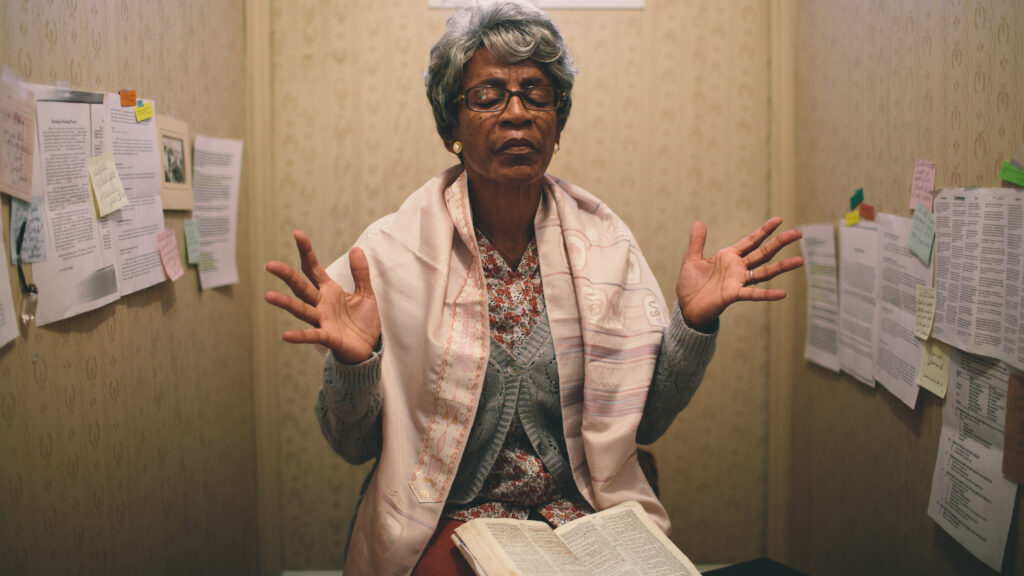
Clara introduces the “War Room” concept. Empty your closet. Fill it with Scripture. Pray strategically. Stop nagging your husband and start interceding for him.
The film’s climax? Elizabeth verbally rebukes Satan on her porch while Tony—miles away, on the verge of adultery—gets sudden food poisoning. Divine intervention or magical thinking? That’s where the controversy begins.
Critics like Michael Rechtshaffen at LA Times called it “preachy” and “wincingly overwrought.” However, Movieguide gave it a never-before A+ rating. This divide reveals everything about modern American religion.
🎬 Synopsis
Elizabeth Jordan sells real estate. Her husband Tony sells pharmaceuticals. Their daughter Danielle? She’s collateral damage in a home that looks successful but feels empty.
Enter Miss Clara, an elderly widow with a secret weapon. Not money. Not therapy. A closet. Literally.
Clara teaches Elizabeth that her real enemy isn’t her emotionally distant, ethically compromised husband. It’s spiritual forces she can’t see. The battlefield? A prayer closet Clara calls her “War Room.”
Elizabeth learns to stop nagging and start interceding. She clears out her walk-in closet, tapes Scripture to the walls, and begins strategic prayer. Not vague “bless us” prayers. Specific, Scripture-based warfare.
Meanwhile, Tony spirals. He’s stealing drug samples. He’s tempted toward adultery on a business trip. His marriage is imploding.
The climax? Elizabeth verbally rebukes Satan on her front porch while Tony—miles away—gets sudden food poisoning that stops him from being unfaithful to his wife. Coincidence or divine intervention?
Tony hits rock bottom. He confesses his theft to his employer. He loses his job but saves his soul and marriage. The film ends with Elizabeth mentoring another struggling wife, passing on Clara’s wisdom.
🔍 Scenes & Biblical Analysis
1. The Lukewarm Coffee Confrontation
Miss Clara serves Elizabeth room-temperature coffee. When Elizabeth complains her coffee isn’t hot enough, Clara delivers the film’s thesis: “People drink their coffee hot or cold, but nobody likes it lukewarm—not even the Lord.”
Biblical Analysis:
This directly references Revelation 3:15-16, where Jesus tells the Laodicean church, “Because you are lukewarm…I will spit you out of my mouth.” The film interprets “lukewarm” as comfortable, ineffective Christianity. Elizabeth attends church occasionally but lacks spiritual vitality.
What’s brilliant here? The coffee becomes a mirror. Elizabeth sees herself: religiously active but spiritually stagnant. The scene challenges the audience’s own temperature.
However, while some theologians argue the historical context of Laodicea refers to the usefulness of water (hot for healing, cold for refreshing) rather than spiritual zeal, the film adopts the standard pietistic interpretation that sees lukewarm as comfortable, ineffective cultural Christianity.
2. The War Room Birth
Elizabeth clears out her walk-in closet. She tapes Scripture to the walls. She begins writing specific prayers. This physical act transforms abstract theology into concrete practice.
Biblical Analysis:
The film champions Matthew 6:6: “When you pray, go into your room and shut the door and pray to your Father who is in secret.” In our age of noise and constant distraction, this kind of dedicated, quiet prayer now seems unfamiliar and only for the devout. Elizabeth shows how intentionality can change that.
The decluttering symbolizes Hebrews 12:1, of letting go of anything that hinders us. Elizabeth isn’t just remodelling; she’s dedicating space to prayer and having an honest go at it.
Miss Clara’s key instruction? “You can’t fix him, and it’s not your responsibility to fix him.” This reframes Elizabeth’s posture from accusation to intercession. It shifts her from James 1:20 territory (“the wrath of man does not produce the righteousness of God”) to intercessory prayer.
3. The Porch Rebuke
Elizabeth steps onto her porch and shouts at the devil: “You can’t have my marriage, you can’t have my daughter, and you sure can’t have my man! This house is under new management. Go back to Hell where you belong!”
Simultaneously, Tony—on a business trip, preparing to commit adultery—is struck with intense gastrointestinal distress. The illness physically prevents the affair.
Biblical Analysis:
This scene is the film’s most controversial. It operates within Charismatic/Third Wave theology, assuming believers have authority to directly rebuke demonic forces. The rationale? Luke 10:19 and Ephesians 6:12 (“we do not wrestle against flesh and blood”).
Biblical Dissonance:
Conservative critics point to Jude 1:9, where even Michael the archangel says, “The Lord rebuke you” instead of rebuking Satan directly. This suggests believers should pray for God to rebuke, not command demons themselves.
Additionally, the food poisoning raises “genie Jesus” concerns. Does prayer mechanically produce miracles? Or did God sovereignly protect the marriage? The film troubled some conservative viewers.
The timing feels too neat. But isn’t that the nature of answered prayer—divine coincidence?
4. Tony’s Restitution
Tony doesn’t just apologize. He confesses stealing drug samples from his employer, risking prison. The employer fires him but shows mercy regarding prosecution.
Biblical Analysis:
This somewhat brings to mind Luke 19—Zacchaeus’s fourfold restitution after encountering Jesus—or at least mirrors Zacchaeus’ contrite heart. The film resists “cheap grace.” Tony faces consequences. His career suffers. But his soul and marriage are saved.
This is theologically mature. Prayer doesn’t erase earthly repercussions. It aligns us with God’s justice, which often involves painful accountability.
5. The Titus 2 Cycle Completes
The film ends with Elizabeth mentoring a younger woman, passing the torch. Miss Clara prays for national revival.
Biblical Analysis:
This fulfills Titus 2:3-4—older women teaching younger women to love their families. The intergenerational discipleship model is increasingly rare in modern church culture.
Miss Clara’s final prayer for revival? It elevates individual transformation to national hope. One War Room at a time.
⚠️ Content Warnings
Violence
Minimal. The opening montage shows brief, non-graphic war footage (historical battle scenes) to establish the metaphor of spiritual warfare. No blood or gore. One scene features Tony aggressively confronting Elizabeth verbally during an argument, creating tension but no physical violence. A young girl does double-dutch jump rope with intensity but no injury.
Drug & Alcohol Use
None directly depicted. Tony is a pharmaceutical sales representative who steals drug samples from his employer (implied but not shown on screen). He later confesses this theft. No recreational drug use. No alcohol consumption shown.
Profanity
Completely clean. Zero profanity, cursing, or crude language throughout the 120-minute runtime. Dialogue maintains family-friendly standards. Even in heated arguments, characters avoid swearing. This is rare for modern cinema depicting marital conflict.
Romantic or Explicit Content
Very minimal. Tony is implied to be emotionally unfaithful and on the verge of physical adultery with a colleague during a business trip. The scene cuts away before anything physical happens—he gets sick instead. One brief kiss between Tony and Elizabeth (reconciliation context). No nudity, no sexual content. The film treats infidelity seriously but never graphically.
Spiritual Messaging
Intense and potentially divisive.
Positive Elements:
- Emphasizes Matthew 6:6 prayer in secret
- Champions Scripture memorization and application
- Portrays repentance as more than words (restitution required)
- Shows God’s sovereignty over circumstances
- Validates suffering Christians that their prayers matter cosmically
Controversial Elements:
- Spiritual warfare methodology: Elizabeth directly commands Satan to leave. This aligns with Charismatic theology but contradicts Reformed/cessationist views (Jude 9 shows Michael deferring to God).
- “Genie Jesus” concerns: Prayer appears to mechanically produce miracles (food poisoning on cue). Some viewers see this as oversimplifying divine sovereignty.
- Submission theology: Elizabeth is told to stop “nagging” and let God handle Tony. While framed as strategic trust, critics argue this could encourage women to stay in dangerous situations. The film doesn’t adequately address abuse boundaries, but maybe it’s not supposed to? Is Elizabeth and Tony’s marital strain the Kendrick Brothers’ attempt at portraying real, complex life issues that couples go through?
Theological Accuracy:
The film excels at showing prayer as intimate alignment with God, not just asking for things. It attempts at portraying spiritual warfare with nuance and grace but may fluster some viewers.
🎯Verdict
Reasons to Watch ✅
1. It takes prayer seriously in an age that doesn’t.
When was the last time Hollywood depicted prayer as strategic, powerful, and necessary? War Room refuses to reduce prayer to closing meal blessings. It presents Matthew 6:6 prayer as a real solution to real-life issues. In an era of therapeutic Christianity, this is refreshing.
2. The African-American cast breaks evangelical film stereotypes.
The Kendrick Brothers, who are white, deliberately chose a predominantly African-American cast after Alex Kendrick said he “started having dreams about an African American cast.” The film respects the fervent, embodied prayer tradition of African-American Christianity.
3. It champions marital covenant over therapeutic exit.
Modern culture says, “If you’re unhappy, leave.” War Room says, “If you’re unhappy, pray.” Elizabeth doesn’t bail when Tony becomes insufferable. She intercedes. This models Malachi 2:16—God hates divorce.
4. It validates the invisible spiritual battles.
Millions of Christians feel their private struggles don’t matter. War Room tells them their closet prayers are cosmic warfare. This validates suffering believers. It says your hidden faithfulness has public consequences.
5. The restitution theology is rare and biblical.
Tony doesn’t just cry and get forgiven. He confesses to his boss. He risks prison. He loses his job. This avoids prosperity gospel nonsense. It aligns with Luke 19 Zacchaeus-level repentance.
💭 Final Thoughts
So. Should you watch War Room?
If you’re hungry for a film that treats prayer like spiritual Special Ops, absolutely. If you want to see African-American evangelical piety celebrated, yes. If you need a kick in the pants about your prayer life, consider it divine assignment.
But go in with eyes open. This film is theologically specific, not universally Christian. Your mileage will vary based on your tradition. Charismatics will weep with recognition. Cessationists will cringe at the rebuke scene.
What’s undeniable? War Room took the most invisible aspect of Christianity—closeted prayer—and made it cinematic. That’s gutsy. In an age where Christian films often chase secular approval, the Kendricks doubled down on particularity. They made a film about an old Black woman praying in a closet, and it outperformed Hollywood blockbusters.
The film’s $74 million box office on a $3 million budget proves something. There’s a massive audience desperate for content that validates their spiritual reality. People who believe Ephesians 6:12 isn’t metaphor. People who want to see prayer portrayed as potent, not pathetic.
Is War Room perfect? No. Is it important? Absolutely.
Watch it. Discuss it. Let it challenge your prayer life. But pair it with discernment about spiritual warfare methods and submission theology. Don’t let it become the only voice in your theological education.
Because here’s the real question the film asks: Do you believe your prayers actually change things? Or is prayer just religious decoration?
War Room insists the secret place is where history pivots. That’s either foolish superstition or the most important truth you’ll hear this year.
Which is it for you?
Explore Latest Book Reviews
-
Unbroken: A World War II Story of Survival, Resilience, and Redemption
Unbroken: A World War II Story of Survival, Resilience, and Redemption 2010, Pages: 528 Genres Writer Laura Hillenbrand Characters Louie Zamperini, Russell Allen Phillips, Pete Zamperini An Olympic runner turned WWII bombardier survives a plane crash, 47 days at sea, and brutal torture as a POW, only to face his hardest battle at home: forgiving…
-
Silence
Silence 1966, Reading Time: 8-10h, Pages: 300 Genres Writer Shūsaku Endō Characters Sebastião Rodrigues, Cristóvão Ferreira, Kichijiro, Tokugawa Inoue Two 17th-century Jesuit priests journey to a Japan hostile to their faith to locate their missing mentor, only to face a test that questions the very nature of God’s presence in suffering. ☕Thus says AI: 89/100…
-
Apocalyptic | Books | Christian Fiction | Christianity | Dystopian | Fantasy | Fiction | Religion | Science Fiction | Suspense/Thriller
Left Behind: A Novel of the Earth’s Last Days
Left Behind: A Novel of the Earth’s Last Days 1995, 5h 21m Genres Authors Jerry B. Jenkins, Larry LaHaye “In the blink of an eye, millions vanished—now, the real nightmare begins for those who stayed.” ☕Our No Cap Review Left Behind in a Nutshell Left Behind is a 1995 novel by evangelical pastor Tim LaHaye and…
-
Books | Christian | Christian Living | Christian Non Fiction | Christianity | Evangelism | Faith | NonFiction | Religion
Gospeler
Gospeler: Turning Darkness into Light One Conversation at a Time Willie Robertson (author) A bold, heartfelt call to share the hope of Jesus through simple conversations that can change a life forever. Genres 224 pages, Paperback First published May 14, 2024 Our No Cap Review Plot Summary Gospeler is Willie Robertson’s personal and practical exploration…
-
Books | Business | Communication | Leadership | Management | NonFiction | Personal Development | Personal Growth | Psychology | Self Help
Never Split the Difference: Negotiating As If Your Life Depended on It
Never Split the Difference: Negotiating As If Your Life Depended on It Chris Voss (Author), Tahl Raz (co-author) Never Split the Difference is a bestselling negotiation book written by former FBI lead international hostage negotiator Chris Voss, with journalist Tahl Raz. Drawing from real high-stakes hostage scenarios, corporate negotiations, and cross-cultural conflict resolution, Voss presents…
-
The Hobbit
Middle-earth #0 The Hobbit, or There and Back Again J. R. R. Tolkein The Hobbit is a timeless fantasy adventure that follows Bilbo Baggins, a comfort-loving hobbit from the peaceful Shire, who is unexpectedly swept into a daring quest. When the wizard Gandalf arrives at his doorstep with thirteen determined dwarves led by Thorin Oakenshield,…


Explore Latest Movie Reviews
-
The King of Kings
The King of Kings The King of Kings | © 2025 Angel Studios Category None Light Moderate Heavy Profanity ✓ Violence & Gore ✓ Drug & Alcohol Use ✓ Explicit Content ✓ Spiritual Messaging ✓ 2025, 1h 41m Genres Director Seong-ho Jang Writers Seong-ho Jang, Rob Edwards Stars Oscar Isaac, Kenneth Branagh, Uma Thurman, Pierce…
-
Amazing Grace
Amazing Grace 2006, PG, 2h Genres Director Michael Apted Writers Steven Knight Stars Ioan Gruffudd, Albert Finney, Michael Gambon The idealist William Wilberforce maneuvers his way through Parliament in 19th-century England, endeavoring to end the British transatlantic slave trade. Amazing Grace: When Faith Fuels Revolution A Christian Review of the 2006 Biographical Drama 📊 Rating…
-
Sound of Hope: The Story of Possum Trot
Sound of Hope: The Story of Possum Trot 2024, PG-13, 2h 10m Genres Director Joshua Weigel Writers Joshua Weigel, Rebekah Weigel Stars Nika King, Demetrius Grosse, Elizabeth Mitchell Inspired by a true story, a rural East Texas pastor and his wife ignite a movement within their small church to adopt 77 of the most difficult-to-place…
-
God’s Not Dead 2
God’s Not Dead 2 2016, PG, 2h Genres Director Harold Cronk Writers Chuck Konzelman, Cary Solomon Stars Melissa Joan Hart, Jesse Metcalfe, David A.R. White When a public high school teacher is sued for answering a student’s question about Jesus, she must fight in court to save her career and defend the right to speak…
-
God’s Not Dead
God’s Not Dead 2014, PG, 1h 53m Genres Director Harold Cronk Writers Hunter Dennis, Chuck Konzelman, Cary Solomon Stars Shane Harper, Kevin Sorbo, David A.R. White A devout Christian student must prove God’s existence in a series of debates against his atheist philosophy professor to save his grade and stand up for his faith. ☕Thus…
-
Drama | Epic | Historical Epic | History | Movies | Period Drama
Silence
Silence 2003, PG-13, 2h 3m Genres Director Martin Scorsese Writers Jay Cocks, Martin Scorsese, Shûsaku Endô Stars Andrew Garfield, Adam Driver, Liam Neeson Two 17th-century Jesuit priests journey to a Japan hostile to their faith to locate their missing mentor, only to face a test that questions the very nature of God’s presence in suffering….